

Farah Khan is my blueprint as a Gen Z in media
…and I’m still learning
The year was 2007. I was in Chennai, spending Diwali break with my parents after a grueling school term of learning how to multiply for the first time.
All I wanted to do was drag my tired parents away from sightseeing to the nearest theatre and watch Om Shanti Om.
As a big Main Hoon Na (2004) fan, even though I did not know what 7×8 was, I knew that Farah Khan x Shah Rukh Khan = guaranteed fun. Unfortunately, I didn’t get to watch the film because all the shows were sold out. I waited for it to premiere on cable TV.
Meanwhile, my friends in Mumbai wouldn’t stop raving about Shah Rukh Khan’s abs, Deepika’s glamorous debut and Arjun Rampal’s mustache.


Being a Farah Khan fan is its own social currency
It’s been almost two decades since the film was released, but even today all it takes is for one person to say chabbis, and like iCloud data syncing, in a microsecond, you can hear an echo of young adults singing Dard-e-Disco. Or, god forbid, we spot a chandelier before everyone bursts into a dramatic hive of bees buzzing, “Issi jhoomar ke niche milegi Shanti Priya…”

Farah Khan laid the foundation for Gen Z’s humour
Most of us from the broken-humour generation watched her films at an impressionable age. We didn’t know it then but Farah was writing the syllabus for us to create our own genre of brainrot.
Om Shanti Om perfected meta-humour; it laughed at Bollywood while loving it fiercely, and before nepotism became a dirty word and nostalgia ruled algorithms. Gen Z, who consume irony-soaked media as a primary food group, are now realising Farah was doing this in 2007.
The film practically invented the aesthetic that rules the current nostalgia cycle.
She refused to get in line
Farah managed to break out as a mainstream director at a time when female creatives were cornered into indie cinema and serious storylines. She arrived loud, hilarious and unfiltered.
In one of her YouTube vlogs, she shared how some industry insiders were happy about her film, Tees Maar Khan’s (2010) failure. They said, “Abh ayi na line pe”. Most people would have, I certainly would. I’m the human equivalent of an ostrich that sticks its head in the ground when confronted; meanwhile, Farah Khan sat across from an industry that celebrated her failure and made another film.

She’s unbothered and unfiltered
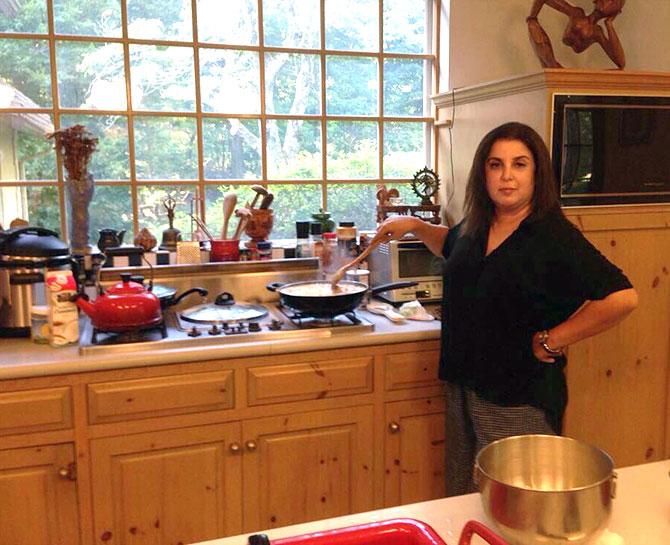
Farah is fully embracing the Gen Z agenda: she’s chronically online, she has a YouTube channel, and she loves catching up with her friends over meals.
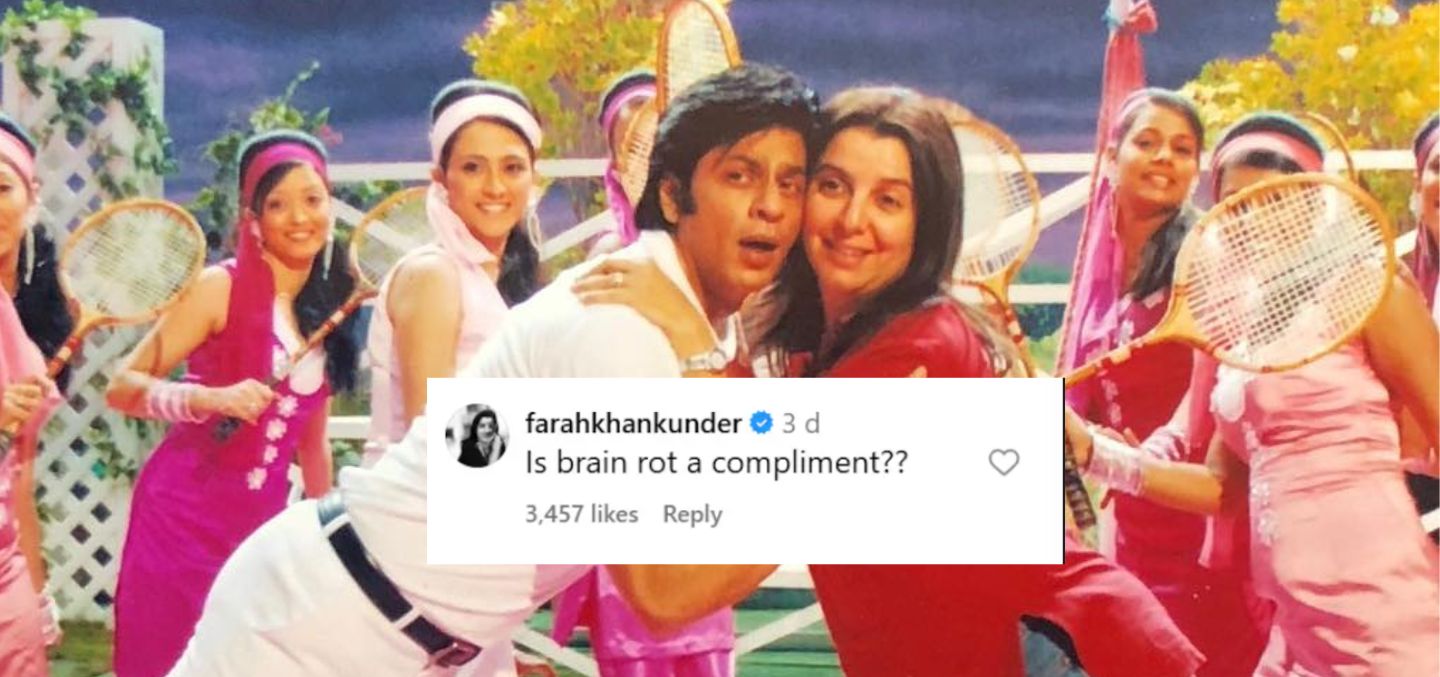
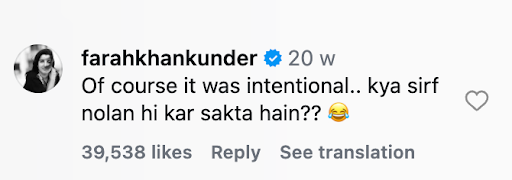
While I have three finsta accounts for different friend groups to filter how much I share with my own friends, Farah is unabashedly leaving comments on Instagram Reels that are fan-edits or scene breakdowns from her films.
On her 61st birthday, after looking at her smushed-up, imperfect cake, all she said was how it represents her life. She didn’t seem like a woman making peace with it, but a woman who had already won. This ease with imperfection pretty much sums up her content strategy.
Her untethered humour is truly captured in the YouTube show she launched in 2024. In one of her videos, she’s having lunch at Rakhi Sawant’s home and urges Sawant to have the first bite, just in case it was poisoned.
There is a specific kind of courage in having no internal editor. I once rehearsed for 15 minutes before calling my therapist for an appointment. Farah Khan once told an interviewer that Bollywood actors claiming they never go to the gym is ‘crap’. I should be taking notes.
Still rehearsing
By most metrics, I’m still the seven-year-old who missed watching Om Shanti Om in theatres because she was in the wrong city.
I still overthink ideas and rehearse phone calls, but Farah Khan has laid down the blueprint for me to show up loud, speak my mind in public and refuse to be smaller.
I’ll be cutting the smashed-up cake and calling it a metaphor.