


'The Love Hypothesis' got everything wrong about being a woman in STEM, except the sexism
Aditi Vijan, a 26-year old PhD student and cancer researcher couldn’t relate to Olive
One evening a few years ago, I decided to ditch my academic textbooks and read the new romance novel I had just bought that afternoon. It was The Love Hypothesis by Ali Hazelwood, and the reason I bought it was the cover. They say never judge a book by its cover, but this one was calling my name. It had a slightly disheveled woman in a lab coat kissing a man with a laboratory in the background. She could be me. As a woman in STEM, I was thrilled to see a romance set in my world, with a scientist as the main love interest. I picked it up without even reading the plot summary.

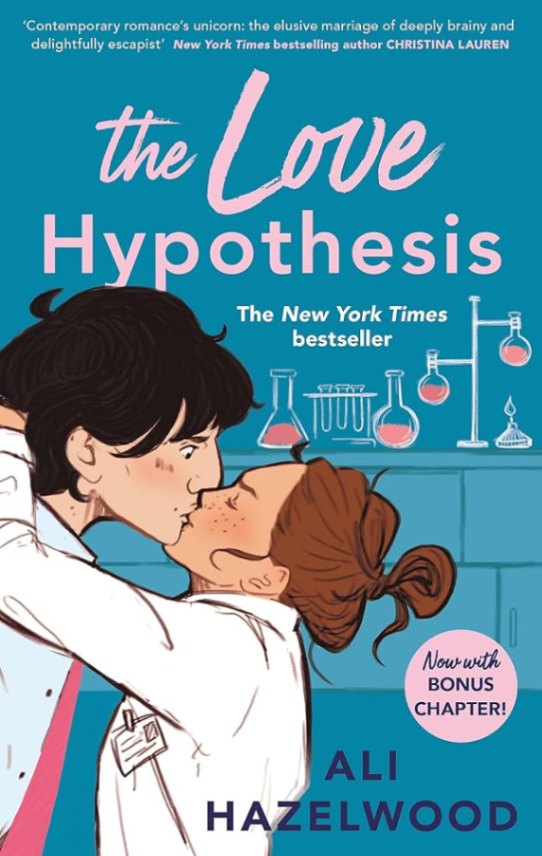
It was all going well until I reached the part where Olive Smith, the protagonist, who is a third-year PhD student at Stanford University, grabs a hot stranger in the hallway outside her lab and kisses him. She’s trying to prove to her best friend Anh that she no longer has feelings for her crush (who Anh has developed feelings for).
It was a perfect meet-cute actually, that at any other time would have left me giddy and fed my delusions about my own lab crush (like these books will feed your delusionship). Except I found out that the stranger—with whom Olive embarks on a mutually-agreed-upon fake relationship and eventually falls in love with—is Dr Adam Carlsen, the PI or Principal Investigator at her friend Malcolm’s lab.
At the time, I was a 22-year-old intern at the Tata Memorial Advanced Centre for Treatment, Research and Education in Cancer (ACTREC) in Mumbai, just discovering that I loved research and wanted to pursue academia. I was familiar with the role of a PI by then, and with how senior such a person is and how inappropriate it would be for them to conduct a romantic relationship with a student. It gave me the ick. I shut the book and tossed it on my roommate’s empty bed.
That was four years ago. Today, I am in the US pursuing my PhD in Biochemistry, and I’m in my third year just like Olive was. So when I heard the movie adaptation of The Love Hypothesis was gathering buzz, I decided it was time to give the story another shot. And I’m here to report that with the benefit of age, personal growth and added perspective, this time around I felt…the exact same way. Here’s why:

Why Love Hypothesis is a STEM romance for a non-STEM audience
PIs are lab dads. Not rich, hot, billionaire CEOs
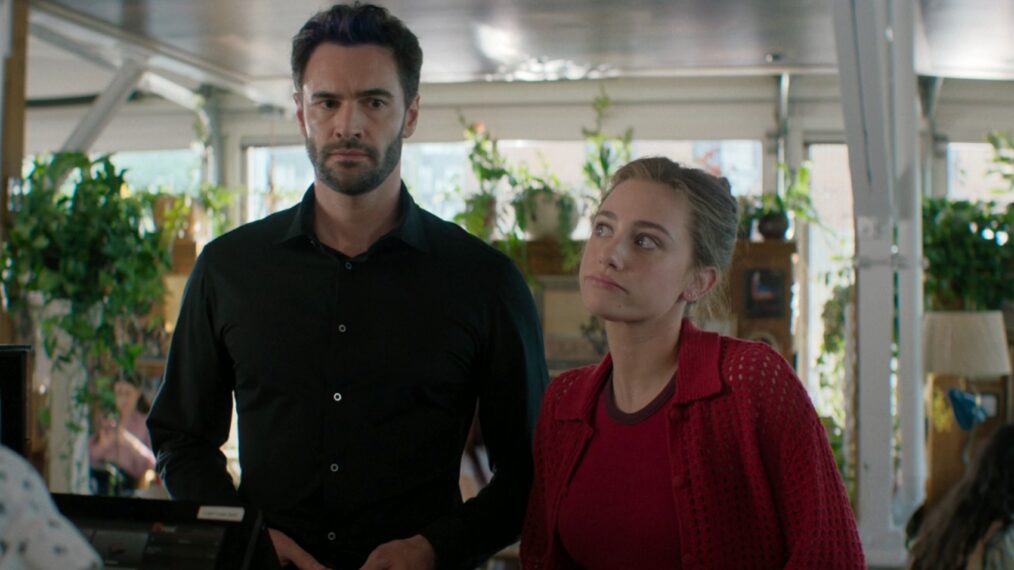
Now I am guilty of enjoying a good Wattpad fan fiction about CEO-assistant romances, but I found Olive (Lili Reinhart) and Dr. Adam Carlsen’s (Tom Bateman) relationship just as frustrating as I did four years ago. The story takes the cookie-cutter archetype of the young, rich, hot, billionaire CEO, and lazily pastes it onto the highest position in research labs. But it simply does not reflect reality.
To begin with, PIs are usually not hot, young men in their early 30s as Dr Carlsen is. They’re usually much older men, who come into this position after decades and decades of study and developed expertise. For instance, my current PI, Dr. Joe Williams* is in his 60s, and his peers are scientists in their late 40s, and more often, in their 50s and 60s. It’s hard to become a PI in your 30s unless you’re some kind of rare genius.
A PI is more accurately like a lab-parent. They’re powerful, yes, but as revered academic mentors and seniors with whom you have a relationship of trust and dependence as you navigate long-term research work. The idea that they would be someone you could be in a romantic relationship with without any kind of pressure or power imbalance is about as likely as finding a PhD student who doesn’t subsist on coffee.
If the book/ movie really wanted to explore the fake-dating trope and make it high-stakes, they could’ve made the love interest the PI’s relative or a post-doctoral researcher. That would complicate matters deliciously and still give us a similar power-dynamic without putting us off. I’ve seen this happen when I dated someone only two years ahead of me; there was still a significant gap in our expertise and it did affect our dynamics personally.


Women in STEM aren’t lonely losers
In the movie, Olive has a close set of friends, but she’s still largely shown as this lonely scientist who spends too much time in the lab talking to mice. That portrayal is dated because it’s not how I am and it certainly isn’t how the other women in STEM around me are either.
As an adult in my mid-twenties, I balance both my PhD work and social life. After moving countries, I’ve managed to become really good friends with people from my classes, other labs and maintain friendships back home as well.
Also, FYI, the mice live in a separate wing or building, which can only be accessed from 6 am to 6 pm; they live very well-regulated lives. Nobody is spending all hours of day and night hanging out with them.
My peers and lab friends try to go out whenever we get a chance. We talk about our lives outside of work and yes, many people in my lab have thriving romantic relationships too. Is there a tendency to hang out with, date and end up with people in similar careers and professional circles? Yes. Because we have to find friends and partners who understand the lives we live.
Suggesting as the movie does, that there are only two types of PhD students—lonely women like Olive, or irresponsible party animals like her roommate, Malcolm (played by actor Jaboukie Young-White), shows an incomplete picture. It reinforces the stereotype of STEM being a profession for asocial, unfun people.


Women in STEM (or anywhere else) don’t need male saviours
The PI-PhD student romance is unlikely but do women students face unwanted sexual attention from men in authority in academia? Absolutely. The movie gets this part right when it has another PI, Dr Tom Benton (Arty Froushan) abusing his position to try and coerce Olive into having sex with him.
But instead of using this plotline to show Olive as a strong, resourceful woman—remember, we’re told she is brought up by her single mother whom she loses when she’s a teen and makes her way to a prestigious college like Stanford all on her own, the story does the opposite. Her attempt to handle the issue in her own way with a female professor is sidelined and instead it takes her lover, Dr Carlsen to intervene and make Dr Benton to back off. It shows that no matter what, you still need a male character to come save the day.
And if you’re a woman and wondering how effective she would really have been in getting the department to take action against Dr Benton. You’re right, real life tells us this is rarely the case. And that’s the point. It is the job of fiction to reflect the hard truths and also help us imagine new realities. Just throwing around some academic jargon or putting a woman in a lab coat (which we aren’t actually allowed to wear outside the lab) isn’t enough in 2026. You actually have to give her agency even if she’s up against realistic odds.


Holding out for a heroine
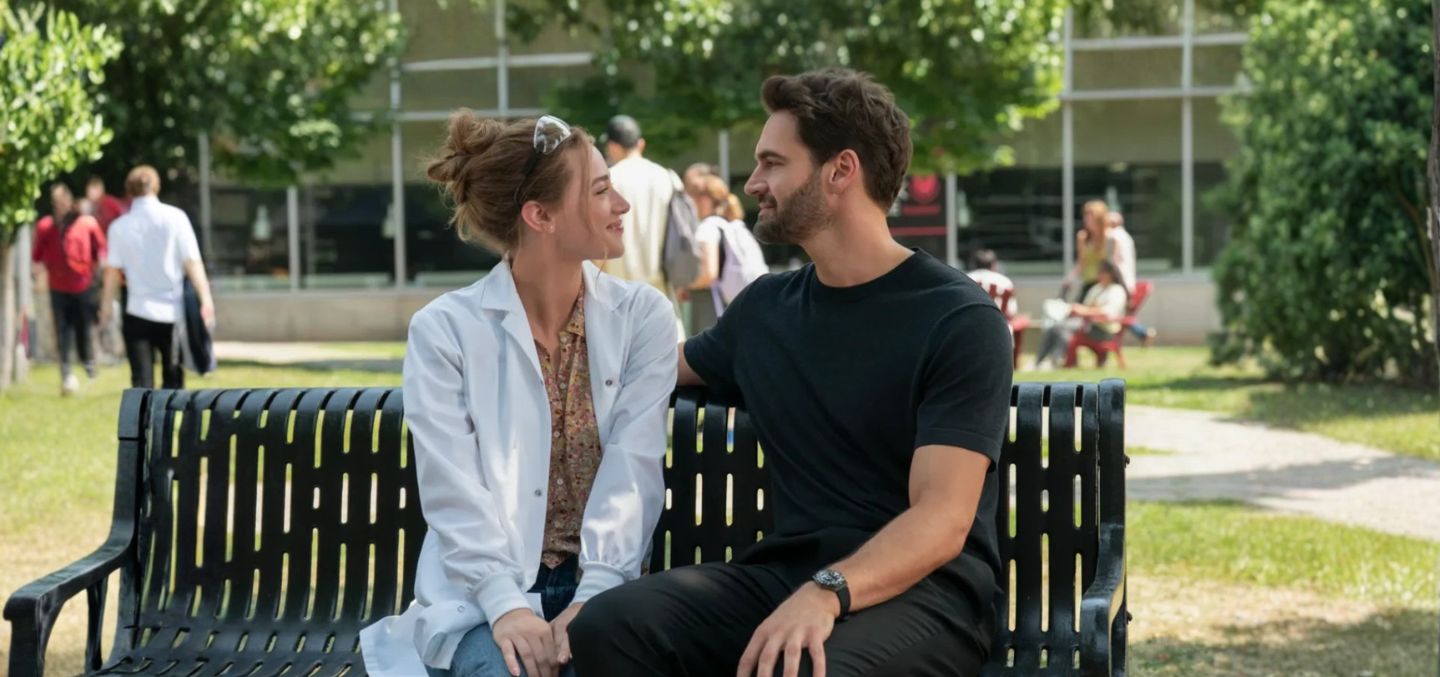
I found the story hard to stomach but I have to admit that the one thing I did enjoy was the chemistry between the movie leads; Lili Reinhart and Tom Bateman have sweet and sexy tension between them, reminiscent of 2000s legacy rom-coms. Like when he picks her up because she’s walking too slowly in heels, it almost made me forget that they’re playing a PI and a PhD student.
I’m still waiting for a book or movie about women in STEM that’s not outright fantasy, portrays us with some nuance, and doesn’t have to rely on boring stereotypes. We know this is possible because didn’t an entire generation of women become lawyers because Legally Blonde exploded the idea that you needed to concede your femininity, your personality or your style in order to be taken seriously? I’m sure they now laugh about the inaccuracies in the film, but Elle Woods was still so compelling.
The point isn’t to have our world replicated or represented with technical accuracy, but rather to show us more multi-dimensionally. And in a way that makes us feel seen.
*Name changed to maintain anonymity
As told to Jhanvi Adatia