

Think your child is struggling at school? Here’s how you can understand and erase the learning gaps
P&G Shiksha’s #EraseTheLearningGap campaign wants us to drop the labels
Think back to your school days, and you’ll likely recall an unspoken sorting system: the high performers who vied for the top ranks, the average students who kept pace, and those who struggled—often dismissed as lazy or slow.
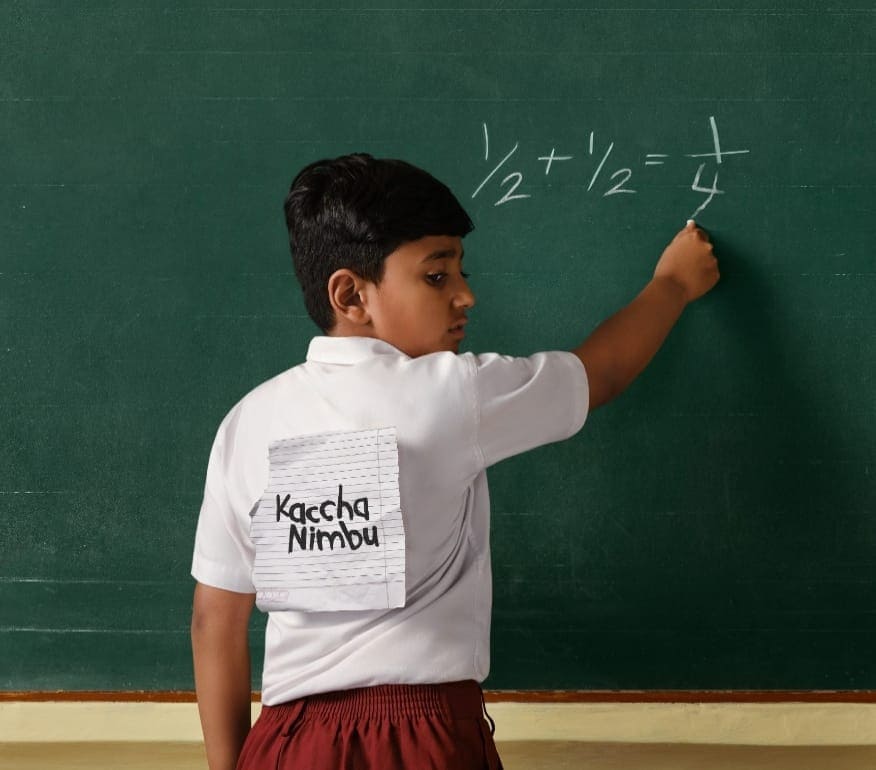
According to the ASER 2024 Report, over half of grade five students in India cannot read a grade two-level text. This isn’t just a statistic—it’s a reflection of the widening learning gap, where children move up the academic ladder without truly mastering foundational concepts. Each missed step compounds the struggle, making it harder for them to understand, engage, or even express confusion. These children get stuck with labels like “weak,” “buddhu” and “kaccha nimbu” and they begin to internalise these names, shrinking into silence and self-doubt, with consequences far more serious than we realise.
And yet, only 28% of adults fully understand what a learning gap is. How can parents identify learning gaps in their children? Dr. Varkha Chulani, clinical psychologist and psychotherapist explains, “You may realise your child usually puts a lot of effort into studying but is finding it hard to keep up. They may have trouble remembering things and may make repetitive mistakes. The easiest way to identify a learning gap is to observe if there is a disparity between input and output.”
How P&G Shiksha is erasing the gap
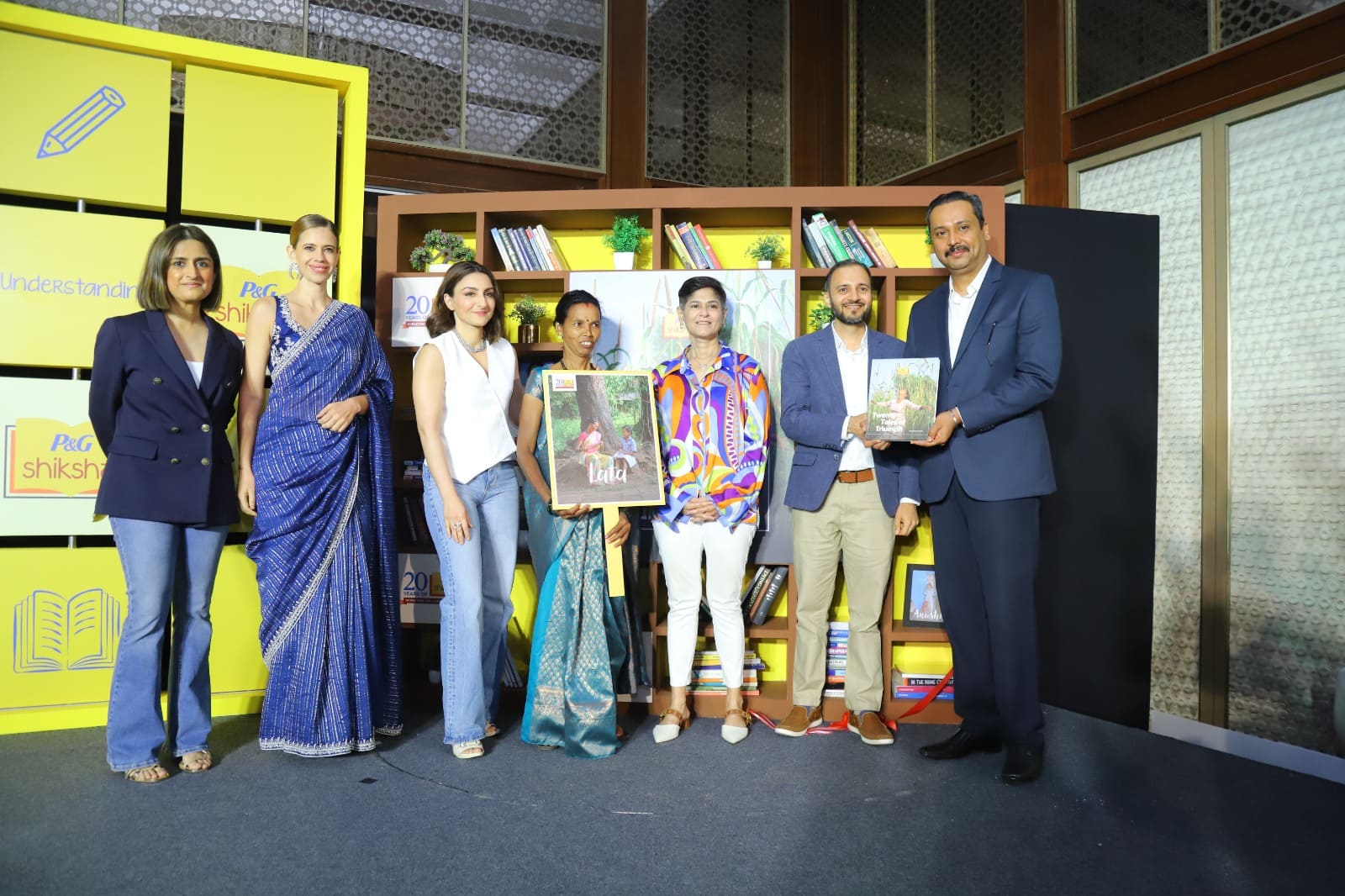
P&G Shiksha, the flagship CSR program of P&G India, has spent the past 20 years working towards ensuring a conducive learning environment for students from underserved communities. With over 50 lakh children being impacted, the initiative began by building schools and has since evolved into a comprehensive program focused on improving learning outcomes. The team behind the program recently released a coffee table book, Twenty Tales of Triumph that captures powerful stories of transformation made possible by access to quality education with the support of P&G Shiksha.
This year’s initiative, #EraseTheLearningGap, confronts the harmful manifestations of labels head-on. They created a film that tells the story of Bikas, a young boy discouraged by repeated failure and ridicule. But with consistent support from teachers and parents, his story shifts—from labels to achievement, showing the impact of belief and support, and most importantly, the role of allies.
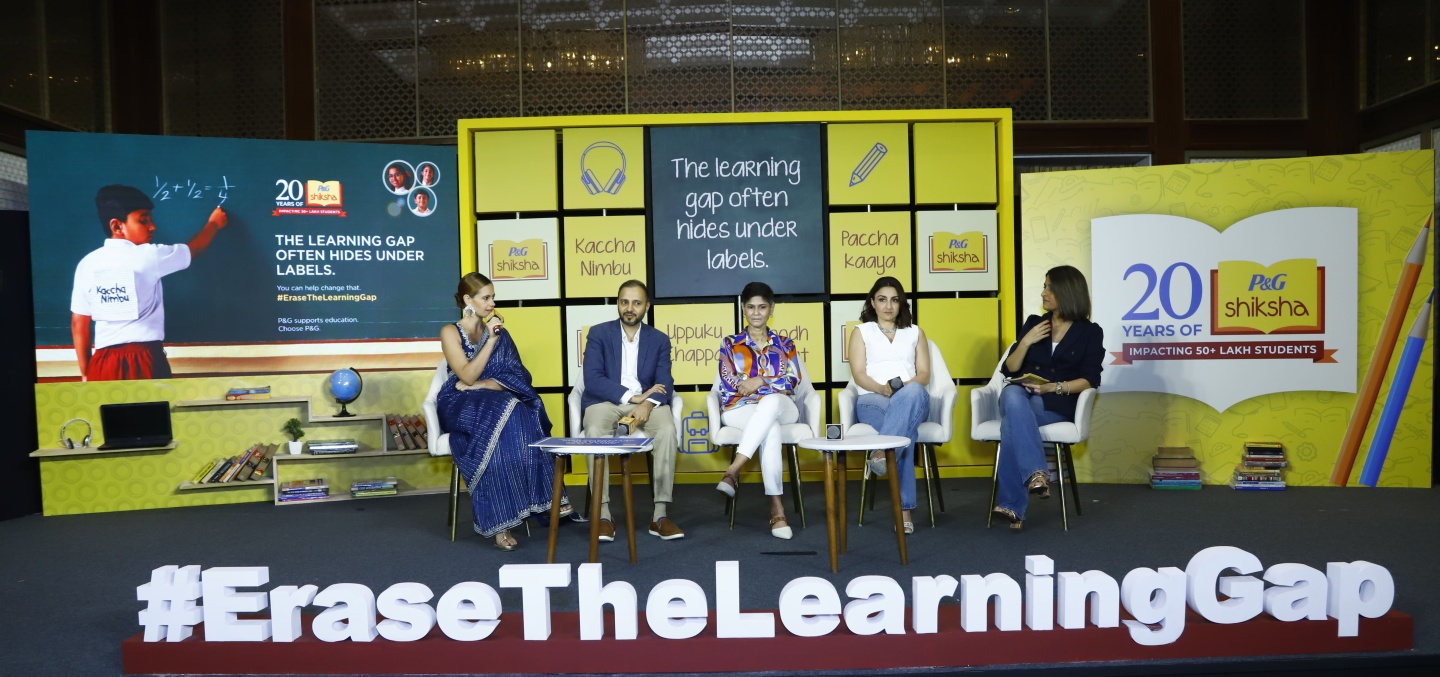
P&G Shiksha launched a nationwide initiative to spotlight the learning gaps, through a power-packed panel that brought together diverse voices from the world of cinema, psychology, and education.
Moderated by Priyanka Khanna, author and former journalist, the panel included: actor and author, Soha Ali Khan, actor Kalki Koechlin, clinical psychologist and psychotherapist, Dr Varkha Chulani and P&G India’s vice president of brand operations and category leader (grooming), Abhishek Desai. The panel explored how learning gaps often go unnoticed or are misunderstood as poor confidence or disinterest, and how interventions at the right time can help #EraseTheLearningGap.
Talking about the program, Desai said: “We are ensuring the learning gaps are addressed in two ways: prevention and remediation. We make sure that the children have the right conducive environment to learn.”
P&G Shiksha has created several interventions that aid their mission, which include building classrooms and toilets to boost enrolment, using a computer-based learning tool to customise programs and remediate learning gaps, and ensure continuity in education via the Betiyan Scholarship that ensures girls from underserved communities can continue STEM education and pursue careers in technical fields.
At its heart, the message is clear: stop labelling, start enabling. This year, P&G Shiksha is on a mission to ensure that each child gets a chance to learn at their own pace. By shedding light on the critical learning gap, they are empowering individuals, parents, and teachers to become agents of change for a brighter educational future for all.
The fight against labels
Chulani emphasises that parents have to be far more observant and far less condemning when the child falters, and find the right learning methodology instead.
Soha Ali Khan, who was also associated with P&G Shiksha 15 years ago believes in keeping the curiosity alive in the kids, to promote learning. What should one do when your child asks unexpected questions like why is the sky blue or why is the moon called ‘moon’? “I would ask my child about what they think the correct answer is because that’s what my father would do with me. First, see what they have to say because they say some of the most fascinating things. And then, go on to research for the right answer together from a reliable source of information.”
Kalki Koechlin believes that learning gaps happen not due to the lack of potential but of self-belief. Growing up in a house where French and Tamil were the primary languages, the actor confesses to struggling with English in school. At school, kids made fun of her accent and she become a shy, withdrawn person. This was until her English teacher started encouraging her to learn the language through books, which eventually led to her topping in the language that semester. “I started learning Shakespeare lines. My first play was A Midsummer Night’s Dream playing Titania. My interest in theatre and my career has all stemmed from that one moment.”
Recognising a learning gap isn’t about placing blame. It’s about opening doors. It’s time we shift the conversation, from judgement to understanding, from failure to potential, and ensure no child is left behind.
(As per data shared by third-party survey)