


Being the frugal friend almost ruined my friendships
….and my sanity
I never imagined I’d have a DDLJ moment with a BEST bus at 5 pm on a Friday, but there I was anyway, sprinting to the bus stop as the bus pulled away. “Missed my bus, will be late,” I texted my friend Rieva, cursing myself for taking a few extra minutes to redraw my eyeliner. “Let me cover your Uber ride, I’d prefer you get here sooner,” she replied instantly. Tempted as I was to take her up on her offer, I refused and kept waiting for the next bus, unsure of when it would arrive.
Before I knew it, two hours had passed, and there was still no sign of the bus. At one point, I even considered giving up and taking an auto rickshaw instead, but the idea of spending more money than originally planned was unthinkable.
Did I consider it was Rieva’s birthday? And that I was the only friend she’d invited over? And that maybe this wasn’t the appropriate time to be frugal? I did. But I convinced myself it wouldn’t really matter if I was an hour or two late. This proved to be a mistake. Because when I finally arrived at Rieva’s house, three hours late, she was on the verge of tears. “It’s my birthday,” she fumed. “The one day I wanted you to be on time. You knew I didn’t have anyone else to celebrate it with.”
I scrambled to justify my tardiness, but every excuse felt hollow, and even after I’d apologised, an icy wall seemed to separate us for the remainder of the night. On my way home, the realisation struck: being frugal was eroding one of my closest friendships. Had I taken the economising a bit too far?


Feeling the pinch
I didn’t always have this fraught relationship with money. My parents were salaried employees and always reminded me to save; as a child, my mother would neatly label envelopes containing wads of cash so all our expenses for the month were strictly accounted for. Eating out was a modest affair and family vacations were rare. But my parents were far from stingy, and never believed in cutting corners for what was important. And yet, I’ve mysteriously acquired a scarcity mindset, which one article defines as “a pervasive feeling of not having enough”.
It doesn’t help that currently, as a full-time student with an unsteady part-time income, living in an expensive city like Mumbai, I have a limited budget (usually falling under ₹8,000 per month). But what I do have a large supply of as a 24-year-old without a laundry list of responsibilities, is time. It’s how I rationalise giving up convenience and quickness in exchange for affordability.


Consequently, I’ve maintained a white-knuckle grip on money—refusing to dine out with my friends (citing poor appetite), taking public transport everywhere, and choosing the cheapest gifts in lieu of ones I know my friend would actually like. Initially, it worked like a charm. I saved a substantial chunk, started an SIP, and delivered my “I’m just not hungry” speech with Oscar-worthy precision. But the cracks began to show as my friends put two and two together and began to make light-hearted jokes about my ‘chindi-ness.’
Worse than the jokes, though, were their offers to spot me when I’d reveal that I was taking a train at night, or if I mentioned I couldn’t afford the ticket to a gig my friends wanted to go for. I was grateful to have friends that cared, but I couldn’t help but feel like a charity case. After all, it wasn’t like my friends—who’re also in their twenties and working entry- or mid-level jobs—were raking it in either. So I’d usually just decline, choose to miss out, or stay hungry till I got home.


Seeing the bigger picture
After the birthday incident, it became clear that my frugality was doing more harm than good. For one, taking the cheapest mode of transportation meant I’d reach hangouts exhausted, sweaty, and struggling to be emotionally present. When I’d feel shame and guilt for buying the cheapest birthday gifts, or worse, not buying any at all, I’d pull a disappearing act and subconsciously avoid my friends for weeks after.
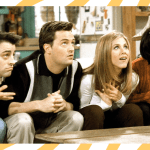
It was an intensely isolating experience, but I soon realised that my predicament wasn’t an uncommon one. In one episode of Friends, for instance, the have-nots (Joey, Rachel, and Phoebe) struggle to keep up with the haves (Monica, Ross, and Chandler)—leading to some awkward moments in the group. A New York Post article also confirms that adult friendships are becoming increasingly expensive, with 22% of Gen Z and millennials feeling anxious when they’re not able to afford a group activity. (Here’s why you should take up space in your friendships anyway.)
Determined to dissolve these patterns, I broached the topic in therapy, where my therapist and I gently uncovered that my relationship with money was symbolic of a deeper emotional scarcity. My lack of fulfillment in my romantic relationships and hobbies, she suggested, had forced me to latch onto the one thing that did feel controllable: money. So, when I overspent, it wasn’t only money I was distraught about losing, but also the sense of control I had relinquished.
A work in progress
Armed with these insights, I resolved to find a middle ground over the next few months. This included budgeting for birthday gifts beforehand so I wasn’t thrown off by the sudden expense, putting a time-limit on waiting at a bus stop to 25 minutes, and ordering appetisers when I went out with my friends, if not a full-course.
I still feel a loss of control every time I need to shell out a bigger amount than I’m strictly comfortable with, but I’m trying to lean into that discomfort and pay attention to what I’m gaining from the expenditure. Namely more ease, more intimacy, more presence. I also look for other ways to create balance, like proactively suggesting lower-cost outings (like walks or free events) to the group. Recently, I ordered an overpriced hashbrown whilst at a cafe with a friend, and when she beamed, “I’m so glad we’re finally eating together!” I was thrilled. It almost eased the sting of paying too much. Almost.