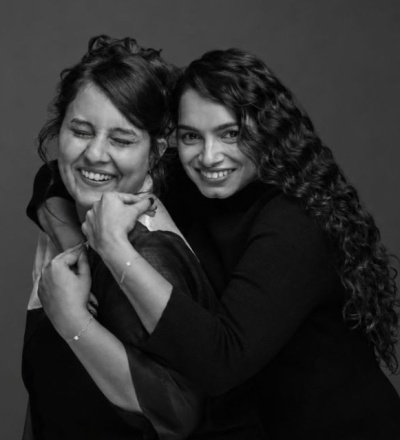



"When you're overweight, you're made to feel unworthy of a bridal lehenga"
Weight gain, acne, mood swings—my PCOS won’t stop for my wedding
Growing up, I was always that girl, the one with lots of acne. At home, we didn’t know about Polycystic Ovary Syndrome (PCOS) or hormonal imbalances. So my parents, with the best intentions, would offer face masks and creams they thought might help. But nothing ever did. I spent years in dermatologists’ clinics too, until one finally suggested I get tested for PCOS. I was 21 at the time, and I wasn’t mentally prepared to test positive for PCOS, but I did.
The symptoms had always been there: irregular periods, persistent acne, and unexplained weight gain. But a decade ago, PCOS wasn’t as widely discussed. The diagnosis came with a flood of medications. Taking a handful of pills every day, especially at a young age, made me feel like something was deeply wrong with me. Like my body had failed me. I gained 20 kilos, and with that, my self-esteem took a nosedive.
The hormonal chaos brought on mood swings, and eventually, I was diagnosed with clinical depression and anxiety, too. I was in my early twenties, trying to find my footing in the world, and suddenly I was dealing with a chronic condition. It was overwhelming. It was lonely.
After two years of depending on prescriptions, I’d had enough. The medications had me gaining more weight and giving me major mood swings. I stopped taking the medication and began making small lifestyle changes to manage PCOS—cutting down sugar, eating mindfully, being physically active, and learning portion control. Working with a compassionate nutritionist helped tremendously. Unlike many people who advised me to give up everything that the Punjabi in me loved most, she gave me alternatives, not ultimatums.


But my battle with acne still continued. I have been a content creator for five years, and once, when I was hosting an event, someone commented on how horrible my skin looked. I went to the car and cried. But it was also the day I resolved to no longer hide; I decided I wouldn’t blur my skin—my truth—with Instagram filters anymore. I began to see that if I was to live with PCOS, I had to start loving my body for everything it blesses me with, like the strength to work and be financially independent, and to enjoy life’s little moments. I have been using my platform to speak about skin positivity, PCOS, and the realities—so many of us often hide—for almost the entirety of my content creation career now. Because I knew how isolating it felt. I believe sharing my journey helps other women with PCOS feel seen, less alone, or more informed.
Today, at 28, five years later, I feel healthier, more confident, and stronger than I’ve ever been. And I’m on the precipice of the next phase of my life: marriage. I got engaged to my best friend, Rahul, in March 2025, and we’re getting married this October.
But as any woman with PCOS will tell you, the condition doesn’t magically take a break because you’re getting married. If anything, it complicates things even more.
Fatigue in a time of celebration
PCOS isn’t just about your painful periods and ovarian cysts. It affects your hormones, your energy levels, your moods. And wedding planning with PCOS? It’s an emotional marathon. The world expects brides to be glowing, excited, and blissfully happy. “It’s the best time of your life,” they say.
But some days, I can’t even get out of bed. It’s not always easy to reconcile those feelings with the joy that’s supposed to surround weddings. I am not just managing timelines and decor but also my energy, my anxiety, and my pain. I’ve had to learn to rest without guilt. To reschedule when I’m hurting. To pause when I’m overwhelmed. And to celebrate the days I show up fully, with joy.
There are days I skip visiting a venue or trying on lehengas. And then there are days when I feel okay again and cram a week’s worth of planning into 24 hours. PCOS brides don’t just learn time management; we master it. On matcha lattes and sheer determination.
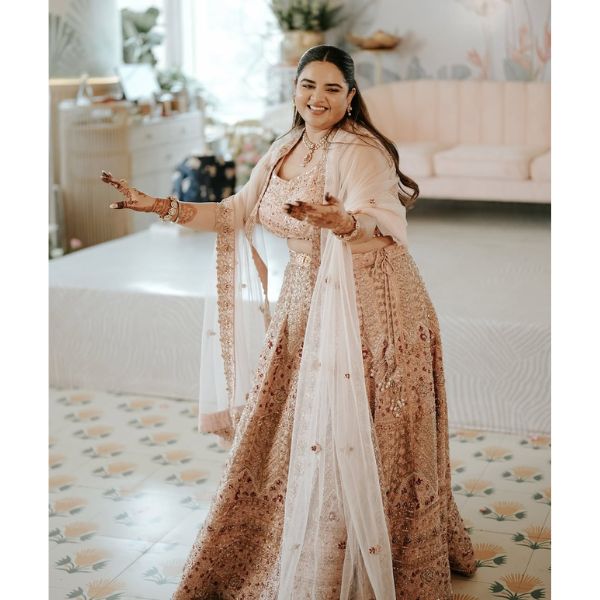
The weight of bias in bridal couture
I’ve worked hard to become a woman who loves her body. But when it came time to shop for my engagement lehenga, the world didn’t seem ready to accept that.
I was so excited—it was the first event, the first outfit, it would be my first big moment as a bride. But the shopping experience all but snuffed out my enthusiasm. Most of the stores I visited didn’t even stock my size. It was like they decided women who fall outside the standard sizing chart don’t get married. Worse still, the way I was treated as if I didn’t belong there. They didn’t seem interested in putting in any effort. Even if they didn’t have lehengas in my size at the store, they could have offered solutions. It was heartbreaking. You could feel the judgment in the air, in their indifference.
When I finally landed on the lehenga I wanted, from a well-known brand, and they confirmed they could make it, I was thrilled. We even planned the event decor around it. But just 25 days before the event, they backed out, saying they couldn’t make it in my size on time. I was stunned. How was my size suddenly a problem?
I shared my experience on Instagram (without naming the brand), and the response was overwhelming. So many women wrote to say they had been through something similar. That’s when I realised: this isn’t just my story. The bridal fashion world claims inclusivity, but rarely practises it. The brand got back to me after seeing the support I received, now offering to make it for me, but I said I didn’t want it from them anymore. The experience was ruined when they made me feel invisible and unworthy.
Thankfully, my friend and well-known makeup artist Kajol R Paswwan, introduced me to designers Jigar and Nikita. In just a week, they created beautiful, custom outfits for me and my fiancé, with zero fuss and all the empathy in the world. That’s how every bride deserves to be treated.
Skin expectations vs. hormonal reality
There’s this unspoken rule: brides must have flawless skin. Dewy, glowing, camera-ready. But if you have PCOS, your skin has its own plans. Breakouts come out of nowhere. Your cycle influences the skin texture. What worked one month might burn your skin the next. While I have embraced my acne scars, I want to avoid acne flare-ups, to the best of my ability. This means no more experiments with new products, I’m sticking to my skincare routine.
The biggest struggle is finding a makeup artists who understands acne-prone skin. Some products can trigger more breakouts. And honestly, I don’t want my wedding look to come at the cost of my skin’s health.
So I did my own makeup for the engagement and I plan to do it for the rest of the events, later this year, too. Not because I’m a perfectionist, but because I trust myself to be gentle. I know my skin better than anyone.
For fellow brides with sensitive or acne-prone skin, here are two rules I live by: stick to what your skin knows. Don’t try anything new too close to the big day; focus on hydration over harsh treatments. And always choose a makeup artist who values hygiene over hype; unclean brushes or expired bottles can wreck your skin after an event.
I’ve also learned to skip over-powdering and instead use a light concealer and hydrating setting sprays. My engagement look was soft and rosy: smoky eyes, lots of blush, a dewy finish. It lasted all day, and more importantly, felt like me.
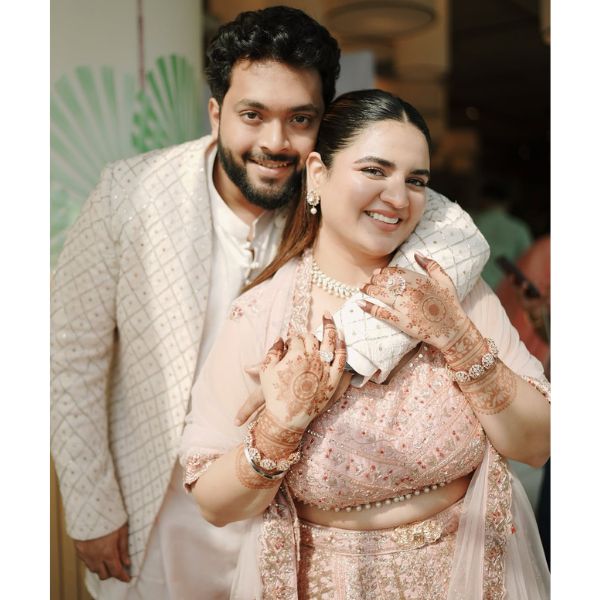
Love that anchors
In the middle of all this chaos, I’m glad I have one constant cheerleader: Rahul, my fiancé. We started as friends in college and transitioned into a relationship during the pandemic. Despite our very different backgrounds (he’s Telugu, I’m Sikh), our core beliefs are the same. For one, we both deeply value our friendship, believing it is essential for any relationship to sustain.
We knew each other better than anyone. He is a very considerate partner—he always understood my perspective, and cared for my needs. His support has been especially meaningful when it comes to the unpredictable nature of PCOS. He shows up in quiet, thoughtful ways, like bringing me breakfast in bed when he knows I’m suffering from PMS. He understands and is patient with my sudden mood swings or need to push wedding preparations, even when I am not able to immediately explain them, because when you have irregular period, it’s hard to identify what your emotions are up to. And even when he doesn’t get it sometimes, I can see he never stops trying.
Every bride deserves to feel seen and loved, just as she is. PCOS is a part of me, but it does not define me. And as I prepare to walk into this new chapter—with hormone imbalances, breakouts, lehengas, and love—I take with me the strength I’ve built over years of learning to care for and accept myself first, before anyone else.
As told to Akanksha Narang
Prableen Kaur Bhomrah is a content creator who starts and steers conversations around PCOS, body positivity, and skin positivity.