

The book that rekindled my love for my hometown
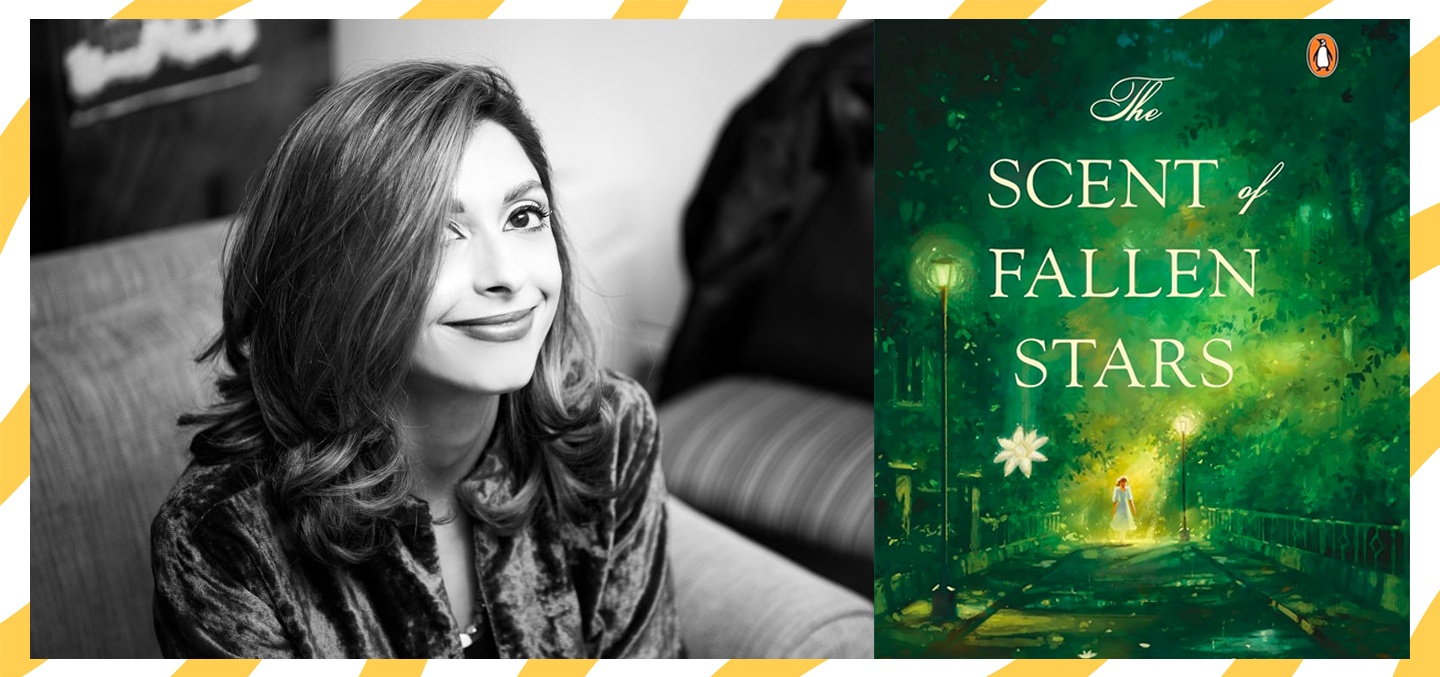
Scent memories and love’s lasting legacy in The Scent of Fallen Stars by Aishwarya Jha
Aishwarya Jha doesn’t just write about Delhi; she makes you feel it. Her debut novel, The Scent of Fallen Stars, turns the city into more than just a backdrop—for me as the reader, Delhi became a living, breathing character in its own right. Perhaps it’s because I grew up in the capital and later moved to Mumbai for work, and I rarely look back. I thought I had left the city behind, but Jha’s portrayal made me revisit the Delhi I knew before pollution, crowds, and a thousand eyes scanning your every movement and body in public became the norm for women—the narrow lanes of Old Delhi, the sprawling bungalows of Lutyens, the constant hustle, and those rare moments of peace. It’s like she’s captured the city’s split personality, both comforting and distant, all at once.
Jha’s own words sum it up perfectly: “Delhi, with its layers of history and modernity, is a city where the past never truly leaves. It’s always there.” And that’s exactly how she weaves nostalgia into her novel—not just as a feeling, but as a shadow character that haunts you in the best way possible.
The Scent of Fallen Stars tells a story that spans continents and decades but stays rooted in the Indian experience. It starts in 1995, a British scholar named Will gets lost in the maze that is Delhi, only to find Leela, a woman who draws him in with her many mysteries. Their relationship is passionate, messy, and, honestly, doomed from the start. Fast forward to 2018, and we meet Aria, their daughter, who comes to India searching for her mother. As she digs through her parents’ past, Aria finds herself forced to face her own identity and the heavy baggage of love and loss she’s inherited.
Will and Leela’s relationship? It’s complicated. Their brief, intense connection leaves a lasting impact on everyone involved. And Aria? She’s trying to make sense of all these relationships, some of which serve as her guiding stars through the darkness left by her mother’s absence.

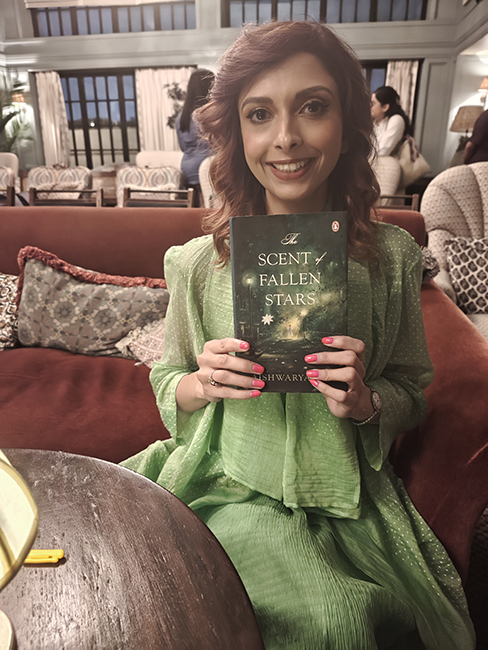
Interestingly, the novel didn’t start as a novel at all. It was a poem inspired by a walk Jha took one evening. Walking through a neighbourhood featured in her book, she kept pausing to smell the maulsari flowers, a flower that plays a significant role in the story. “It seemed to me that the fragrance of the flowers contained within it a whole lost era. A whole story lingered in that scent,” Jha told me. And just like that, she saw the scene unfold before her that would become the heart of her story—two figures, one walking along the avenue, the other watching. The moment Will first sees Leela.
Jha’s journey to this debut novel is as intriguing as the story itself. Aishwarya Jha, a writer, designer, and entrepreneur from New Delhi, is a creative force to be reckoned with. Her writing has appeared in multiple literary journals, including Atticus Review and Boats Against the Current, as well as in Oxford’s ‘A Personal History of Home’ digital anthology. Jha is currently working on her second novel under the aegis of the Asian Women Writers programme, further solidifying her place in the literary world.
But Jha’s creative talents don’t stop at writing. In another life, she won accolades for acting and directing her one-act plays. When not writing or dreaming about lost eras, she can be found helping companies strategise their growth and marketing and designing maximalist spaces.
It’s the same creative thinking and visualisation that makes The Scent of Fallen Stars powerful. The maulsari flower isn’t just a symbol; it’s a link between past, present, and future. The scent ties the story together, just like the enduring bonds between people, reminding us that even the shortest encounters can leave a lasting impact.
Jha’s intimate knowledge of the city comes through in every scene, every description. The Delhi she presents is a place of contrasts—modernity and history, chaos and calm, love and heartbreak. From the bustling lanes of Old Delhi to the quiet avenues lined with colonial-era bungalows, the city is a canvas upon which the characters’ lives unfold.
In the author’s hands, Delhi is a city of memories, and my own have been both good and bad. Yet, through her narrative, Jha brings out a different side of Delhi—a place where love blooms amidst the chaos, where history whispers through every street corner, and where the past is never truly left behind. The novel made me fall in love with the city all over again.
If you’re someone who’s ever loved and lost, who’s felt the weight of history on your shoulders, or who’s been captivated by a city that refuses to let you go, then The Scent of Fallen Stars is for you. For anyone who’s ever called Delhi home and those who haven’t, it’s an invitation to experience the city’s magic, one scent, one street, and one story at a time.
Published by Penguin Random House, you can click here to get a copy of The Scent of Fallen Stars by Aishwarya Jha.