

At 95, Dr Sneh Bhargava talks about being the first female director of AIIMS
In our series Leading Ladies, we profile change-makers whose pursuit of excellence and challenging of conventions has inspired many to speak their minds
Think back to your first day at a new job. Did you feel hopelessly lost and alone? End up with a bout of anxiety-induced diarrhea? Forgot someone’s name three seconds after they introduced themselves? Now, imagine it’s your first day as the director of the All India Institute of Medical Sciences (AIIMS), one of the most prestigious medical institutions in India, and Prime Minister Indira Gandhi is brought to your hospital—blood-soaked and lifeless. It may seem like an awful coincidence, but that’s exactly what happened when Dr Sneh Bhargava, one of India’s most renowned radiologists, became the first female director of AIIMS in 1984.
“It was a frightening day,” she recounts of October 31, 1984, the day Mrs Gandhi was assassinated by two of her bodyguards. “It was around 9:30 in the morning, and one of my radiographers came running to me and cried, ‘The Prime Minister is in the casualty!’” It was there that Bhargava found Mrs Gandhi on a trolley. “I immediately recognised her streak of grey hair, but when I checked her wrist, I couldn’t feel a pulse.” Despite their best efforts to pump her with blood, it was simply far too late—Mrs Gandhi couldn’t be revived.
The ensuing hours were a nightmare. To avoid a power vacuum in Delhi, the hospital had to put off announcing Mrs Gandhi’s death and keep up the pretence of treating her until her son Rajiv Gandhi arrived and could be sworn in as the Prime Minister. When the news finally spread, a throng of people gathered outside the hospital, climbing on car tops and trees, eager to catch a glimpse of the goings on.

But, Bhargava’s sense of unease didn’t end there—even though Mrs Gandhi had already appointed her the director of AIIMS, the institute’s governing body needed to give their stamp of approval too. Already, malicious whispers were making the rounds. Some said that they wouldn’t let a woman become the director of AIIMS if they could help it. Others said that with Mrs Gandhi gone, nobody else would advocate for her. Luckily, once Rajiv Gandhi took the office, he immediately cleared her appointment.
It’s been 41 years since that day, but at the ripe old age of 95, Bhargava’s memories are still vivid and untainted as she speaks animatedly with no signs of fatigue. As we interview her on a phone call, dates and details spring to her mind with ease, as if a montage of her memories were playing out before her. It’s perhaps what compelled her to write her memoir, titled ‘The Woman Who Ran AIIMS (Juggernaut Books) that released this month. Now, the nonagenarian lives in Delhi, on the ground floor of a two-storey house, while her daughter and son-in-law live on the first floor.
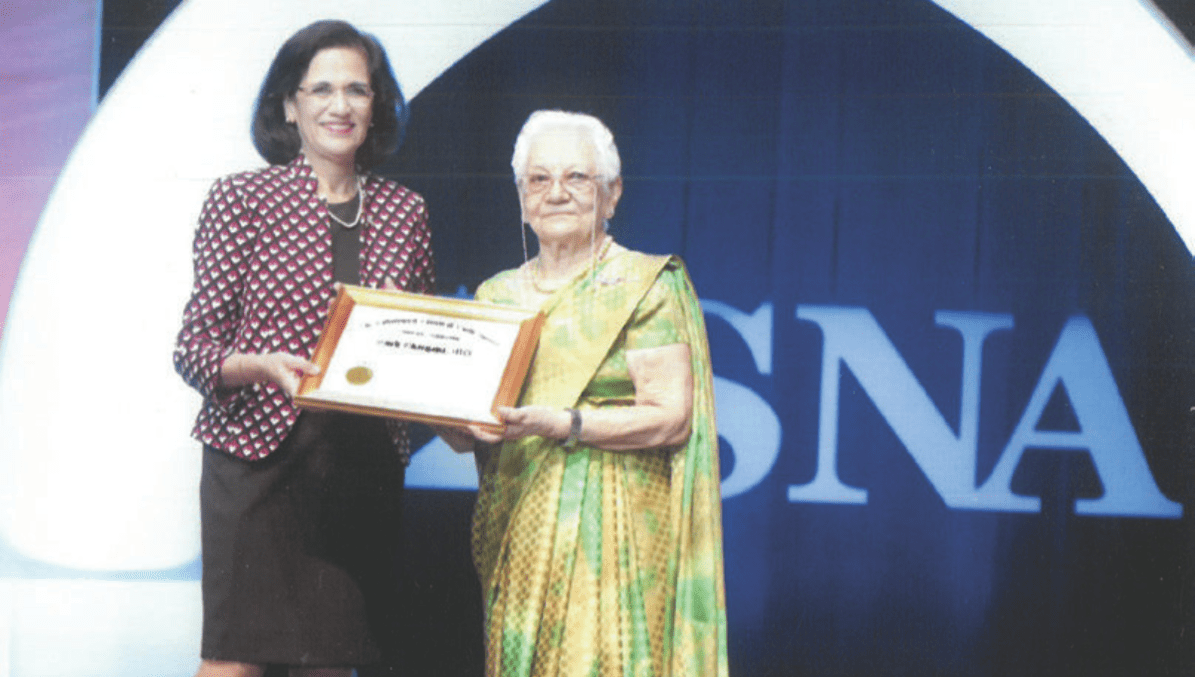
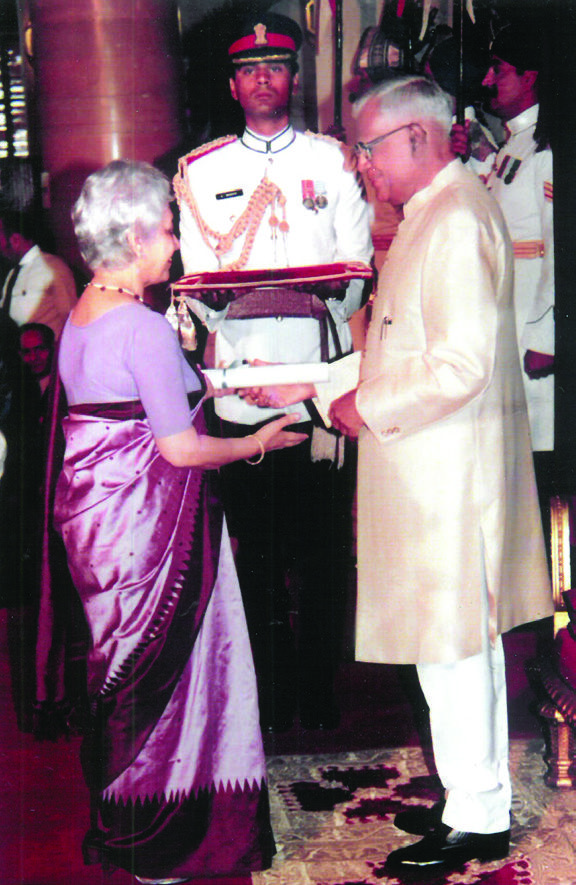
Bhargava’s story is one of triumph, but in many ways, it’s a reminder that women in STEM have always been handed the shorter end of the stick. Have things changed now? Perhaps. Earlier, you’d barely find any women in a medical college. “When I joined college, there were just 50 girls,” shares the Padma Shri awardee. Now, more women than ever before are entering the medical field. “Whenever someone asks me how I managed, I say: you can’t get there easily, but if you work hard, there is always room at the top,” she says.

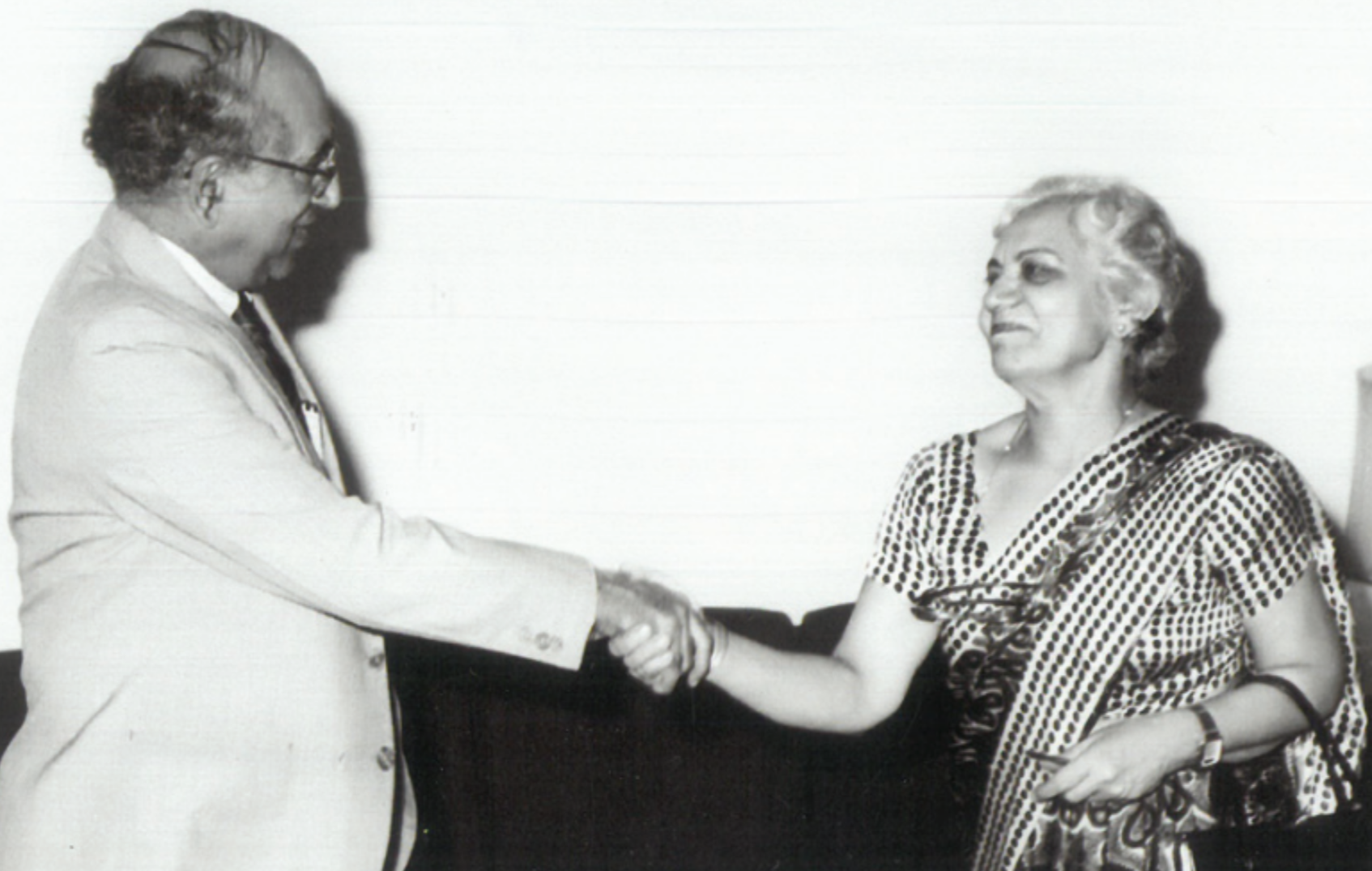
The girl who played ‘doctor’
One thing is crystal clear, though—Bhargava’s decision to become a doctor hadn’t been an impulsive one. In fact, there was nothing she was more certain of. Growing up as the eldest of four sisters and a brother, she had many dolls in her collection; except, instead of playing dress-up, she’d play doctor, carefully removing their ‘tonsils’. In those days, she explains, it was quite common to have your tonsils removed. “I’d probably heard that so-and-so’s tonsils had been removed, so I felt like I had to treat my dolls as well,” she laughs.
Undoubtedly, her parents also played a crucial role in paving the path for her lifelong interest in medicine. During the Partition, Bhargava and her family moved to the Indian side of the border from Jhelum, which is in modern-day Pakistan. Upon reaching Ferozepur in Punjab, her father would take her along with him as he set up a refugee camp for those fleeing Pakistan. “We heard horrifying stories from the refugees who came, about women jumping into wells to avoid being raped. The cries and wails in the camp of survivors would send shivers down my spine,” says Bhargava in her memoir. As a 17-year-old, this experience only strengthened her resolve to enter the medical profession and help those around her.

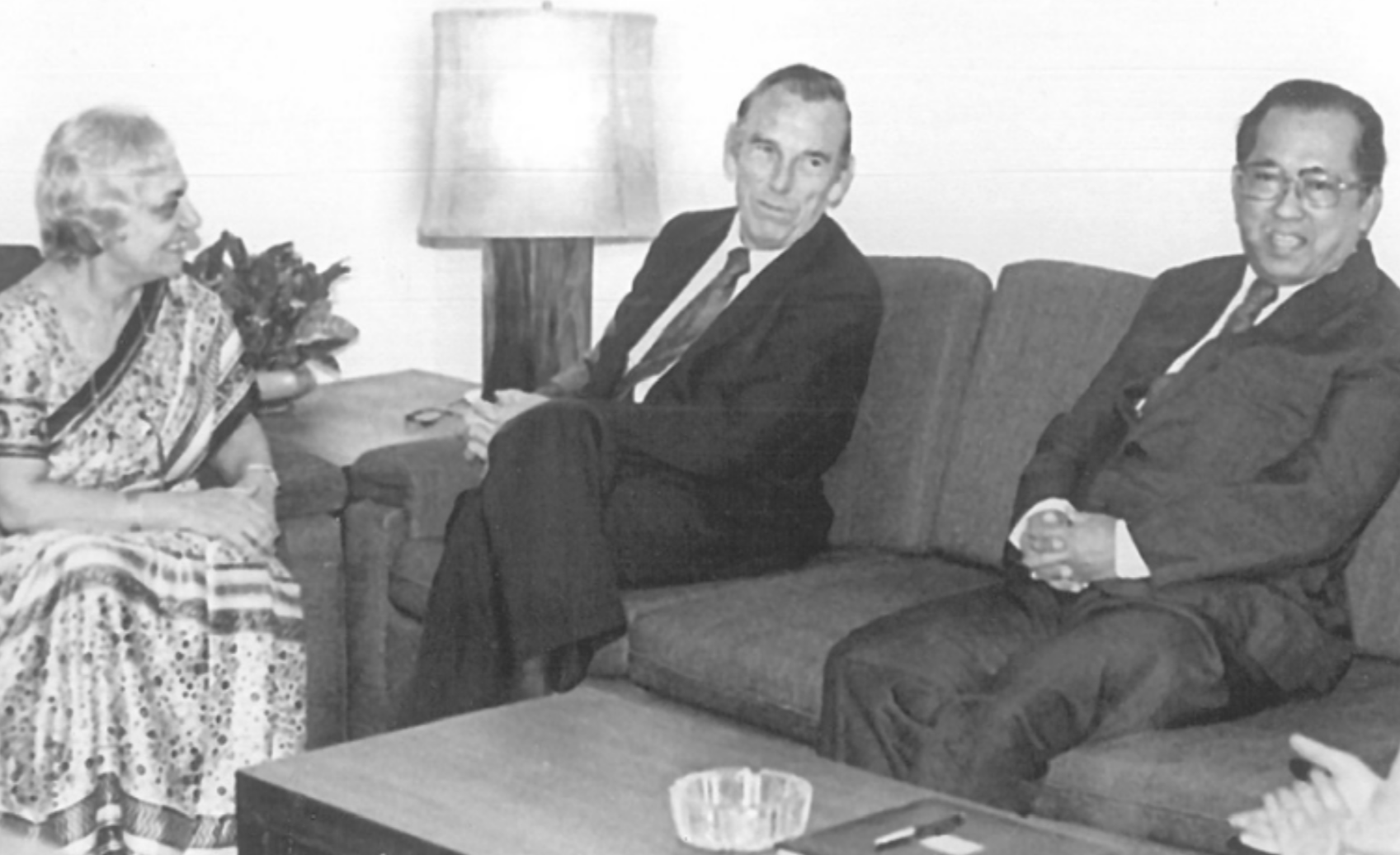
Taking the untrodden path
Today, says Bhargava in her memoir, we don’t bat an eyelid when we’re asked to get an X-ray. But, until its discovery in 1895, doctors had no way of looking inside the human body. In fact, even if someone had swallowed a coin, the only way to find out where it was lodged was to cut them open. So, a non-invasive tool like the X-ray was quite revolutionary at the time.
“Yet, there was no respect for radiology,” Bhargava tells us. “Many people didn’t even know what a radiologist was. Patients would only interact with the clinicians treating them, not the people conducting their X-rays. So, radiologists were just treated as photographers, or worse, back-office workers.” In fact, when the time came to pick a specialisation after her MBBS exam, Bhargava wasn’t too keen on it either—she much preferred pathology, she admits.
But a doctor she looked up to told her about the growing need for doctors with this specialty and a vacant spot in the radiology department. His words sowed a seed of interest and she soon made her choice. Fortunately, it seemed to be the right one. So adept was Bhargava at making a diagnosis, according to her memoir, that her colleagues referred to her as having a ‘third eye’. When questioned, she says, “I used to have a board in the department which read, ‘The eye cannot see what the mind does not know.’ That’s all there is to it. I used to read and stay updated, so my eyes were trained.”

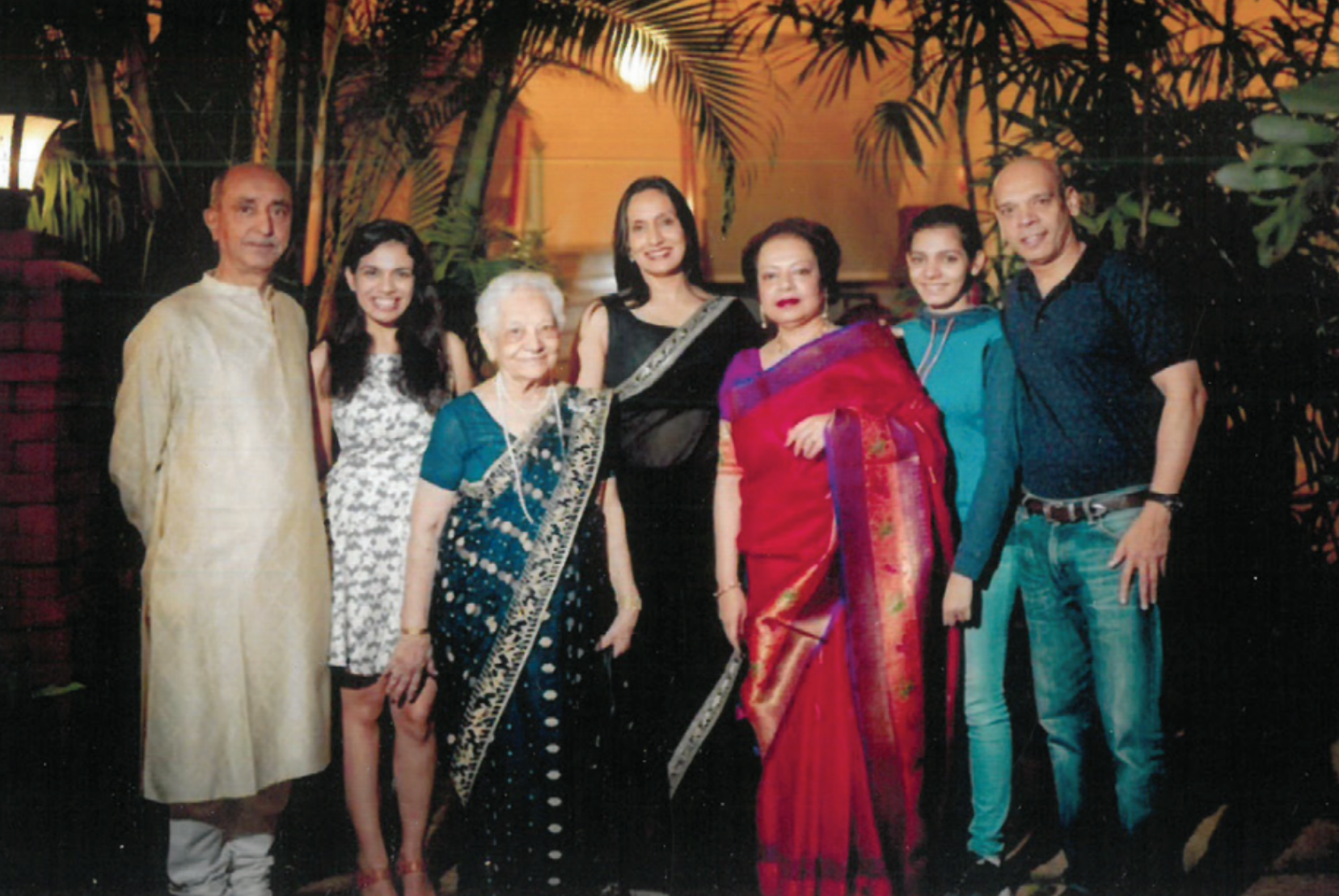
Juggling motherhood and her career
When she wasn’t donning her scrubs, Bhargava was a mother: tucking her children in bed at night and scrutinising their homework. At 35, she had a daughter, Anjulika, and about three years later, a son, Sandeep. “At times, nothing was as important as wearing a mother’s cap, and at others, work took precedence owing to the oath I had taken,” she reflects in her memoir. Juggling the two wasn’t easy, of course, (sometimes, motherhood changes you completely) and she admits to missing her fair share of PTA meetings. “I always tried to compensate for it, though. At times, I’d call up my children’s teachers and ask to speak to them separately,” she says.
Did her children understand why their mother couldn’t be present sometimes? Well, for the most part. Recalling a humorous anecdote from when her daughter was seven years old, Bhargava shares, “One day, my daughter Anju was supposed to visit one of our relatives, so my husband told her, ‘I’ll pick you up from mummy’s hospital. She’s very busy right now.’ Later, when my husband picked her up, she said, ‘Papa, you said mummy was busy, but she’s not. She only gives orders!’”
Dr Sneh Bhargava’s memoir ‘The Woman Who Ran AIIMS’ is available here