

This reigning world champion boxer is not a fighter
Jaismine Lamboria, 24, didn’t need aggression to punch her way to the top
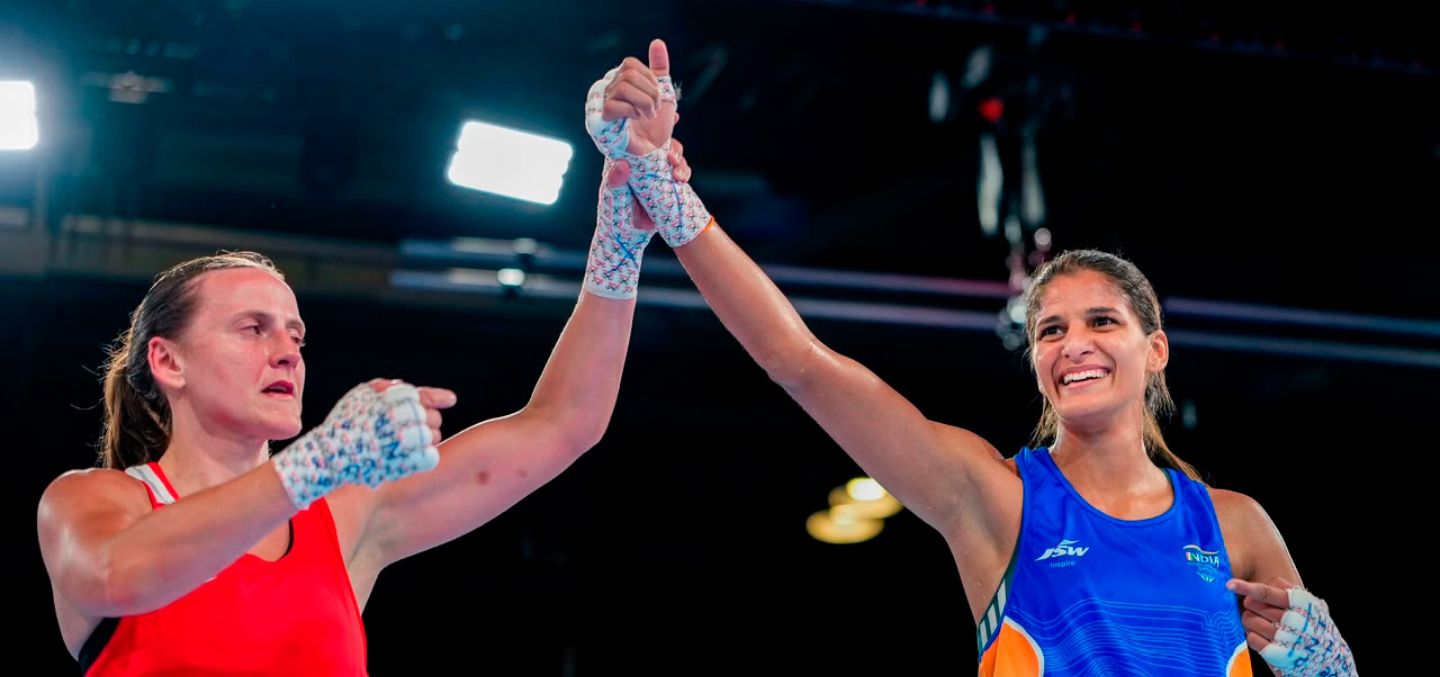
When I imagined a champion female boxer who is also an Indian army officer, I imagined someone stoic, who maybe gives one word answers and doesn’t crack a smile. But watching Jaismine Lamboria play the 2026 Commonwealth finals in Glasgow against Northern Ireland’s Michaela Walsh changed that. While Walsh appeared to have her jaw set in game mode, Lamboria was grinning right up to the minute the match began. It ended with her cinching her first Commonwealth gold.
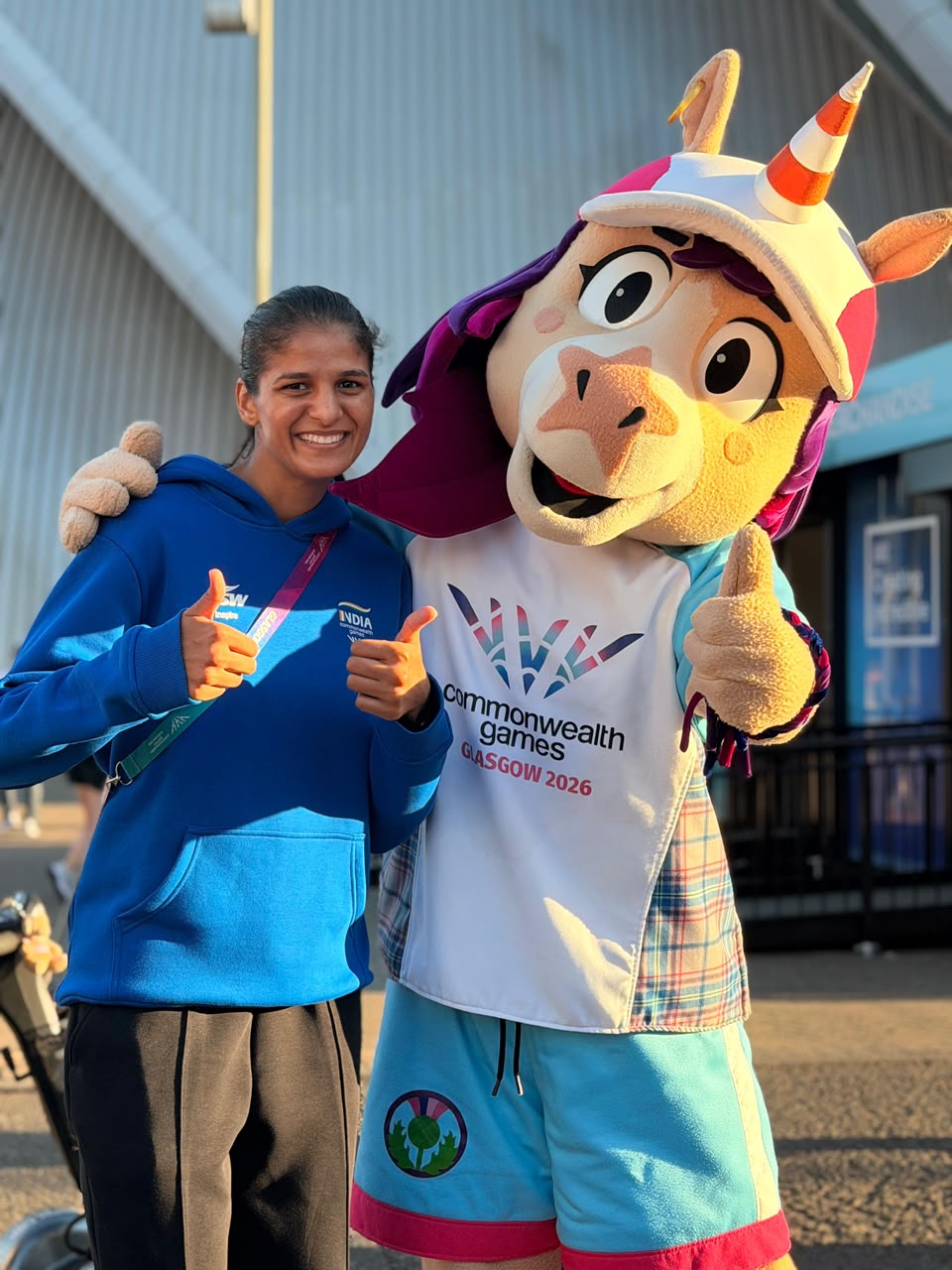
To be fair, 24-year-old Lamboria has a lot to smile about. Hailing from Haryana’s Bhiwani district (also called ‘mini Cuba’ for giving India some of our best boxers, including Lamboria’s idol Vijendra Singh), she began training at 15, inspired by her uncles, the international boxers Sandeep and Parvinder Singh. Just 10 years later, she’s the reigning world champion in the women’s 57kg featherweight rankings, after winning gold at the 2025 World Boxing Championships (Liverpool). She became the first female boxer to join the Indian army, in 2022, right after she won bronze at her first Commonwealth Games. She’s also the first woman in her family to enter the ring.


Image credits: Commonwealth Games, Glasgow 2026
However, when we met over a video call after weeks of co-ordination—she’s been deep in training for the upcoming World Cup Finals that will be held in Tashkent, Uzbekistan in November—I realised she’s just an easygoing person. I was greeted with a shyness that lasted exactly two minutes before she told me about her beginnings in boxing, carrying on her family’s legacy, meeting her idols and how she sometimes has to feign aggression to look the part.
Boxing champion Jaismine Lamboria’s winning mantra is keep calm and carry on punching
Tweak: At the Commonwealth finals, you were seen smiling right until the minute the match begins. How do you tap into the aggression you need the very next minute?
Jaismine Lamboria: To be very honest, I don’t know. I’ve never been naturally aggressive and what you see on my face [when the match starts] is not even aggression. I’m just focused on the right techniques. My coaches have to constantly ask me to be a bit more aggressive. I’ve just started working on this and even then it only comes because I want to improve myself.
T: You grew up watching your uncles’ boxing matches on TV with your family. Does your family follow the same tradition for your games now?
JL: Yes, absolutely. Whenever there’s a match that’s going to be televised, I already know all my immediate family, plus grandparents, cousins, uncles and aunts are going to be watching it—either together or if they’re travelling, then on their phones. I once video-called my parents after a match and I could see everyone had come over to watch my match together.
T: You used to play other sports in school and started boxing only as a teenager—what made you pick boxing?
JL: I didn’t play anything seriously, mainly just gully cricket with my friends. I always wanted to box, my uncles are both international level players and I wanted to be just like them. I actually told my mother about my interest in boxing when I was in the eighth standard. She said she would speak to my uncles but she probably thought it was just a one-off thing, so she didn’t tell them. But I kept asking her until she finally spoke to them a year later. My uncles and parents were supportive from the get-go, and my grandfather came around to it as well. So I officially began boxing training in the 10th standard.

T: Tell me about a punch you won’t forget.
JL: There are two actually, both from the same guy, from when I started out training with boys at my uncle’s academy in Budhwal. This boy was really good with left punches. So good I don’t remember the punches, because I had been completely knocked out. I have vague memories of my uncle helping me get home.
T: You’ve won so many matches in the last few years, are you a better boxer than your uncles now?
JL: [Laughs] No, I don’t think that’s possible. I think they will always be better than me at boxing.
T: You got a chance to train with [Olympic boxer] Mary Kom at the very start of your journey. What was that experience like?
JL: Mary Komji has been my idol since I started training—she and Vijendra Singh. I was still a new, entry-level boxer at the national academy [Netaji Subhas National Institute of Sports, Patiala], when I had that training session with her. I greeted her and didn’t even think she would speak to me, but she asked me how I was finding everything. And when we were training, she would come up to us and give us one-on-one suggestions like “Move this way,” or “You can hit better this way”. It was hard to keep a straight face through the session because I was so giddy on the inside.
T: What do you like to do in your free time, when you’re not training or working?
JL: I love to sleep, like a lot. And I like listening to music. Any genre, Hindi, Bollywood, Western pop and even Haryanvi. I will dance on my own in my room.

T: There are prejudices an aspiring female boxer might still face, like the idea that women are unsuitable for combat sports. What advice would you give to someone like that?
JL: I think for me, I was lucky to have a supportive family who didn’t think that I couldn’t play this sport. But if some people think women can’t be aggressive, well, we shouldn’t internalise it. We shouldn’t underestimate ourselves. I mean, I’m still learning how to be more aggressive but we shouldn’t ruin our game just because others don’t think we can do it.
Note: The interview was conducted in Hindi and has been translated to English.