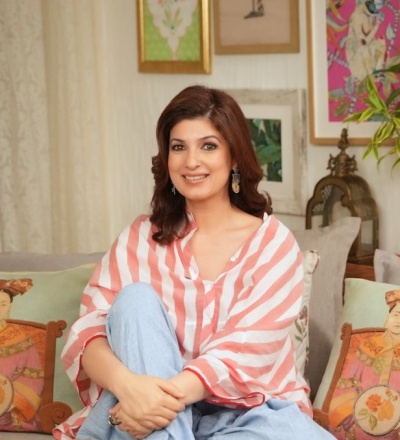



Deepa Chauhan wants you to put dhania in your dessert
Anyone for Sindhi Khoya?
Thai curry paste and Sindhi cuisine aren’t likely to appear in the same sentence, unless they describe Deepa Chauhan’s origin story. With extra veggies delivered by an overzealous sabziwallah, Chauhan’s happy accident set her on a culinary journey that would eventually crown her the champion of Sindhi cuisine. She turned the abundance of veggies into about six kilograms of Thai curry paste, which she shared with her friends and family, including one who runs a home-based catering business. “I asked her to sell it off as a Saturday special,” Chauhan recalls, “and she said, wait, let me try cooking with it.” This experiment landed Chauhan’s creation on the menu. With a little push from a neighbour in the catering business, she began experimenting with various Thai curry pastes, spice mixes and more. “I ended up having 21 products! After that, I launched my brand Mortars And Pestles in 2018, but within two years, COVID-19 and the lockdown hit.”
Like many of us, Chauhan spent more time online during the lockdown. An Instagram live session, where she showcased a spice recipe, caught people’s attention. The spice mix (we’re adding it to our homemade recipe list) in question was Buknu, a speciality native to eastern Uttar Pradesh, a recipe Chauhan got from her husband’s grandmother.
Buknu’s precise ingredients were shrouded in secrecy. “People weren’t willing to share it publicly. It was one of those ‘if you know, you know’ situations,” Chauhan explains. She obtained the family recipe on one condition: “You have to share it with people.” The recipe yields about a kilogram of Buknu, ensuring there was plenty to share.
Chauhan’s online community grew, as did her business, garnering love and appreciation from fellow food content creators. “Towards the end of the pandemic, I got a call from MasterChef. At that point, I resolved to come on the show only if I could showcase my cuisine. Like many other regional gems, Sindhi cuisine is unsung. People who eat it in our homes are floored by it. However, outside of the lower-priced outlets in the community clusters, one rarely finds Sindhi food on a restaurant or hotel menu. So, I said I will come on MasterChef only if I am allowed to advocate for my cuisine.”
Kadhi chawal with tuk, a traditional Sindhi dish consisting of double-fried, smashed potatoes seasoned with spices, was her audition-passing dish. Soon, Chauhan became a household name. “I got to talk about Sindhi food and customs, layering stories, anecdotes and childhood games into the dishes. I had a great time,” she recalls with glee.


After her journey on MasterChef Season 7 (2023) ended, Chauhan decided to take a break. But being hailed as the ‘custodian of Sindhi cuisine’, she knew she couldn’t drop the ball. After all, as Shakespeare said, uneasy lies the head that wears a crown.
“I had to keep my promise to the judges. I took the food to the best hotels in the country.” She followed through, with several pop-ups, food festivals and now her own TV show called Sindh Ji Rasoi on the FoodXP channel.
Chauhan’s love for the food is evident from the way she talks about its enduring legacy, best described in one word – adaptability. “We don’t have a geography to go back to or get produce from. So, we’ve taken our khatta teekha (sour and spicy) flavour profile to the world.”
“I’ve heard stories about how in Bengaluru, when palak (spinach) was not available, Sindhi ladies would use an equivalent called Chakut to make sai bhaji. What we kept intact were our methods, our papad, our vadi (fried dumplings) and our masala dabba (spice box). We worked with whatever was available around us. Though quite basic, Sindhi cuisine is unique, consisting of a few things you’ll probably only find in a Sindhi kitchen, like kokum ka phool (dried petals or skins of the kokum fruit) and the Sindhi papad.” Sindhi cuisine is perhaps one of the few where you’d find a dessert made using dhania (coriander) powder.
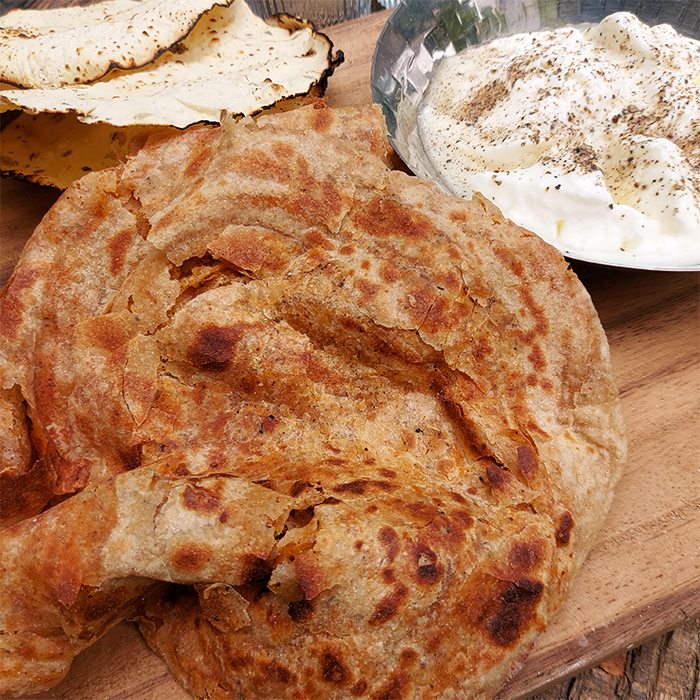
While Deepa plans on pursuing a Master’s in food anthropology some day, you don’t need a degree to try your hand at Sindhi cuisine. Chehra fulka is the perfect introductory dish, she says, for anyone interested in dipping their toe into this flavourful world. A ‘spicy paratha’, to put it crudely, it can be accompanied with any home staple or paired with other Sindhi delights like kadhi, sai bhaji, or aloo tuk.
She shared the beginner-friendly recipe of her go-to Sindhi comfort food with us.
Sindhi loon mirch jo fulko or chehra fulka by Deepa Chauhan


Ingredients (makes 2-3 fulkas)
- 1 cup whole wheat flour (little extra for dusting)
- 1 tsp coarsely ground black pepper or red chilli powder
- 1 tbsp oil (approx.)
- Salt (as per taste)
Method
- Make a soft dough with the whole wheat flour and allow it to rest for 10 minutes.
- Roll it into a thin, large roti and brush with oil.
- Sprinkle generously with a mix of salt and pepper or red chilli powder.
- Make a cut from the centre of the roti to the end and roll it into a coil. Flatten the coil and roll it again to make a paratha.
- Cook on a hot tawa, flipping often.
- Finally, brush with oil to get a crispy, flakey fulka.
- Crush the fulka by hand from the edge towards the centre to prevent it from getting soggy. Enjoy it with dahi, chai, or by itself. Stays well for a few days when travelling.
- Variation: To personalise your loon mirch jo fulko, use finely chopped green chillies or any spice mix of your choice.