

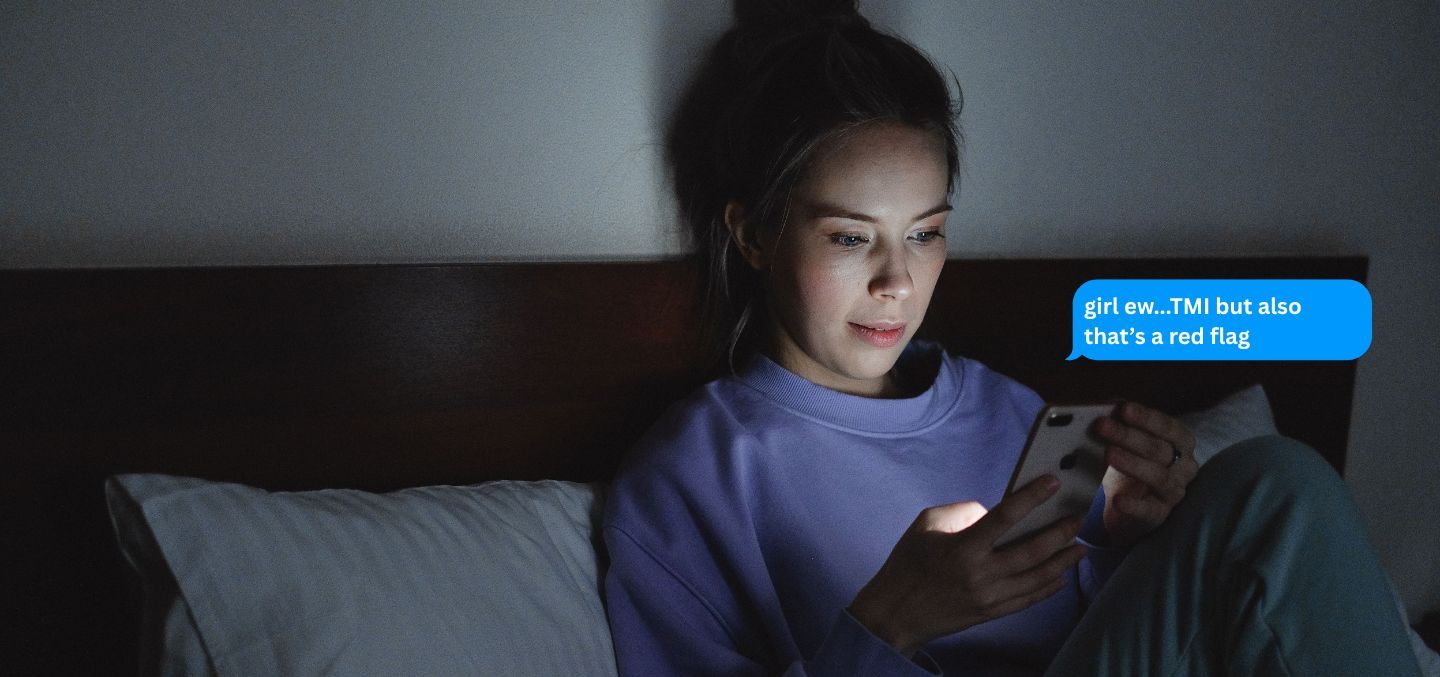
Is Gen Z actually having sex or just talking about it?
6 women in their twenties tell us about the state of their sex lives
Up until the late 90s, Bollywood films had two main ways of alluding to sex—flowers dancing with each other on screen or an umbrella obscuring the lovers. This changed drastically in the 2000s, when sex seemingly exploded on the screen, and off it too. Emraan Hashmi was serially kissing across our screens, and item numbers were quickly becoming a staple for Bollywood films. As always, there was ensuing moral panic too. Gen Z and millennials, who were still minors and teenagers during this era, knew the drill: change the TV channel if you see a woman dressed in a bikini.

Then came high-speed, low-cost internet with our smartphones in the 2010s. Now everyone, including teenagers, had access to what was choli ke peechhe, all from the safe distance of a screen. Not only were we watching Hollywood movies and TV shows that portrayed sex and sexual conversations unflinchingly, we could easily watch pornography too when mummy-papa were asleep.
By the end of the decade, the internet had become the go-to stop for both pleasure as well as sex education. We could access platforms like Refinery29, Popsugar, Buzzfeed, and closer home, Agents of Ishq, who brought sex-positive conversations onto our radar. By the time social media blew up and tweet-journalism took off, we didn’t even have to go looking anymore. Our feeds had become our ready sexpert.
It definitely looked like Gen Z—particularly in a country like ours—had all the tools to become the generation that shed the coyness and stigma around pleasure, and embraced our sexual selves. But is that what happened? The data says no. In a study done by an American conservative think-tank Institute of Family Studies, the new adults of the world are having less sex than their parents and grandparents.
The unsexy reality is we can barely afford to meet our friends more than once or twice a month, let alone have active love and sex lives. And though public discourse around sex has never been this open and widespread—we now understand sex in terms of politics, culture, identity and art—perhaps we learnt so much about sex, it ended up putting us off it.
We decided to conduct our own investigation on this alleged lack of sex in the city among Gen Z. We asked six women in their 20s about how much sex they’re having, what shapes their sexual experience and where they think desire has disappeared to.
6 Gen Z women share the state of their sex lives
The ROI on sex isn’t great
“Most of the creative jobs [in Mumbai] are based in hubs like Khar, Bandra and CST, which take a lot of time to commute to. I live in Thane and my office is in Fort, so I spend 16 hours of my week travelling to work and back. I can’t be bothered with sexy-times, I literally want to just sleep on the weekends. My partner and I also live with our parents. This leaves us with options like booking Airbnbs or hotel rooms, and they’re pretty heavy investments that can put you back on your personal budget.
You end up using sex toys or reading smut online as an easy, efficient way to pleasure yourself, but you can end up relying on that instead of the actual thing. I’m sure this is a thing with other women with access to toys. Though liberating in theory, they have made it really easy to opt out of the analogue way. You get what you want in a fraction of the time. We’re losing the art of foreplay.”
— Disha Menon*, 25, copywriter, Thane
Ick is a constant mood
“I went through my casual-sex era in college, but I’m now looking for a real connection. I’ve gone on dates but nothing has ever resulted in a proper relationship. It mostly feels like a waste of my time. The problem is now I have so many criterias for what I would like in a partner, for both companionship and pleasure. For example, he has to be ambitious so I know he’ll also be able to grow with me. I feel insecurities, especially about who feels more in control of the relationship, end up reflecting in the bedroom. And I don’t want to be with someone who always feels the need to assert himself.”
– Gayatri Sharma*, 25, interior designer, New Delhi
TMI alert
“I don’t think we’re necessarily having less sex. We’re just more aware of what sex involves emotionally, physically, and mentally, and we’re making more intentional choices rather than doing things because they’re expected. And I think the way we talk about sex has changed. Conversations have become more private and selective, especially as people become more aware of boundaries and consent. In friend groups, I notice people are less likely to discuss intimate details with everyone and more likely to reserve them for people they deeply trust.”
– Tripti Patel*, 23, doctor, Gandhinagar
Trust your own experience
“I used to identify as bisexual when I first started having sex and exploring my sexuality. However, most people would tell me that my experiences with women didn’t count because penetration is what makes it real sex. I spent so much time being confused.
I’ve come a long way since then, because I realised that everything I had learnt about pleasure was validated by my experiences with women. The epiphany led me to the conclusion that I’m most definitely a lesbian.”
–Krishna Deshmukh*, 21, university student, Mumbai
Mental wellness > sex drive
“I was 16 when I started taking medicines to treat my depression, which was also when I was learning about sex online. While it felt good to be finally treated for my mental health, the SSRIs also took my new-found sexual curiosity with them. The timing couldn’t have been worse, but that side of my brain just switched off.
After I got off the medication at 21, the switch flipped instantly, I went through a phase of hook-ups. Eventually, I grew out of that phase as well, and prioritised looking for someone long-term. I got together with my current partner last year.”
– Ami Joshi*, 24, events planner, Mumbai
Sex comes with too much drama
“I’m terrified of using dating apps to find someone to have sex with. Apart from the stigma that accompanies pre-marital sex in India, I’ve heard enough people talk about bad experiences to even entertain the possibility. Exploring my sexuality through democratised fandom spaces like AO3 [Archive Of Our Own, a non-profit platform where you can post and read fan-fiction and original stories, including smut], feels much more safe.”
– Rashmi Chawla*, 24, media writer, Thane
Names changed upon request to maintain anonymity