

Dear Manjulika, can you please leave me alone?
The horrors persist, but so do I
It began in 2007. I was tucked into bed at night, after what seemed like my 20th attempt to sleep alone. The haunting melody of ‘Ami je tomar, shudhu je tomar…’ echoed in my ears, accompanied by the faint sound of ghunghroos. The image of Manjulika—dishevelled hair, smudged bindi and kajal, head tilted sideways, staring at me with those crazed eyes—kept flashing in my mind. I was only nine then, and this horrifying image had lodged itself in my brain ever since I watched Bhool Bhulaiyaa (2007) at a friend’s birthday party. Little did I know that this film, which piqued my curiosity as a child, would grow into a lifelong trauma.

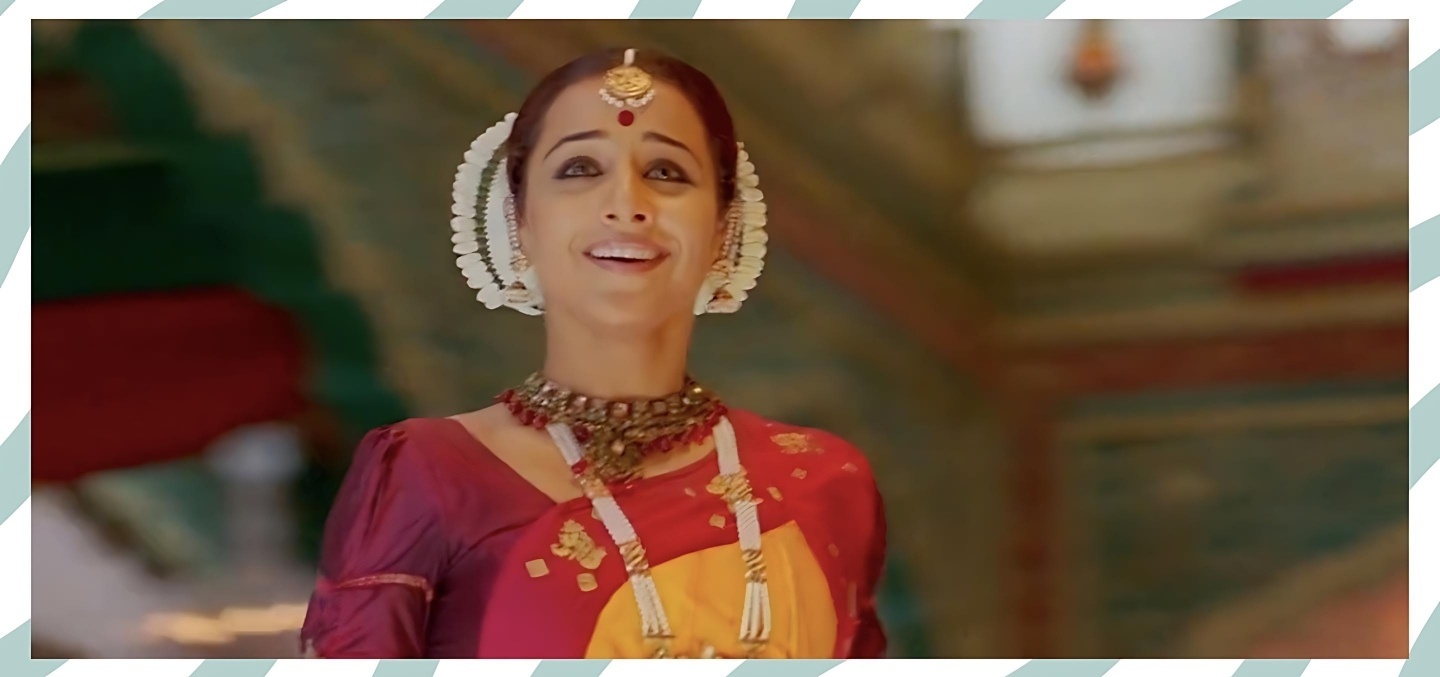
For the unversed, Bhool Bhulaiyaa is a psychological thriller about a couple, Siddharth and Avni, who move into Siddharth’s ancestral palace in Varanasi, which is rumoured to be haunted by the vengeful spirit of a dancer named Manjulika. As eerie incidents unfold, the family becomes convinced of the haunting—until they discover that Avni suffers from dissociative identity disorder and has unknowingly embodied Manjulika’s persona (a role expertly played by Vidya Balan), causing the ‘supernatural’ disturbances.
Now, at 26, I found myself battling the same insomnia and nightmares again. Thanks to the release of Bhool Bhulaiyaa 3, Balan’s new rendition of ‘Ami je tomar’ has triggered a whiplash effect, pulling me right back to the spooky original. It still scares me to the point that, as a grown woman, I actively avoid anything related to the film, even the faintest audio cue triggers my memories of Manjulika to leap out of the Gangajal-doused box where I’ve tucked her away in a corner of my brain.
I’ve gone down multiple rabbit holes trying to read up about this fictional character’s mental illness to rationalise my fears. Despite my best efforts to banish the supernatural with science and logic, that vision of Balan dancing as Manjulika—dressed in a yellow-and-red silk saree, eyes boring into my soul—has lost none of its power. My childlike fear morphed into a full-blown irrational terror. It’s not like a hallucination or a dream. My brain projects her into my room, even as my eyes confirm it’s empty. No rationale or Hanuman Chalisa has been able to ease my mind.

She followed me into therapy, too. Instead of discussing childhood attachment styles and breakup trauma, I found myself discussing a Bollywood ghost. My therapist was empathetic, but I suspect she was holding back the urge to laugh out loud. She gently explained that my hyperactive imagination, combined with me being a visual thinker, was likely causing this. When I see something vivid and intense, it lingers in my mind for a long time. My brain then links these images with certain emotions, replaying a slideshow of past horrors whenever similar feelings arise. Over the years, my fear of Manjulika had become a stand-in for my fear of the unknown.
She suggested a ritual to help me confront the visual: “Write a letter to Manjulika, saying everything you want, and then burn it.” I was desperate to try anything that would rid me of this haunting, so I sat down with pen and paper and wrote: “Dear Manjulika, I’m sorry for what happened to you. I fully support your revenge plans, and I understand your heartbreak and longing, but you’re really scary. Please leave me alone?”
I poured my heart out about the emotional distress her presence was causing me, burned the letter over my sink, and watched the ash fall, hoping this symbolic release would finally help me let go.
I was dead wrong. There she was again, a few months later, piggybacking on my insomnia and approaching me menacingly. At the time, I was emotionally stressed in my waking life, feeling suffocated between my then-boyfriend’s expectations and my parents’ disapproval of him. When I brought this up with my therapist again, she deduced that Manjulika was an ally, my mind’s twisted wake-up call to make me confront issues I was avoiding in my daily life. In this case, her encroachment of my personal space was practically forcing me to confront the suffocation I felt in my relationship.

It felt like a breakthrough. Was Manjulika really my personal fear counsellor, popping up to say, “Face this, or else?” My conscious brain would have never agreed to this; I cursed my mind. Why did it have to pick something so visually terrifying? Like Ron Weasley says in Harry Potter and the Chamber of Secrets, “Why spiders? Why couldn’t it be follow the butterflies?” Why couldn’t it have been Colin Bridgerton, coaxing me to face my fears with his deep green eyes and enchanting smile?
That’s the thing with irrational fears—they’re not just shadows to be shooed away. They’re like unannounced relatives who drop in with their unsolicited advice, which annoyingly holds some kernel of wisdom. I had to face the truth: I was in an accidental mentorship with Manjulika. Her ways were unorthodox, sure, but I had to appreciate her persistence in keeping me from ignoring hard truths. With the help of my therapist, I realised that I often take the scenic route while dealing with emotional stressors, preferring to simmer in drama and uncertainty rather than resolve the issue. But Manjulika’s scare tactics ensured I snapped out of it sooner and relieved myself of the emotional baggage.

So if your personal demon is that bully who pushed you on the playground, or the evil witch from Makdee, maybe look deeper into what they represent? Sure, irrational fears take on scary forms, and it’s overwhelming to experience them, but sometimes they’re only trying to bring attention to deeper issues that need addressing. Like twisted allies and guardians of things-we’d-rather-not-face. Over time, I began to notice that Manjulika made an appearance at pivotal moments: when a colleague’s rude behaviour was bothering me or I was floundering over the next step in my career.
And while I do appreciate Manjulika’s dedication to being my personal accountability buddy, the truth is, I’d rather not have her visit. So, while I figure out how to unsubscribe from this non-consensual mentorship, I just have to make peace with the fact that maybe she’s just a woman supporting another woman in becoming the best possible version of herself.