


5 skincare lessons I learnt when I graduated from "just face wash"
Turns out a good skincare routine is not overrated
I used to think skincare was unnecessary. In my early teens, my routine was using whatever soap or body wash I found in the bathroom and the brightly-coloured family face wash. I didn’t understand why anyone needed more than that and definitely didn’t believe in investing in skincare, which was a concept taking root at the time. My skin looked great, no blemishes, nothing. My logic was simple: if there’s no problem, why attempt to fix it? So moisturiser was optional, sunscreen was reserved for beach days, and anything that had a dropper felt like too much.
But then I entered my 20s, and my confidence in my good skin couldn’t cancel out the effects of dehydration, pollution and stress. Breakouts started lasting longer, dark circles found a permanent home under my eyes, and the dullness became harder to ignore. I had to start paying attention. I began with a CTM routine, which now, three years later, has expanded to applying sunscreen daily, occasional masking and implementing conscious lifestyle changes.
Along the way, I realised that real skincare isn’t just about a 10-step routine, but about being attentive and accountable to myself in a small, everyday way. At 23, taking care of my skin has become a subtle marker of adulthood. It has taught me patience, consistency and the need to unlearn unhealthy practices passed off as low-maintenance routines.
What I discovered when I started caring for my skin


Always lead with your skin type
While I had observed early on that I had dry skin, I didn’t think it mattered. As a model younger sibling, my skincare was largely borrowed from my sister, who has oily skin. Those products worked for her as they were meant to, but they made things worse for me. For example, the Glenmark Episoft OC Cleansing Gel, which has properties to control sebum production and was effective for my sister, ended up making my skin feel dry and flaky. It was during a conversation with a friend, who also has dry skin, that I realised I was using the wrong products, and I’d have to switch to the ones suitable for my skin type.
Dr. Smriti Naswa Singh, dermatology consultant at Fortis Hospital, Mulund, explains, “Using products not suited to your skin type can trigger reactions. For instance, ingredients like AHAs, BHAs, niacinamide, or salicylic acid work well for oily skin but can cause dryness, irritation, or allergies in dry or sensitive skin. Similarly, rich cleansers or moisturisers meant for dry skin may clog pores and worsen acne in oily skin.”
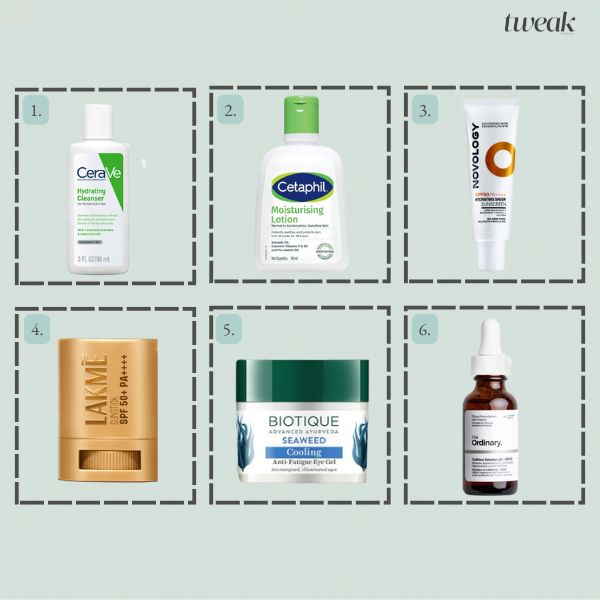
After going down a skincare rabbit hole on Reddit, I found out that ingredients like hyaluronic acid, ceramides and shea butter have hydrating and moisturising effects, and would be effective on my skin. Last year, I switched to the CeraVe Hydrating Cleanser and Cetaphil Moisturing Lotion, both of which have since helped my skin feel soft, nourished and glowy.
Neglecting sunscreen is not an option
When I started taking an interest, I noticed that the golden rule that all skincare pros swore by was applying sunscreen every day. Until then, I only applied sunscreen when I was spending time outdoors. Partly because I equated its use with literal heat and sunniness, and partly because every time I applied it, it left an unsightly white cast and made my skin feel dry.
“Sunscreens containing physical filters like zinc oxide or titanium dioxide can sometimes cause dryness or leave a white residue,” Dr. Naswa Singh confirms.
To avoid it, Dr. Sumiti Pareek, dermatologist at Shantam Skin, Hair and Laser Clinic, Jaipur, recommends opting for chemical sunscreens. They have compounds that penetrate into the skin instead of sitting on top and leaving a residue.
I chose the Dot&Key Vitamin C + E Sunscreen, which felt lightweight and hydrating for everyday use. But on very harsh summer days when I needed to be outdoors longer, I realised I needed greater protection to prevent tanning. To further experiment, I tried (and now currently use) the Novology Hydrating Sheer Sunscreen, a hybrid cream-gel formulation that seems to do the job and doesn’t make my skin feel dry. And on days I want a bit of natural coverage too, I go for the Novology Tinted Sunscreen.
Most importantly, I now make it a point to apply sunscreen regularly, because as Dr. Pareek puts it, “Giving up on sunscreen altogether means making peace with future possibilities of pigmentation, premature skin aging, and a host of other sun-induced skin conditions.”
Under-eyes need princess treatment
“The skin under the eyes is nearly seven times thinner than the rest of your facial skin, making it much more delicate and also more absorbent,” Dr. Naswa Singh shares.
If only I had known this. Maybe then I wouldn’t have taken for granted that my dark circles and eye bags—by-products of binge-watching, overworking and crying over overworking—would magically disappear without me changing anything about my routine. In fact, they became so pronounced that my friend noticed them on a video call and immediately recommended that I use an under-eye gel. After glancing in the camera myself, and seeing that I looked like I had applied Halloween make-up, I agreed.
“Applying an under-eye gel, serum or cream at night can help in resetting the oxidative stress the skin is exposed to during the day,” Dr. Pareek suggests, adding, “Using sunglasses when out in the sun could enhance this protection.”
I began with the easier changes first. I started using the Biotique Bio Sea Weed Cooling Eye Gel which immediately made my eyes feel relaxed and refreshed. Then for two months, I regularly used The Ordinary Caffeine Eye Serum and noticed my dark circles gradually getting lighter. Lastly, I started drinking two to three litres of water every day to boost hydration, and always prioritised sun protection while stepping out, which have made my eyes look brighter still. Now to stop doomscrolling next…

Your kitchen can double as a skincare store
We have all grown up with our mothers and grandmothers giving us DIY solutions for every skin and hair problem. They always had four different homemade face-mask recipes ready on hand, and could whip up the most foul-smelling but effective hair oil in minutes. But for a long time I looked down on these homemade workarounds, until my sister started trying them and influenced me as well.
It started with multani mitti, which made my skin feel clean and bright, but also dry and stretchy. Coconut oil proved to be an effective moisturiser, and a regular honey-curd-turmeric face pack brought a natural glow.
Dr. Pareek confirms the efficacy of these everyday kitchen ingredients, “Curd has lactic acid, which is a gentle skin exfoliant and moisturising agent. Honey is a humectant with anti-bacterial properties. Banana can also hydrate and soothe the skin. Turmeric has anti-bacterial and anti-inflammatory properties.”
While I have befriended some skincare brands and products over time, these nuskhes surprised me with gradual but definitive changes and I keep returning to them every now and then.
However, Dr. Naswa Singh cautions, “Avoid scrubbing while removing homemade packs. Always wet the skin and gently wipe off to prevent irritation. Also, moisturising afterwards is essential, whether using commercial products or natural options like aloe vera or coconut oil.” I always do patch tests first when trying any new ingredients too, and would recommend you do the same.
A skincare routine can only fix so much
I started using the right products, I built a routine. And yet, there were times when I felt my skin was rebelling against everything. No amount of under-eye gel could hide the fact that I only slept for three hours. No moisturiser could help with the breakouts that appeared after I frequently ate fried food or my periods were delayed. I realised I’d have to go deeper and fix my lifestyle.
“A good lifestyle comes above everything else,” agrees Dr Pareek. “Smoking, stress, poor sleep schedules, a sedentary lifestyle and unhealthy diet can do more damage to our skin than most people can fathom.”
So now, my resolution is not only to maintain the skincare practices I have built, but also manage my lifestyle. I try to avoid fried food whenever I can, go for walks everyday and have stopped sacrificing my sleep for anyone and anything.
My relationship with my skin has improved in many ways. I take it seriously, I try to stay consistent with care, and I take better care of myself on the whole. I didn’t know it then, but the journey of finding a skincare routine ended up bringing me closer to myself and taught me to show up for myself in ways I overlooked before.