



Plot twist: Kumbh Mela flips Bollywood’s lost-and-found script
Spoiler alert: This time, it’s a happy ending
Growing up, Bollywood taught me that if there’s one place you’re bound to lose a sibling or a parent, it’s the Kumbh Mela. The Amar Akbar Anthony moment—where long-separated brothers find each other decades later—feels practically imprinted in my DNA. So I’ll admit, before setting foot at the Kumbh, I was equal parts nervous and amused. The sheer size of the event had me wondering if I should tattoo my family name and phone number on my arm—just in case I ended up as the protagonist of my own dramatic Bollywood lost-and-found story.
But, when I finally attended the Maha Kumbh, the massive spiritual gathering that takes place every 12 years, in Prayagraj last week, I realised the reality is far more nuanced. Yes, it’s chaotic. Yes, people still get lost. But staying lost? That’s another story altogether.
Let me set the stage: the Kumbh is huge. To put it into perspective, just Mahakumbh Nagar, a sprawling pop-up city of temporary tents built for the occasion, stretches across 10,000 acres. Now, add to it millions of people converging for a holy dip at the Triveni Sangam, the confluence of the rivers Ganga, Yamuna and the mythical Saraswati, navigating an intricate maze of tents, food stalls, and prayer congregations. It’s awe-inspiring, overwhelming, and more than a little nerve-wracking.

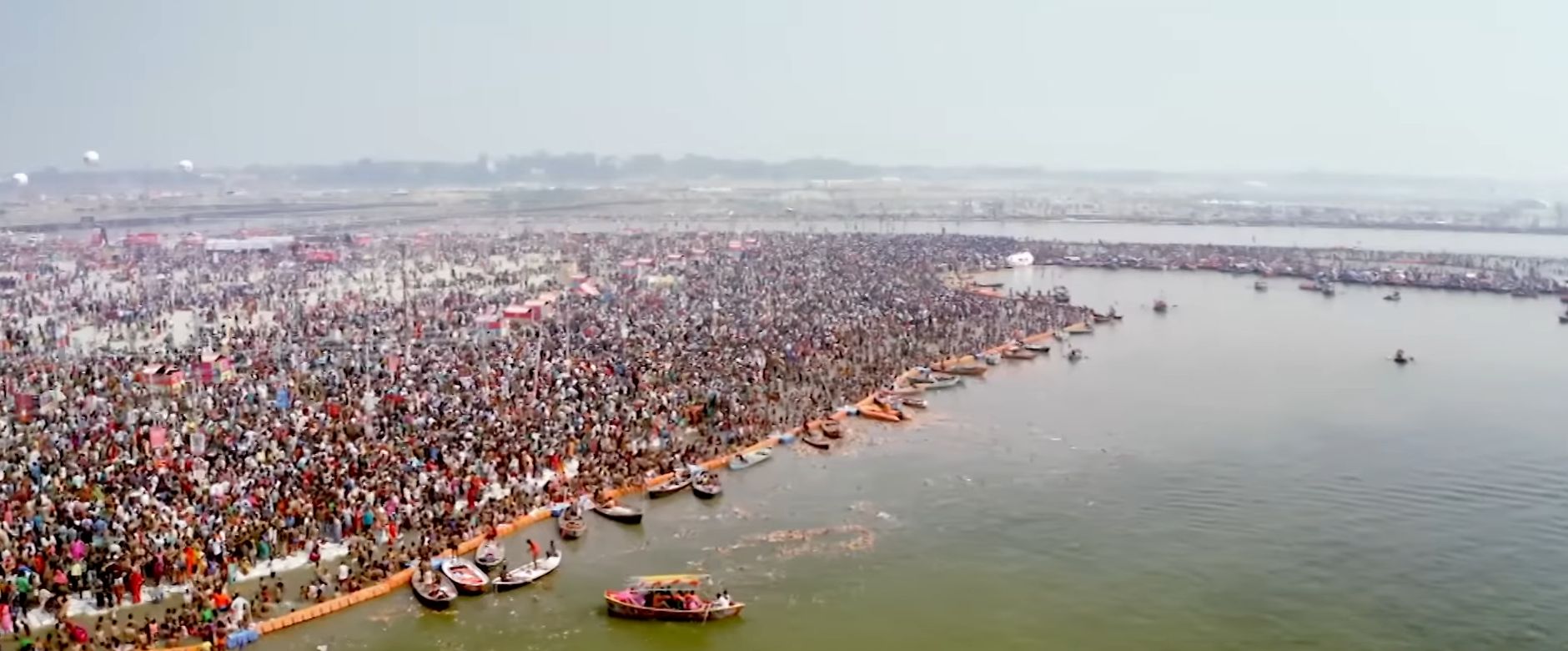
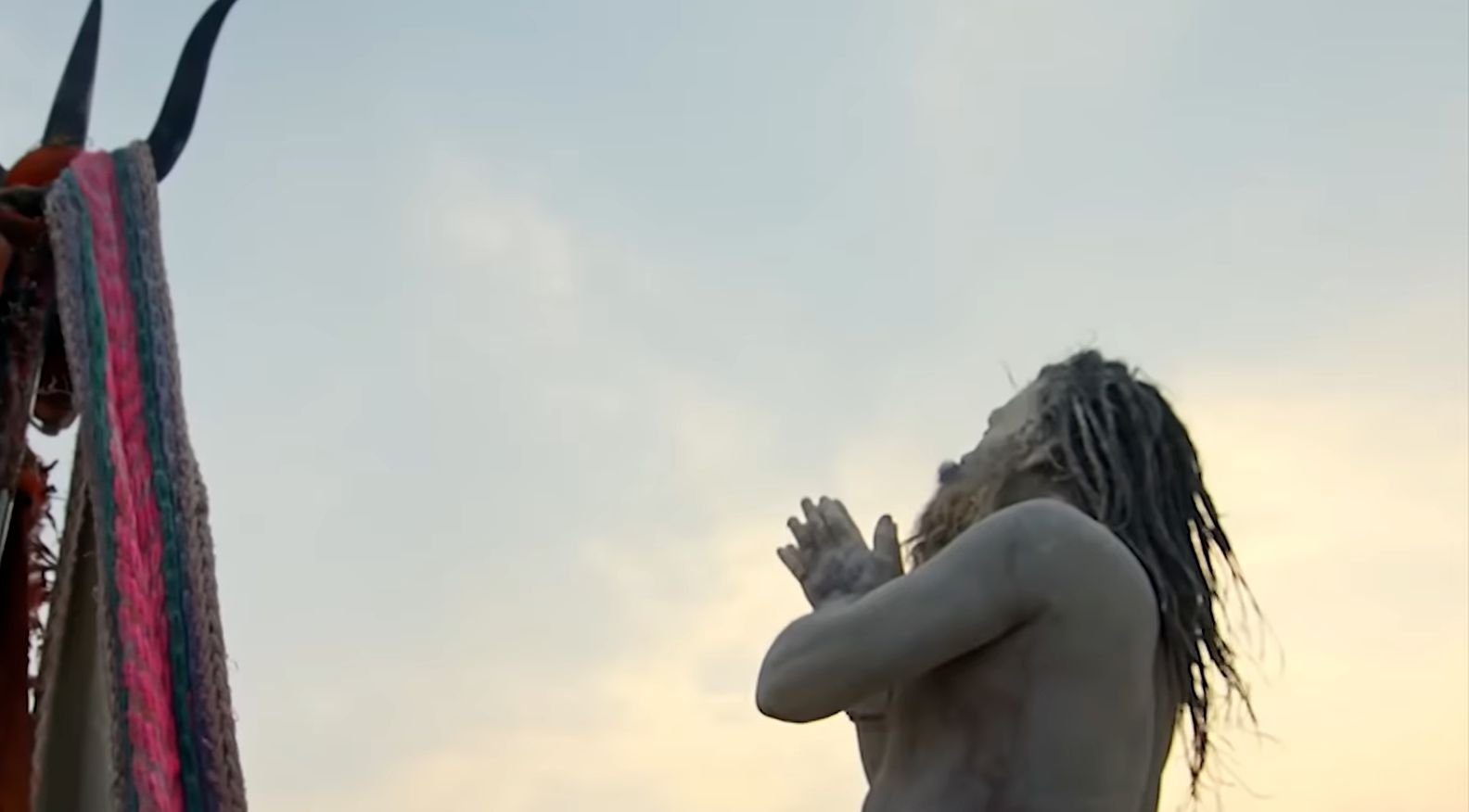
Standing there for the first time, I felt like I’d walked into another world—one alive with colour, sound, and an energy that was almost palpable. Everywhere I turned, there was something to take in: sadhus with ash-smeared faces meditating by the riverbank, colourful canopies fluttering in the breeze, and pilgrims carrying offerings, chanting in harmony. The air was thick with the aroma of incense, mingling with the more earthy smells of food stalls serving piping hot chai.
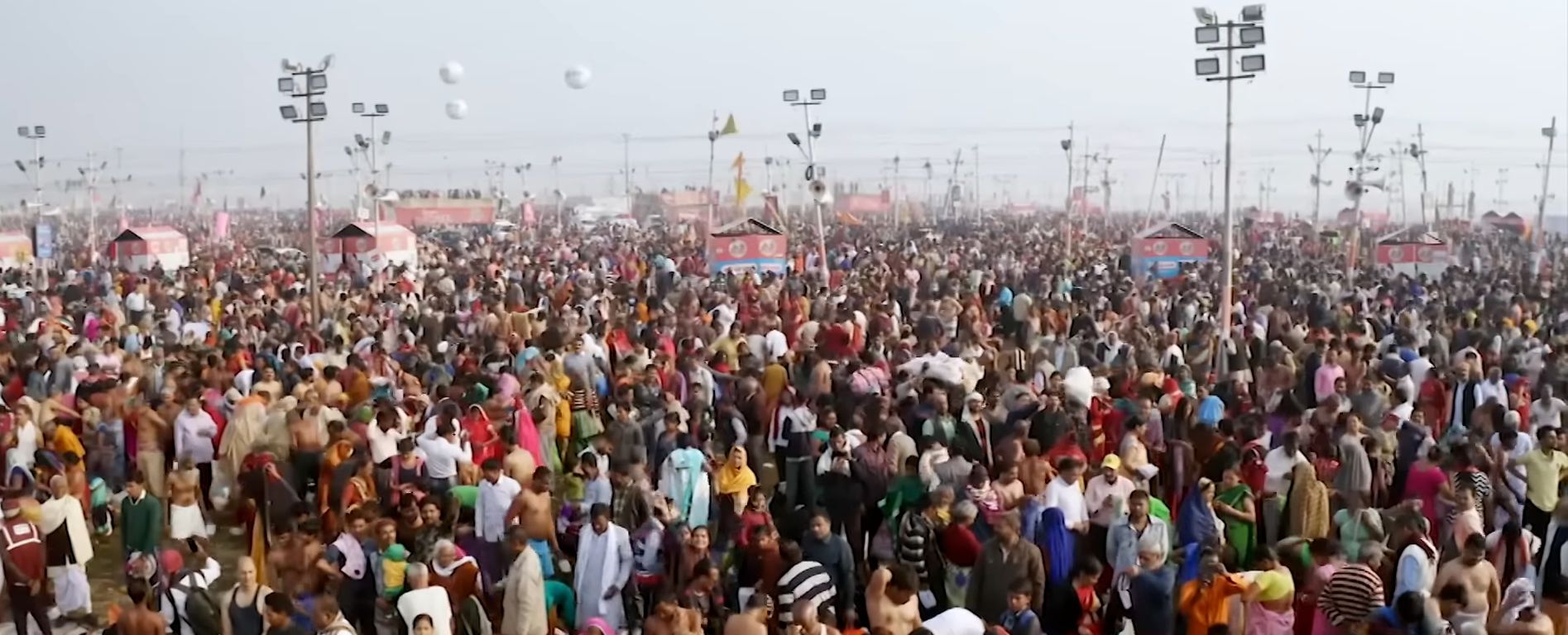
What truly struck me, though, was the movement of the crowd. It felt like a living, breathing organism. If you stood still for too long, the sheer momentum of people around you would nudge you forward, as if the crowd itself had decided you needed to move along. Distractions were everywhere, so it wasn’t hard to see how people could wander off, following a trail of sensory temptations until they suddenly realised they’d lost sight of their group.
So naturally, I too fell for the cliché. Within the first hour of my visit, I lost track of my parents. One moment, they were right behind me, marvelling at a colourful procession of pilgrims, and the next, gone. As I spun around in the crowd, my heart rate shot up. My first thought? Bollywood was right—it really is this easy to get lost here. Panic kicked in, but only briefly. A few minutes later, I saw my dad sheepishly waving at me from across the throng. Crisis averted.
The thing about the Kumbh today — sure, it’s chaotic, but it’s also surprisingly efficient when it comes to reuniting lost travellers. Between January 13 and 24 alone, nearly 1,000 people were reported missing, according to local police. Remarkably, every single one was found within hours, thanks to a seamless blend of technology and tireless human effort.

Behind the scenes
The 10 Lost and Found centres at the Maha Kumbh deserve all the credit. Because spotting someone here is tougher than finding Waldo.
Here’s how the system works. Giant 55-inch LED screens at the centres flash photos and details of missing and found individuals nonstop. A high-tech communication network, manned by policemen and volunteers, updates everything in real time, while the PA system keeps announcements rolling. And social media platforms like Facebook, X, and WhatsApp send descriptions to hundreds—maybe thousands—of screens and phones in seconds.
Who’s behind this impressive machinery? The Uttar Pradesh police and hundreds of volunteers with infinite patience. Sandeep Kumar, a native of Lucknow and one of these volunteers, says they handle up to 100 cases of missing persons on a busy day. “It’s mostly children and elderly people who get separated in the crowds,” he explains. “But now, most people are reunited within a few hours.”


He isn’t exaggerating. One of the most emotional stories I saw was Saroj Devi’s, a 73-year-old native from Bihar, who had lost her 10-year-old grandson, Ramesh. She told me how she’d searched frantically for hours before flagging down a volunteer near one of the Lost and Found centres, who immediately took down his description and flashed it across their channels. Within 20 minutes, they located him near a food stall. Watching her tearfully embrace him reminded me of every Bollywood reunion scene ever, minus the dramatic background score.
While technology has made it easier to track people down, it’s the human element that truly stands out. Most of the volunteers are locals or from other parts of Uttar Pradesh, drawn to the Kumbh by a sense of spiritual service. For many, it’s their first Mela, as the event takes place only every 12 years. They undergo basic training before the festival begins, learning critical skills like crowd management, and how to comfort and assist distressed individuals.
Take Jyoti Singh, a housewife from Prayagraj, for example. She had to play detective (Women are the best detectives) to piece together fragmented details from distressed pilgrims. She shared a story about an elderly man who couldn’t remember his family’s phone number but kept mentioning a landmark near their meeting point. It took hours of cross-referencing and walking through the crowds, but they eventually found his son waiting near it. “The gratitude on their faces is what keeps us going,” she says.

Does Bollywood get it right?
So, does the Kumbh Mela still live up to its reputation as the ultimate “lost and found” setting? Yes and no. Historically, before the advent of modern technology, such separations weren’t purely fictional. Stories of families losing loved ones at the Kumbh and reuniting only after decades—or sometimes never—were tragically real. Locals I spoke to shared anecdotes of pilgrims who never made it back home, leaving families to wonder for years about their fate.
One such tale is of a young boy from a village near Varanasi who wandered off during the 1954 Kumbh Mela, which became infamous for its stampede. His family eventually found him decades later after recognising his description in a newspaper story about the homeless in Delhi. Such stories, while difficult to confirm, underline how monumental the challenge of staying connected was in an era without mobile phones, surveillance cameras, or organised systems.
Fast forward to today, and modern technology and meticulous planning have made the likelihood of staying lost almost zero. Yet, today too, the crowds are just as overwhelming as Bollywood makes them out to be, and yes, people still get separated.
But the drama of decades-long separations? That’s a relic of another time. That said, the emotions—the fear, the relief, and the sheer joy of reunion—are as real as they come. My parents still laugh about how I almost called for reinforcements that day, but for me, it was a moment of pure chaos followed by an overwhelming sense of connection. And maybe that’s what the Kumbh is really about: losing yourself in the madness but finding your way back—whether to your loved ones or to a part of yourself – through community and a shared sense of connection.