

Period stains, tummy rolls and perennial exhaustion: This illustrator shows us the reality of adulting
Akshara Ashok’s comics show us the messy side of adulthood
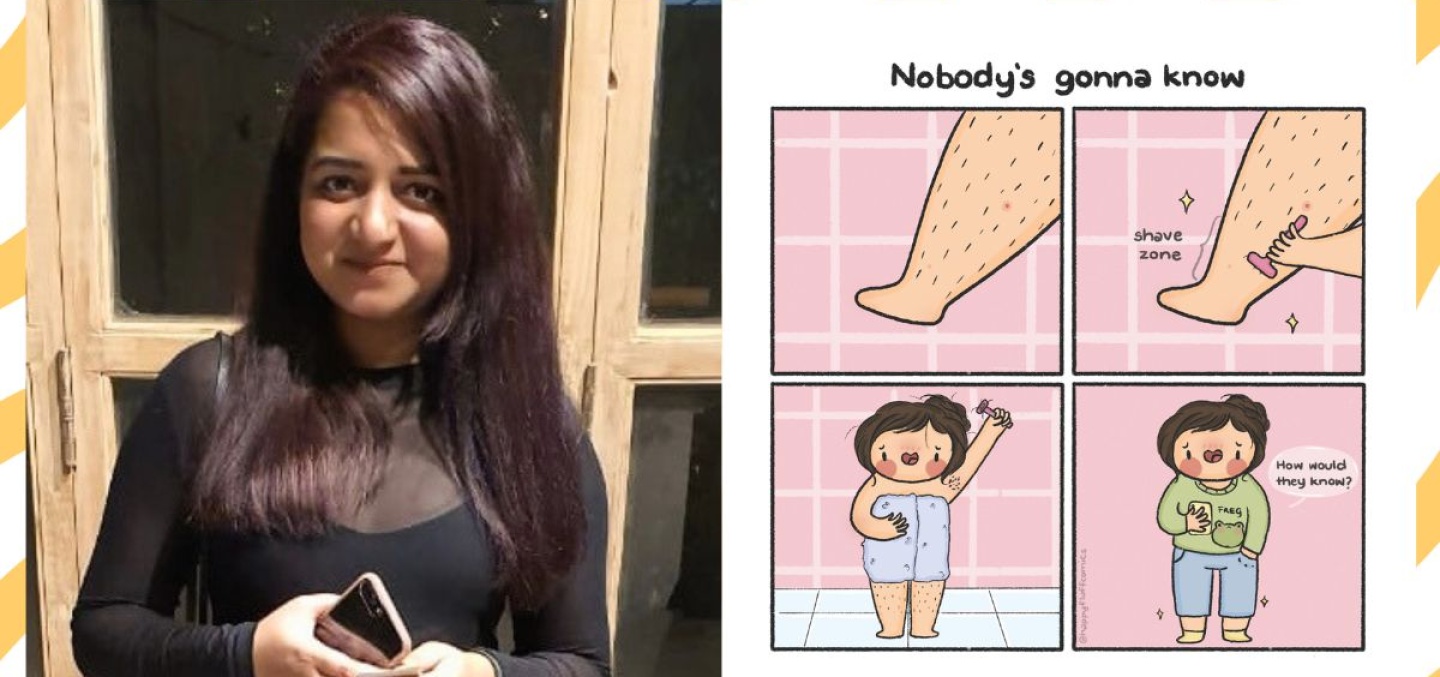
In one of the many relatable Happy Fluff Comics artworks, you can see the leading lady shaving only the bits of her legs that will be visible when she’s dressed. Twenty-seven-year-old Akshara Ashok, both the artist and the inspiration behind the comics, who thought she had discovered a genius hack says, “When I posted it, people told me they do it too. That’s when I knew I wasn’t alone.” Ashok, a shy kid who grew into an adult with social anxiety, created Fluff as a comic extension of herself, but along the way, the character became relatable to many women out there.
Fluff is not aspirational or preachy. She’s one of us, getting stressed about a delayed period and annoyed because it arrives only when she’s least expecting it. Fluff doesn’t have the energy to keep her room sparkling clean, especially because she wants all her essentials—her laptop, snacks, plushies—close to her. She loves buying new clothes, but like many of us, she hates that every store is stocking only crop tops these days. Like us, she’s stumbling through life, tired, sleepy, hungry—and feeling at home only in her most tattered clothes.
The origin story of Fluff
Chennai-based Ashok, a self-taught illustrator, started making comics in 2017 while she was still in college. She was studying architecture because back then, it seemed like a safer, conventional career option. One day in the second year of her architecture course, when she was taking a break from project deadlines, she posted some of the comics she had hand-drawn in her school days, on Instagram. The response was swift and positive. It spurred her on to create more comics. She completed her architecture course but had already decided—if her art career took off before graduation, she’d stick with it. And it did. Today, eight years later, she illustrates for a living, has more than 200K followers on Instagram, and recently compiled her comics into a book called The Little Book of Big Girl Issues (2025). She has also showcased her work at Comic Con Bengaluru and Chennai, and will be exhibiting in Mumbai too, next month.
Ashok’s comics, often tackling societal taboos for women, stem from her childhood experiences. “Teachers told us to hide pads from boys and to run for cover if we stained our clothes. On my 12th birthday, I wore a sleeveless top, and a teacher pulled me out, saying it would distract the boys. It was baffling because my family never said such things,” she recalls. These experiences got Ashok thinking about the never-ending list of topics that girls are discouraged from discussing. Being a shy child, she never said anything but took to drawing to express her thoughts. Today, she creates comics that shatter these stereotypes and make people feel seen.
It was only later, after so many women began engaging with her comics on Instagram that she realised how many wished for the same thing as her: to break the silence and express their truth in all its imperfection. Fluff is messy, awkward and humorous—qualities that Ashok believes are often overlooked in female representation. The comic uses humour and a childlike style to deliver deep truths, raw and unfiltered, about how women really feel—and to challenge societal norms—far from the hyper-polished depictions often seen on our social media feeds. Fluff, named to suggest someone throwaway and silly, is actually anything but those things. She is a deceptively simple portrait of everygirl.


The messiness of adulting
Adulting may have some perks, like being able to choose your own friends, not wearing a ridiculously pink tulle dress selected by your parents, and not saving gajar ka halwa for after dinner. But with power comes responsibility. Who knew deciding what to cook for dinner would be so difficult? Nobody is going to renew your passport for you. The adult who has to fix the AC that’s been leaking for days, is you. And then there is decision fatigue. As kids, our parents packed our bags and lunch boxes. They decided what we’d wear for Amit chachu‘s wedding, how much screen time we should have, and when we needed to sleep. With all the decisions left to us, we are here, doomscrolling like we have another set of eyes and brains when the current one rots like a forgotten avocado.
Ashok’s comics celebrate this reality—Fluff feels like a MasterChef after making noodles, her bed is a disaster, and her love for chips often outweighs her energy levels. “As kids, we think adulthood is glamorous—fancy jobs, dream apartments, flawless lives. Then you grow up and realise it’s just endless work. You finish office tasks only to come home to more chores. Even vacations don’t feel like real breaks,” Ashok shares.
Fluff as a character reminds us that adulthood is less about having it all figured out and more about surviving with small wins—like getting a perfectly-timed nap on a WFH day.
Embracing vulnerability and imperfection
Adulting feels like a pressure cooker already, and when you add being a woman to it, the societal expectations alone are enough to make you blow your lid. It’s hard to admit how difficult it is to balance all of our roles and also be perfectly turned out, Instagram-ready selves. Social media doesn’t encourage you to show your vulnerability so you’re constantly left feeling you’re the only one struggling. “Until we talk about these things with the women around us, we don’t realise that they are also feeling like they are not living up to adulting standards,” Ashok says.
Happy Fluff Comics normalises everything from asymmetrical boobs to tummy rolls, dark inner thighs, body hair. The clear message underlying all the humour is body positivity—that your body, however it is, is yours, and deserves your acceptance. Drawing Fluff helped Ashok grapple with her own self-image. “I was struggling with body image issues, never feeling comfortable in my own skin. So I started making such art to deal with them,” she shares.
Unsurprisingly, her content resonated deeply with women. For instance, an artwork she shared on Instagram shows a girl with PCOS waiting for her period to arrive, while feeling nervous because she is sexually active too. Comments started pouring in, with several women saying how much they related to it. A user (@izzydizzyyoutube) commented, “Can’t tell you how many pregnancy tests I’ve taken just to learn I had PCOS.” Another user (@pachamamitaa) wrote, “I also have PCOS and I feel so seen!”
This is exactly what makes Akshara Ashok’s work so important—she reminds us that we’re all stumbling through life together, with love handles, body hair, and perennial tiredness. With the help of these comics, she also learnt to take her own struggles with a pinch of salt.“I am able to laugh at myself and find humour in my imperfections.”
You can buy The Little Book of Big Girl Things published by Penguin Random House India here.