


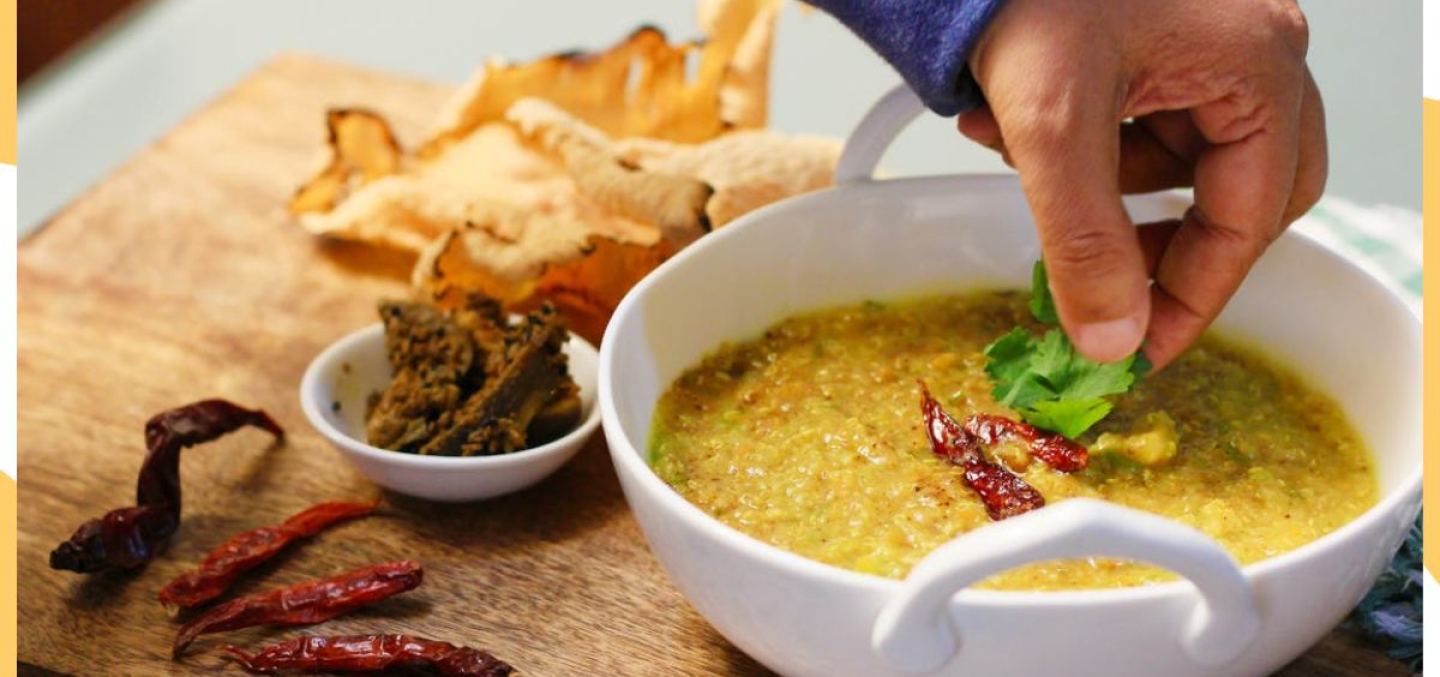
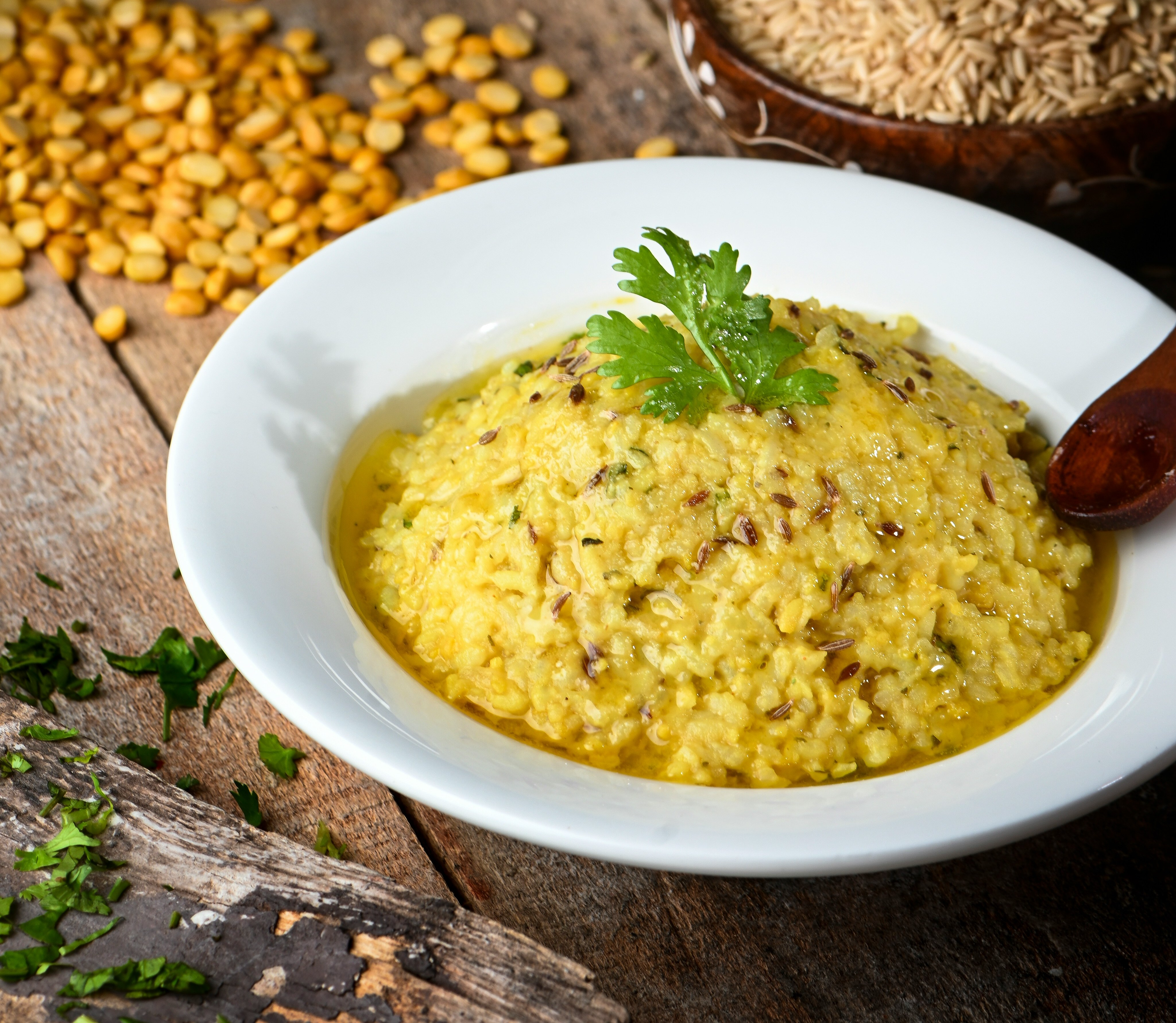
5 Chef-approved khichdi recipes to satisfy the mice jumping in your stomach
What’s your version of comfort in a bowl?
Otters have two layers of fur: an external layer that gets wet when they move around in water, and an internal layer that remains dry, protecting them from hypothermia. Unfortunately, humans lack this dual-fur advantage. So, during peak monsoon season, you have no option but to engage in a game of kabaddi with passing vehicles to avoid muddy water splashes, and swing your umbrella around until you find the exact angle to shield yourself from the wind-driven rain.
Our strategy for staying cosy during this wet and cold season is to demolish a plate of warm food. While crispy samosas and bhajiyas are understandably tempting choices, we believe, a bowl of garam khichdi trumps them all. When the incessant rain makes you feel like you’re living in a simulation of Cherapunji 2.0, a plate of steaming khichdi will warm your soul and ease your stomach.
During this season, our digestive fires are at an all-time low so health and food experts recommend foods that are light, easy to digest and have higher water content. But switching between your routine runny veggie khichdi and dal khichdi can get boring. To amp your monsoon meals, we asked five chefs to share their unique takes on this wholesome dish so you have enough variety to please your tastebuds through the season.
5 khichdi recipes straight from the chefs’ table
Vaghareli khichdi by Ali Akbar Baldiwala, Executive chef at Slink & Bardot, Mumbai
Baldiwala’s khichdi recipe is rooted in his childhood memories of growing up in a Gujarati household. “My mom used to make this vaghareli khichdi at home, which is a Gujarati–style khichdi. The fun part was that she would add several vegetables to it with a tadka. The dish becomes elevated in the sense that it becomes a full meal, not just a mix of dal and rice.”
Ingredients
- 180 gm white rice (any white grain rice can be used)
- 140 gm toor dal
- 50 gm green peas
- 100 gm potatoes (peeled and cubed)
- 50 gm carrot (peeled and cubed)
- 80 gm capsicum (cubed)
- 150 gm tomato (chopped)
- 80 gm cauliflower (florets)
- 15 gm ginger (chopped)
- 5 gm green chilli
- 30 gm coriander (chopped)
- 1 litre water
- Salt to taste
- 1 tsp turmeric powder
- 1 tsp red chilli powder
For the tadka
- 100 gm ghee
- 5 gm mustard seeds
- 5 gm whole jeera
- 3 gm whole black peppercorns
- 2 bay leaves
- 1 inch cinnamon
- 4 cloves
- 4 dried red chillies
- 1 gm hing
Method
- Wash dal and rice and soak them together in enough water for about 20 minutes. Heat oil and ghee in a pressure cooker, add cumin and mustard. When they start to crackle, add cloves, cinnamon, peppercorn, bay leaves, asafoetida (hing) and the whole dried red chillies.
- Then add all the chopped vegetables, ginger and green chillies, and stir fry for a few seconds. Add all the powdered spices and cashews and sauté for a minute.
- Drain water from the soaked dal and rice, place them in the pressure cooker, and stir fry for a few seconds. Now add five cups of water and shut the cooker lid. Pressure cook for 3 whistles on medium heat.
- Let it cool completely, then open the cooker and add chopped fresh coriander; mix gently. Serve hot with a dollop of ghee.

Khichdi cooked in achaari paste by Akanksha Saigal, consultant chef, Mumbai
Like many of us, Saigal, is a loyal member of the spicy achaar club, and even decided to infuse her khichdi with it. “I’ve always loved a hit of spice in an almost bland rice and dal combination, and adding this aachari paste elevates the humble dish for me. The tanginess of the raw mango adds so much flavour, and when combined with ghee, it becomes my go-to comfort dish.”
Ingredients:
- 2 tbsp ghee
- 1 tsp fine ginger
- ¼ tsp hing powder
- ⅓ cup chopped onion
- 1 cup masoor dal
- ¾ cup short-grain rice
- ½ tsp turmeric powder
- ½ tsp salt (adjust to taste)
- 4 cups of water (adjust for desired consistency)
- 1 ½ tsp mango pickle paste
- 6-8 curry leaves
- ½ tsp cumin seeds
Method
- Rinse and wash the rice and lentils until the water runs clear. Let them soak together for 30 mins.
- Heat ghee in a heavy-bottomed pan or pressure cooker. Add cumin seeds, minced ginger, hing and curry leaves and sauté. Then add onions and cook until they start to turn light brown. Then add turmeric, rice and lentils to the pan, mix well and season with salt.
- Before adding the water, mix in the pickle paste. Add water as per the desired consistency of khichdi.
- Cover and cook in the heavy-bottomed pan for about 30 minutes or till the rice is fully cooked, or for three whistles in a pressure cooker.


Tamilian style khichdi by Chef Ebaani Tewari, Co-founder, Kari Apla, Mumbai
Tewari’s khichdi recipe features a Tamilian twist, inspired by her mother’s post-vacation meals, and reminiscent of a hearty plate of sambar-rice. “I wanted to capture the essence of a classic Tamilian sambar sadam but with a few tweaks to make it quicker and richer in flavour. Instead of toor dal, I use masoor dal, which is easier to digest. For the rice, I opt for Ambemohar or Indrayani short-grain varieties, which break down beautifully into a porridge-like texture. And, of course, great quality sambar powder, preferably homemade, makes all the difference. This recipe takes me back to when we returned home from family vacations. After indulging in a lot of eating out and binging, my mother would always make a classic version of this dish with ghee and whole spices as a quick reset for our systems. The moment I smelled the ghee ka tadka, I knew we were truly home.”
Ingredients
- 3/4 cup rice
- 1 cup masoor/toor dal
- 2 tbsp ghee
- Pinch of hing
- 1 tsp mustard seeds
- 1/2 tsp cumin seeds
- 2 dried red chilies
- 1 large onion (sliced)
- 6 cloves garlic (chopped)
- 1 sprig of curry leaves
- 1 large tomato (chopped)
- 1 tbsp sambar powder
- 1/2 tsp turmeric powder
- 1 cup diced vegetables of your choice (cauliflower/drumsticks/carrots/peas)
- Salt to taste
Method
- Wash the dal and rice, and soak them in water for 15-20 minutes. Strain and set aside.
- In a pressure cooker, warm the ghee. Add hing, mustard seeds, cumin seeds and the dried red chillies. Let the mustard seeds crackle. Add the sliced onion, garlic and curry leaves. Sauté until the garlic and onion is translucent. Follow this with the tomatoes, sambar powder and turmeric powder, and sauté until the raw smell of the spices goes away. Next, add the vegetables along with the soaked dal and rice. Stir-fry for a minute until the masala coats the rice.
- Add 3-4 cups of water (depending on the consistency of khichdi you prefer), bring to a simmer and season with salt. Cover with a lid and cook under pressure for 10 minutes. Serve hot with your favourite papad and pickle.
Moong and sorrel khichdi with burrata by Pavan Kumar, Executive chef at Miss Pinto and RED, New Delhi
Kumar’s khichdi recipe is an ode to cherished flavours from his childhood, and the Italian culinary techniques he mastered as an adult. “Growing up in Andhra Pradesh, my childhood is rich with memories of enjoying gongura [sorrel] pickle with rice, boiled dal, and ghee. Gongura holds a special place in the hearts of South Indians, especially in Andhra Pradesh, where the pickle made from this tangy green ingredient is a beloved delicacy. I like to call this creation my ‘Indo-Italian Connection’. It’s a dish that celebrates simplicity and the harmonious pairing of ingredients in a way that is both nostalgic and innovative.”
Ingredients
- 50 gm burrata
- 40 gm gongura pickle (Indian sorrel pickle)
- 40 gm unsalted butter
- 70 gm yellow moong dal
- 100 gm Arborio rice (Italian short-grain rice)
- 4 gm cumin
- 3 gm salt
- 10 gm peeled garlic
- 30 ml extra virgin olive oil
- 1gm crushed black pepper
- Sea salt (to taste)
Method
- Soak and boil moong dal. Strain the water (keeping the water aside), and blend the dal into a fine paste.
Soak arborio rice and boil in the dal water. - In a pan, heat butter and roast cumin seeds. Add chopped garlic and sauté until golden brown. Next, add cooked rice, pureed moong dal and gongura pickle. Check for seasoning, and finish with butter.
- Serve the khichdi topped with burrata, drizzled with extra virgin olive oil, sea salt and black pepper.


Mutton lonche with jowar khichdi in mutton stock by Abhishek Deshmane, Executive chef at Slow Tide, Goa
Khichdi is Deshmane’s ideal dish to cook on his days off from work; not because it’s easy to make, but so he can practice the skill and technique required to prepare it. Here, he shared with us a unique medley by combining two of his favourite dishes: khichdi and mutton shorbah. “I decided to use mutton broth to add more flavour to the khichdi while cooking, and adding jaggery at the end adds another layer of flavour. The jowar khichdi and mutton lonche are a spin on the classic combination of jowar bhakri and mutton. We have it on our menu as well.”
Ingredients for mutton lonche
Marination
- 250 gm mutton (fatless and diced small)
- ½ tsp turmeric powder
- Salt to taste
- 1.5 tsp ginger-garlic paste
- 2 gm green chillies
Pickle powder
- 4 tsp coriander seeds
- 4 tsp cumin seeds
- 2 tsp mustard seeds
- ¼ tsp fenugreek seeds
Tempering
- 90 ml oil
- ¼ tsp mustard seeds
- ¼ tsp cumin seeds
- 10 curry leaves
- 2 bay leaves
- 1 black cardamon
- 4 black peppercorns (whole)
- 1-inch cinnamon
- 5 cloves
- 2 pieces of star anise
- 2 dried Kashmiri chillies
- 2 tsp coconut (grated)
- 90 gm onion (chopped)
- 12 gm garlic (sliced)
- 2 tsp sesame white
- 2 tsp red chilli powder
- ½ tsp garam masala
- 1 tbsp pickle powder
- Salt to taste
- ½ tsp chaat masala
- ½ tsp amchur powder
- 2 tbsp lemon juice
- 10 gm jaggery
Method
1. Marinate the mutton and refrigerate for 2 hours. Separately, toast spices for the pickle powder and grind to a fine powder.
2. In a pressure cooker, cook the marinated mutton with enough water to just cover the mutton until 2 whistles. Once cooled, strain the mutton dices and retain the mutton stock for the khichdi.
3. Heat oil in a heavy-bottomed pan and shallow fry the cooked mutton until it charrs a little on the surface. Remove the mutton and place it in a strainer. In the same oil used for frying mutton, add mustard seeds and cumin seeds, and let them crackle. Add the whole spices, and once they become fragrant, add grated coconut to the mix and toast it. Follow this with onion and garlic and cook until the raw flavour dissipates. Finally, add the fried mutton, sesame seeds and sauté. Reduce the heat, add chilli powder, garam masala, pickle powder, salt and cook.
4. Deglaze the pan with 250 ml water and cook to bring all ingredients together. When the oil splits, take the pan off the flame and add the remaining ingredients, folding them in. When the pickle cools to room temperature, then store it in a tall glass jar so the oil floats on top for preservation.
Ingredients for jowar khichdi
Spice paste
- 4 gm cumin
- 1 gm coriander seeds
- 24 gm garlic (chopped)
- 10 gm ginger (chopped)
- 4 gm green chillies
- 5 gm coriander leaves (chopped)
Other ingredients
- 25 gm oil
- 25 gm ghee
- 1 pinch hing
- ¼ tsp mustard seeds
- 6 curry leaves
- 33 gm moong dal
- 1 gm turmeric powder
- 80 gm onion (chopped)
- 30 gm cauliflower (grated)
- 30 gm carrot (diced)
- 60 gm tomato (chopped)
- 110 gm jowar
- 1.5 gm chilli powder
- 4 gm garam masala
- 3 cup mutton stock (hot)
- Jaggery to taste
- 5 gm ghee
- Salt to taste
Method
1. Soak jowar for 6 hours, strain, and pulse grind to break the grains without powdering them. Grind the ingredients for the spice paste.
2. In a pressure cooker, heat oil and ghee. Add hing, mustard seeds, curry leaves and let them crackle. Add moong dal and sauté till it gives off a nutty aroma. Follow this with turmeric, onion, cauliflower, carrot and sauté. Then add the tomato and spice paste and cook. Finally, add jowar, garam masala, chilli powder, mutton stock, jaggery and salt. Bring it to a boil, lower the heat and cover with a lid. Cook on a medium-slow flame for 7 whistles.
3. Open the lid once the pressure subsides. Pour in the ghee and fold. Serve hot with a sprinkling of jaggery on top.
Whether you love this traditionally two-ingredient dish for its simplicity (topped with ghee) or prefer to experiment, nothing warms your soul quite like a bowl of hot, runny khichdi. So, take your pick and discover your own version of comfort in a bowl.
You will love this