

"Maybe menopause will finally fix my endometriosis and end a lifetime of pain and discomfort"
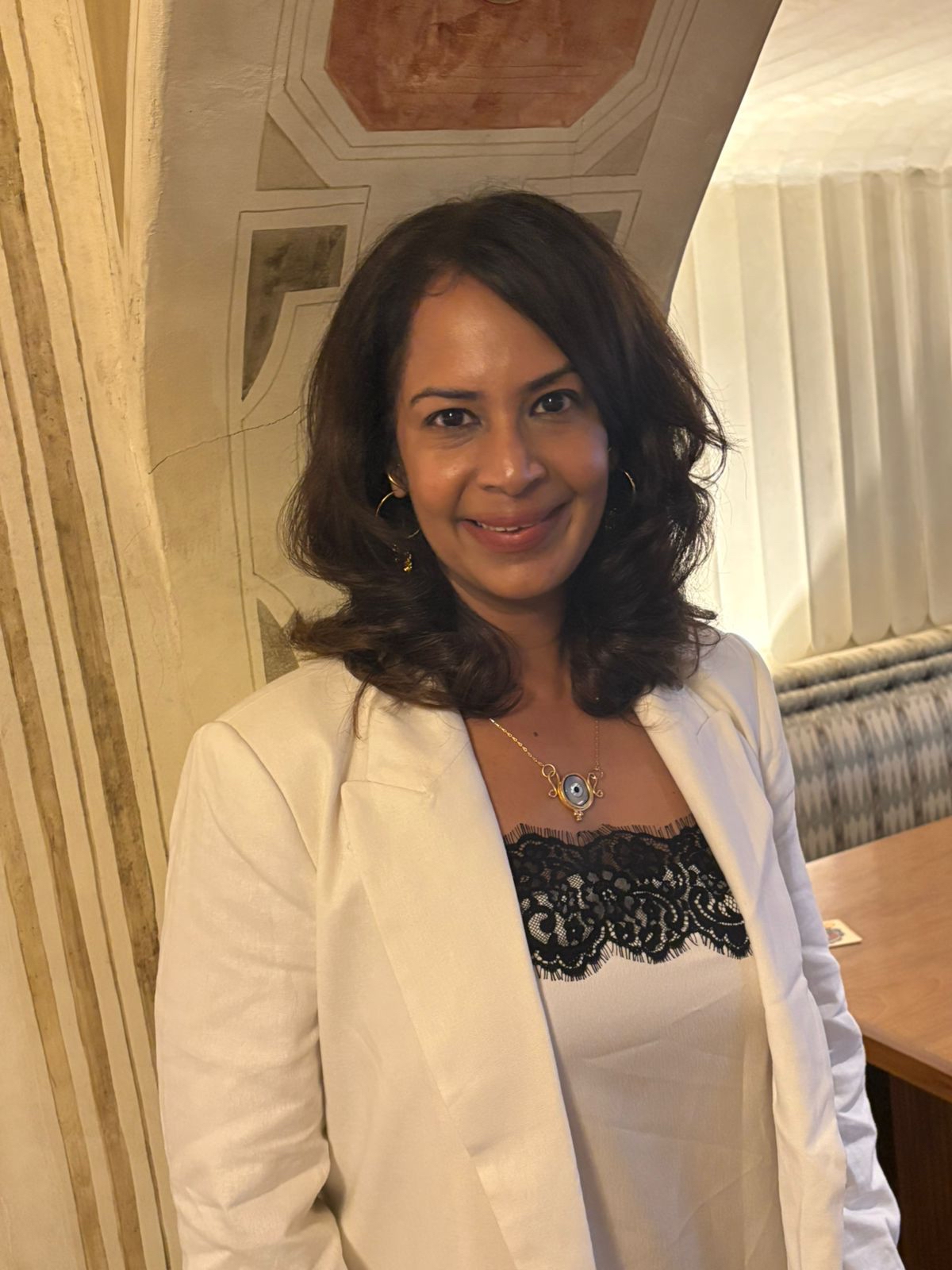
Media professional, Tasneem Mukadam, 49, shares her journey of living with pain
I came across Tweak’s post on Instagram about a film titled This is Endometriosis that won Best Short Film at the BAFTAs this year. My first reaction to this news was, ‘Oh, I could have made that film’.
I turned 49 this year, and I have been dealing with endometriosis since I was 13. Back then, no one around me had even heard about this condition. I just knew there was something wrong with my periods and it wasn’t just cramps.
I’ve been operated on twice in four decades, and it would have been thrice, if I hadn’t refused. See, the thing with endometriosis is that surgeries only provide temporary relief, and after years of enduring the pain and discomfort, I am now looking for something more long-term.
When puberty came crashing down
I got my period at 13, and about six months in, I started bleeding very heavily. Naturally, my parents were concerned and took me to a gynaecologist, because it wasn’t just the heavy bleeding, but also migraines, blood clots, and cramps with nausea. The doctor prescribed painkillers for the cramps and pills to deal with the migraines. It wasn’t great, but just what was available.
I would complain to my friends about how many pads I had to use per period, and imagine my surprise when I found out that they used only one or two pads a day while I was using double, if not triple, that amount. Every girl around me was having three- to six-day cycles, with minimal or no pain, while I would often pass out from the pain.
It truly drained me as a teenager, both physically and emotionally. No one else was missing school or classes every month to deal with period pain. It was really hard not to feel constantly isolated by this disease. But I was fortunate to have parents who were supportive of my needs and always trying to make me comfortable. My dad would sit with me, holding the hot water bag, never questioning why I was always unwell or in pain. My mother, who is now 79, still accompanies me to every sonography and all my doctor’s appointments.
It would be five years later, when I turned 18 and had my first sonography, that I first heard the word ‘endometriosis’. But we still didn’t have information—or access to information—as widely as we do now.
Even with a diagnosis, I continued to silently suffer. I would end up bunking college every month because of excessive bleeding. I had somehow managed through school and college, but I knew that after graduation, the workplace would be tough to handle with this condition.

An adulthood shadowed by pain
In 1998, when I was just 22, my then-gynaecologist recommended I should get married early because “an early pregnancy would dry out the cyst”. As ridiculous as that sounds today, people really did believe that the temporary pause in periods due to pregnancy could make the condition go away. I was inclined to follow that treatment plan, but life had different ideas and I’m still single and childless.
When I turned 24 at the turn of the millennium, and was working in marketing and sales, the cyst inside became severe enough to be operated on. The doctor told me they would do a laparoscopic surgery and I would be in and out of the hospital within a few days. However, while operating, they saw that the cyst was actually the size of a mango. The laparoscopic surgery became a proper cut-open one and left me with 13 stitches, the scars of which I still bear to this day.
Initially, I had only taken a few days off work, but post-op, I ended up staying in the hospital for the whole week. Recovery was a whole other wave to deal with—I was in severe pain the whole time. I don’t really remember the details of how I took that much time off work, but I remember the stitches feeling bruised, and feeling scarred emotionally.
A brief respite
There was relief after the recovery and operation, I won’t lie. I truly felt okay for a while. But it didn’t last long. Three years after the surgery, the pain came back with a vengeance. I was entering my late 20s by this time, and just finding out that endometriosis does not just go away after one removal. New cyst can develop over time and need periodic removal to manage the symptoms.
By the time I was 32, it became unbearable and they detected a cyst that needed to be operated on. After months of very severe pain and agony, they detected another cyst. Not wanting to go through another operation, I asked for options. My gynaecologist then prescribed birth control.
I tried them for a short period of time, but I saw that even with pain killers added, they weren’t helping; the bleeding was still a strong current. Another reason I decided to stop taking the pills and opt for a second surgery was that back then I still wanted biological children and I did not want to mess with my natural hormone system.
Surprisingly, it went more smoothly the second time, maybe because of the new laparoscopic technology and medications available then. They managed to remove the cyst with a laparoscopy and I only had to stay in hospital for two days post-op. The scar too was much smaller, with three stitches.
Hoping to outgrow the illness
About 14 years after the second operation, I started experiencing the same discomfort again in 2023. Even though the pain returned as smaller cysts were forming, I was able to manage it with over-the-counter painkillers. I went to my doctor once it became unbearable and she found that a cyst had grown to five centimetres.
My doctors suggested another surgery, but this time I refused. Even though the last one was easier to deal with, I just didn’t wish to put my body through more trauma. I wanted something permanent.
I have been told that menopause frees many women from endometriosis because of the significant drop in oestrogen levels, relieving some painful symptoms of endometriosis. The gynaecologist said that since I was close to perimenopause and eventual menopause, that I could look forward to being rid of it once and for all. Yet, I’m also aware, there’s a chance it won’t go away, and might even present new symptoms during menopause.
For now, they’ve started me on a hormonal pill to induce perimenopausal symptoms. With these new medicines, the cyst has shrunk quite a bit, going from five centimetres to 2.7 centimetres now. Now, I look forward to welcoming my 50s and menopause with open arms.
I want to remind every woman who suffers from endometriosis that even if the disease is beyond our control, things are changing. We went from not knowing what it was just four decades ago, to women winning awards for films about dealing with the disease. I’m hoping that at least in the next few years or decades, no other woman has to suffer her entire life as I have.
As told to Jhanvi Adatia
A note of caution: This is a personal story shared for educational purposes only. If you are experiencing symptoms, please seek guidance from a qualified medical professional.