


The 75 Soft challenge gave me something better than abs
The real glow-up was internal
If you’ve spent more than five minutes on Instagram in the past few months, the 90 and 75-day wellness challenges will have inevitably found you. Reels featuring 6 am Pilates classes, the best 5-litre water bottles to hit your daily water intake, and 10 different self-help books, each of which will absolutely change your life. I first noticed these challenges when actress Alaya F started documenting her days as she took on the 75 Hard challenge in September 2025. I researched it and the intense rules—a strict diet with no cheat meals and two 45-minute workout sessions (one outdoor) a day—made me scroll right past anytime it surfaced on my feed again.
But the algorithm persisted, and soon enough I stumbled upon the challenge’s lite version, the 75 Soft challenge. Now this was more my speed. The parameters seemed more flexible, something a person with a full-time job and a deeply unserious relationship with discipline (me!) could actually manage. It fit with my needs too. I didn’t have lofty fitness goals—what I was looking for was a lifestyle refresh because I had been feeling drained of energy over the last year, and my mental health had taken a backseat. And so, I embarked on this adventure in November.
The rules were simple enough to remember without a Notes-app checklist: eat well (with some flexibility), exercise daily for 45 minutes, drink three litres of water and read 10 pages of any book every day. There was no talk of start overs if you ‘messed up’, the challenge didn’t need you to ace any goal; you only had to do your best. It is no wonder that I immediately embraced it—and stayed with it. Somewhere between my morning walks (elevated by Taylor Swift songs) and my nightly reading ritual, I found a gentle rhythm and discovered seemingly obvious-yet-overlooked truths about life.
What I discovered (and rediscovered) doing the 75 Soft challenge


Self-improvement doesn’t have to mean self-punishment
In 2021, shortly after I contracted COVID, I started gaining weight perhaps due to the medications. It made me feel insecure, so I began following the OMAD (one meal a day) diet. I felt like I needed to take on an extreme challenge if I wanted real results. But I couldn’t keep it up. After just three days, I ordered a pizza and chocolate lava cake.
This time around though, after starting the 75 Soft challenge, I understood that self-improvement doesn’t always require dire measures. I incorporated healthy habits, but without the fear of failing.
On days when my job required more time—like having to attend a post-work event—I let go of my early morning walk the next day. Sometimes I gave in to my food cravings, like eating a pastry, without feeling guilty about it. Because while I was striving to be healthy, I also wanted to keep myself happy. This actually helped me have a healthier relationship with food, without obsessing over carbs and fats and classifying any foods as ‘bad’.
I was not breaking any rules either, since the challenge allowed for that flexibility. So I learnt to be soft with myself and as a result did not give up on my goals when I missed sticking to the plan on some days.
Even ‘soft’ change is hard at first
When I watched reels of people attempting this challenge, it seemed so easy, too easy even. That’s what gave me the confidence to try it in the first place. But I quickly realised that social media only shows you the highlights and achievements; rarely the real struggle behind it.
The 75 Soft challenge immediately posed several difficulties for me. I had to incorporate protein into every meal (check out these protein-rich breakfast recipes). It became tough to find vegetarian recipes and plan meals to meet my required intake, especially since I am a terrible planner. My roommate, who was aware of my goals and seeing me struggle, suggested I check out fitness and nutrition coach Vanshika Khurana’s recipes. They proved to be a game-changer.
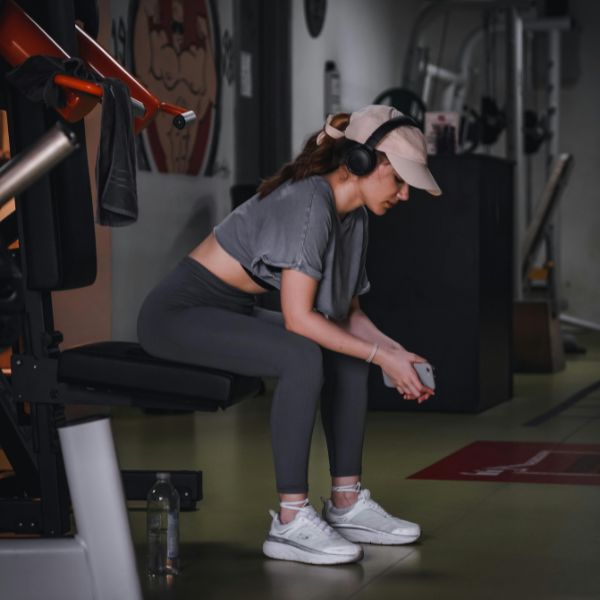
Getting into a consistent fitness routine, too, took some getting used to. When I started going to the gym, I was extremely energetic the first two days. But on the third day, the soreness appeared. By day six, I couldn’t lift any of the weights I had on the first day, which was extremely demotivating. I eventually pushed through the frustration and discomfort, but if someone had told me I’d encounter such challenges, I would have gone in better prepared.

There’s more to life (and me) than work
If you ask any millennial or Gen Z to introduce themselves, chances are they will start by stating their profession. I was no different. Being a social media manager requires you to be plugged in all the time, and it was difficult for me to extract myself from work. Soon it became my entire personality. For over two years, my life revolved around waking up, going to the office, coming back and sleeping. I didn’t have the time or the energy to do anything else.
Taking up the 75 Soft challenge was my conscious attempt to change that. And it helped me discover (and in some cases, rediscover) my interests. For example, I used to be an avid reader in school, but couldn’t even remember the last book I had read when I started the challenge. Yet no sooner had I begun to read the requisite 10 pages a day than I fell right back in love with my old hobby. A few weeks in, I finished reading The Midnight Library by Matt Haig in one day. I can’t describe the elation I felt.
My next surprise was falling in love with working out. I had never, ever pegged myself as a ‘gym person’, but as I started weight training and noticing how limber and strong I began to feel (I went from lifting 2 kgs to 7 kgs in just a few days), something changed. My workouts went from being just about fitness, to being more about building self-confidence.
So not only did the 75 Soft challenge help me develop new habits, and reunite me with my interests, but it also helped me unlock new capabilities. I was feeling multi-dimensional for the first time in a long time.

Small steps can make a big difference
I wasn’t making any drastic changes. In fact, to someone looking in from the outside, the changes might not even be visible. But whatever I was doing was working. Earlier, I was always exhausted after coming back from work. Even on weekends, I would just want to lie in. But as I became consistent with my new routine, I started noticing a subtle surge in my energy levels. It became even more evident when one Sunday, my friends made a plan to meet, and I didn’t automatically make up an excuse to cancel.
The second—and much deeper—change I started to notice was that I was not complaining as much anymore. My mind felt calmer, and better able to handle whatever life was bringing me. If I had a bad day at work, I still had my reading ritual to take my mind off things. If I had a fight, my walk gave me time to cool off.
The benefits of these tiny new habits compounded in ways that I wasn’t even expecting.

Consistency is everything
There really is no way around this one. Yes, I gave up on my routine on some days, and often reverted to my old habits, but I also kept coming back. The only thing I didn’t allow myself was to give up entirely. The more reps I put in, the more consistent I became. Little by little, these conscious actions became default habits. I wasn’t pushing or dragging myself to get them done anymore, I was already in the flow.
I started the challenge with just walking for 45 minutes daily, but it became easy enough for me to then add a gym session to my routine four or five times a week. I didn’t even realise when I transitioned from 75 Soft to 75 ‘Medium’.
Every single thing I started in these 75 days has become a habit, and even as the challenge ends this month, the routine stays. And life now looks a whole lot different.
(As told to Raaina Jain)