

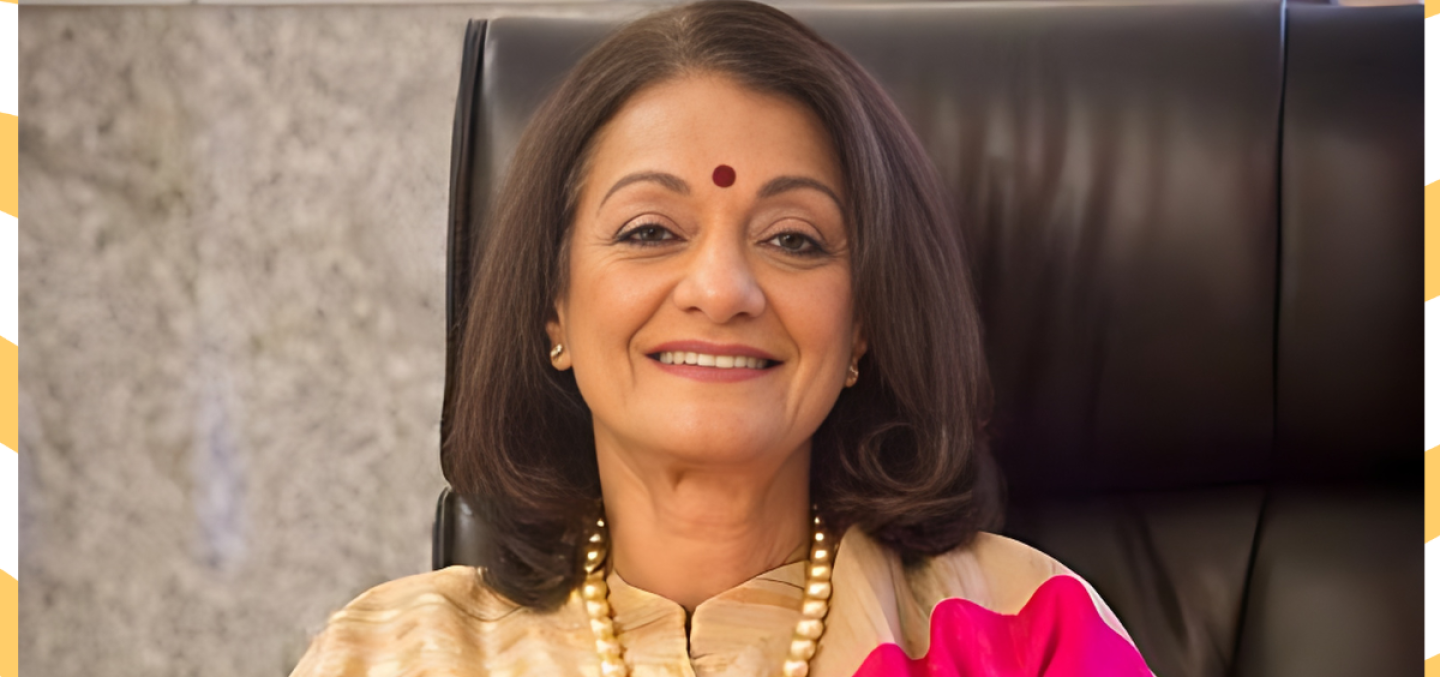
Meet Dr Duru Shah, the gynac spotlighting India's PCOS problem
In our new series Leading Ladies, we profile change-makers whose pursuit of excellence and effort to challenge conventions has inspired many to speak their minds
Ask the average six-year-old, “Beta, bade hokar kya banna chahte ho? (what do you want to be when you grow up?)”, and you might be met with answers like Deadpool, Wonder Woman or (Margot Robbie’s) Barbie. But even as a six-year-old, Dr Duru Shah was certain she’d be a medical professional. This came as a surprise for those around her, since she was born and raised in a business family. Shah says her heightened compassion and empathy led to this early career choice. “I can’t see anyone suffering,” she explains. “So if I had made up my mind at six, it was probably fuelled by the feeling of wanting to help others.”
Today at 75 years old, Shah is the founding president of the PCOS (Polycystic Ovary Syndrome) Society of India. But that’s just one of her many professional achievements, which, quite frankly, are almost too many to list. She’s chair of the Council of Affiliated Menopause Society (CAMS), trustee of the Mumbai Obstetrics & Gynaecology Society (MOGS), as well as the director of Gynaecworld, the Center for Women’s Health & Fertility, while also working as a consultant ObGyn at some of Mumbai’s top hospitals. This (abbreviated) list of achievements isn’t just a professional flex for Shah, it’s a way to lead and implement real change. “When you’re in the position of a chair, you get the opportunity to do something for women,” she says.
It’s not just period pain, it’s PCOS
Shah completed her MBBS from Grant Government Medical College (Mumbai University), one of the oldest medical institutes in the country. Soon after, she commenced her post-graduation residency in gynaecology at the Wadia Maternity Hospital, Mumbai, in 1972. Though Shah was always interested in medicine, specifically women’s health, gynaecology wasn’t her first choice of specialisation.
Back in 1971, as an intern doing her clinical rotations at the Grant Medical College, Shah was keen on pursuing ophthalmology. She was skilled at performing fine, precise work with her hands. But her husband-to-be at the time made a valid point—no one would trust a woman with their eyes. “He wasn’t being a male chauvinist,” she explains. “This decision had to be made 50 years ago, and back then, it was a fact of life. When I considered it, I couldn’t think of a single [female] ophthalmologist who had done well for herself. So on the last day, I switched my speciality from ophthalmology to gynaecology,” recalls Shah.
It was her interest in reproductive endocrinology that piqued her curiosity about India’s PCOS problem, which is often brushed under the carpet like dhool. PCOS, as we know it today, stands for Polycystic Ovary Syndrome, a hormonal disorder that affects the ovaries and hampers their ability to carry out reproductive functions. This can cause irregular menses, increased levels of androgens (male hormones), excess facial hair, cysts on the ovaries, and other issues. In 2014, PCOS was barely a recognisable medical condition, and while women suffered from it even then, it was usually dismissed by mothers and doctors alike as “only period pain”. Around that time, in her practice, Shah noticed an influx of patients with fertility issues, and cases of teenage girls struggling to cope with PCOS, both physically and emotionally. She discovered they weren’t being adequately treated for it, either.
Finally, in 2015, she decided to take matters into her own hands and established the PCOS Society of India in Mumbai. “Once I got into the depths of it, I realised there’s so much we can do. So I got different experts together under one umbrella, because this disorder isn’t only a gynaecological disorder. It’s a multidisciplinary problem; everyone from endocrinologists to dermatologists, obesity experts and nutritionists have to be involved,” she says.
Beating PCOS with policy
The idea behind establishing the PCOS Society was to bring together the country’s top medical specialists so they could pool findings, learn from each other, and provide the best patient care. Nine years after its establishment, the Society now has over 1,600 members and medical and affiliated medicine professionals from across India and the world. Another milestone, in 2023, was when Shah became the only Indian to join the global team of physicians setting international guidelines for diagnosing PCOS that was led by Monash University, Australia.
“I got different experts together under one umbrella because PCOS isn’t only a gynaecological disorder. It’s a multidisciplinary problem; everyone from endocrinologists to dermatologists, obesity experts and nutritionists have to be involved”
Dr Duru shah
She was also a part of the core committee of C20 (Civil Society 20), the civic arm of the G20 intergovernmental forum, as part of their women and child vertical. At their meeting, which was hosted in India in April 2023, Shah communicated the need to spotlight PCOS as a medical condition in the country. Their agenda, she says, is to try and identify as many women as they can with PCOS, enable accurate testing, and then provide the right treatment to protect future generations.
“We want to focus on lifestyle changes for younger generations and get them to do some form of exercise in their routine,” says Shah. “My recommendation to the government was to make sports a compulsory one-hour session in schools; that will take away the pressure from mothers to send them for any kind of physical training, and help improve their health. The second was to stop unhealthy food in school canteens. I’m looking forward to the day when this gets accepted.”
For now, Shah’s biggest hurdle is convincing the big players in the medical system to take this issue seriously, “When I speak to funders, they say, ‘Oh, it’s a women’s health issue, we don’t have any products for it, so how will we fund your activities?’ And I keep explaining to them…it’s not just a women’s issue, it’s a universal health problem. They’re now discovering that even men can have PCOS,” says Shah.
What keeps her going, despite the many hurdles faced by large-scale change-makers, is her passion for doing something worthwhile and her drive to materialise it. “Sometimes there are disappointments, but you have to be positive.”
Shining a light on reproductive health
Even after being a practising gynaecologist and fertility expert for more than four decades, Shah is still asked the time-worn question: “aapne kitni deliveries ki hain?” (how many babies have you delivered?). “We deal with a lot of women’s health issues— painful periods, uterine cancer, ovarian cancer, reproductive issues, polycystic ovaries, prolapsed uterus, urinary incontinence, so it’s not just deliveries,” she says.
Throughout her career, Shah has been an active force in the field of women’s health, contributing through various programmes and initiatives. In the ’90s, when her daughters were growing up, she noted that their city-bred friends were in the dark about menstruation and women’s reproductive health. “I realised schools don’t have this education. So I took it upon myself to then educate the whole world.”
This led her to create initiatives like Growing Up and Let’s Talk in 2001 under the government’s Adolescent Reproductive and Sexual Health (ARSH) programme. As part of these initiatives, she led a team of 1,000 volunteer gynaecologists, who would educate school-going and college-going girls about their reproductive and sexual health. Shah also took the programme to the central health ministry with a recommendation to introduce it in school curriculums. Her recommendation was accepted, and the centre made it mandatory for all schools to make reproductive and sexual health a part of the school curriculum.
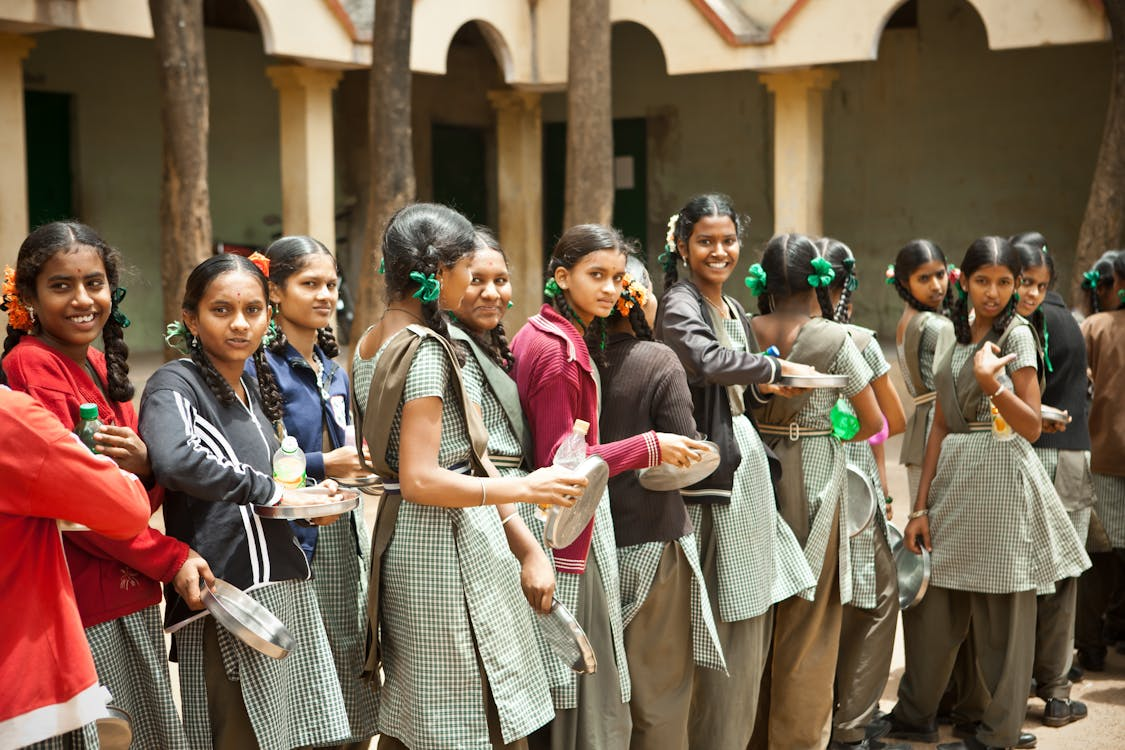
Shah has also been instrumental in bringing IVF (In vitro fertilisation) under health insurance coverage, making it accessible to a wider demographic of women. She has led educational and medical initiatives in rural regions of the country aimed at significantly reducing women’s mortality rate during childbirth. She’s currently spearheading Too Shy to Ask, an app from the Metropolis Foundation that allows adolescents to freely ask questions regarding their reproductive health or general physical and mental well-being. This allows them to dodge the awkwardness they might feel around adults in their lives, and get expert answers straight from doctors and medical professionals.
Going back to the drawing board
To drive change, one also needs to be a visionary and anticipate the shifting needs of the future. In the early 2000s, when Shah began her initiatives to empower adolescents with knowledge about their bodies, everyone questioned her youth-centric approach to reproductive health. “I had studied what was happening…. [I asked myself] Who are going to be the mothers or parents of the next generation? And I realised that we had the largest number of adolescents in our country. I said, why don’t we focus on them? So this was what I did in 2006. And today I feel so happy that what we started then has made a difference today.” Shah hopes to do the same with PCOS in the country.

Even after 43 years of practice, Shah makes it a point to keep up with new research with the diligence of a student preparing for their board exams. Science is always progressing, she says. There’s something new to learn every day. Even as a high-achieving professional in the field of medicine and women’s health, Shah remains grounded and connected to what matters. “Believe me, at this age also I may not be earning as much as some of the younger generation [that] is earning through stocks or something else. But there’s a lot of satisfaction I get from this job, and that’s amazing.”