
These 3 women-led fashion brands will earn you good karma
In our series, Tweak Spotlight, we feature homegrown brands that are making a mark with unique products and grounded philosophies
In India, beyond the chaandi ke bartan, sone ke gehne, and the occasional disputed property with a kaleshi chacha or bua, our regional crafts and cultural traditions are our biggest inheritance. And it all starts at home. Watching your mom drape a bandhani sari (do you want to start your own sari collection too?), roll papads, and mix achaars, or seeing your dadi-nani sew and crochet in their golden years—these moments plant the seeds for something bigger. That’s exactly how the origin stories of Sienna, Sui and Happy Threads took shape. These three Indian fashion brands, led and largely enabled by women, are not just celebrating craftsmanship but uplifting local artisans while keeping cultural legacies alive.
3 Indian women-led fashion businesses spotlighting cultural crafts
A mother-daughter duo spotlighting Bengali heritage
Brand: Sienna
Who they are: Started by Shuli Ghosh in 2020, Sienna—the fashion vertical of her family’s lifestyle brand of the same name—champions Bengal’s textile heritage through easy, breezy modern wear including saris, kurtas, and dresses. A signature Sienna piece is light and airy, and sports a mix of quirky and classic prints such as a bajaar bag inspired by life in Bengal.
Origin story: Sienna’s real journey began 30 years ago, when Shuli’s mother, Shanta Ghosh, an architect, started a small pottery workshop in Santiniketan with the aim to empower local potters and to keep the craft of terracotta alive. It was a small business, selling directly to restaurants and walk-in pottery enthusiasts, until Shuli—fresh out of college and still to find her feet—came on board in 2009. “I was always surrounded by heritage art thanks to my mom but I never saw myself working in that field,” she says. But that gap year drew her deeply into Bengali culture. By 2015, the mother-daughter duo launched brand Sienna to expand their pottery business, naming it after the red soil of Santiniketan. Over a decade, Sienna has grown into a creative hub in Kolkata’s Hindustan Park neighbourhood, comprising their flagship pottery and fashion store, as well as an acclaimed three-storey restaurant—each celebrating a different facet of Bengal.

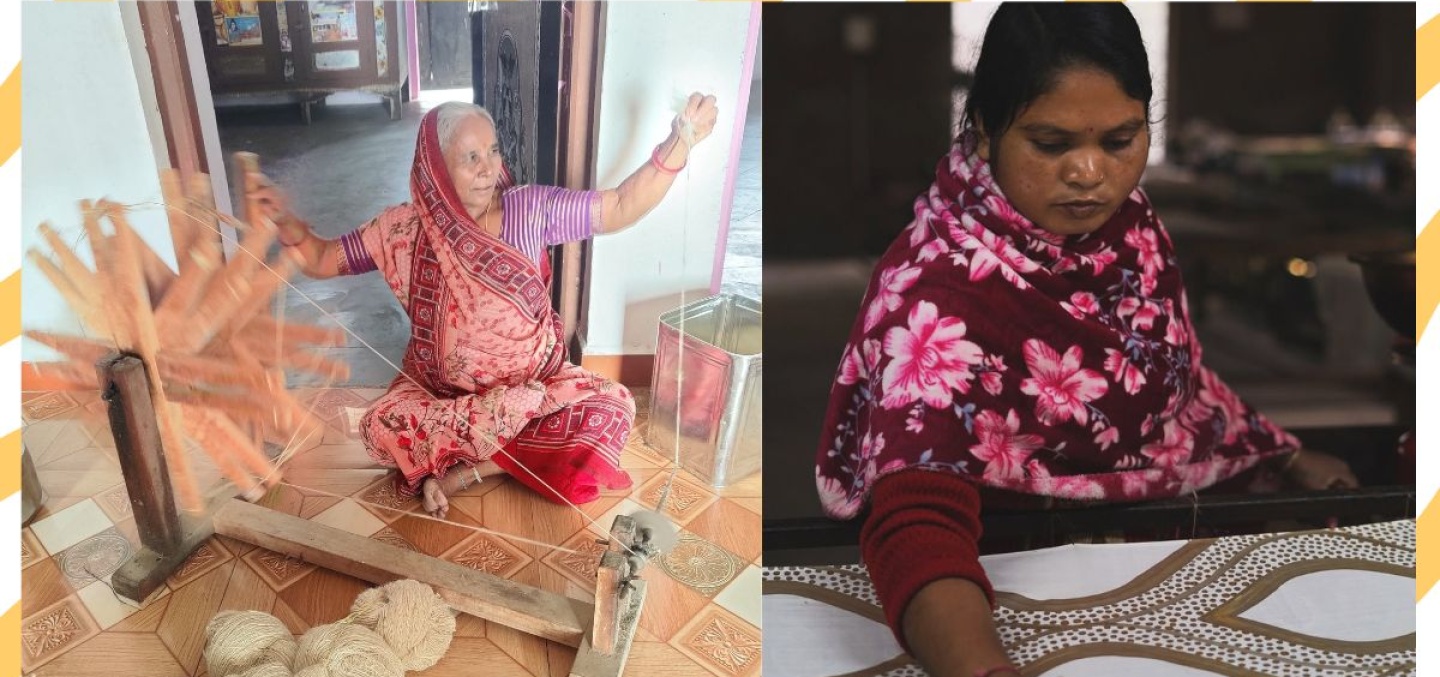
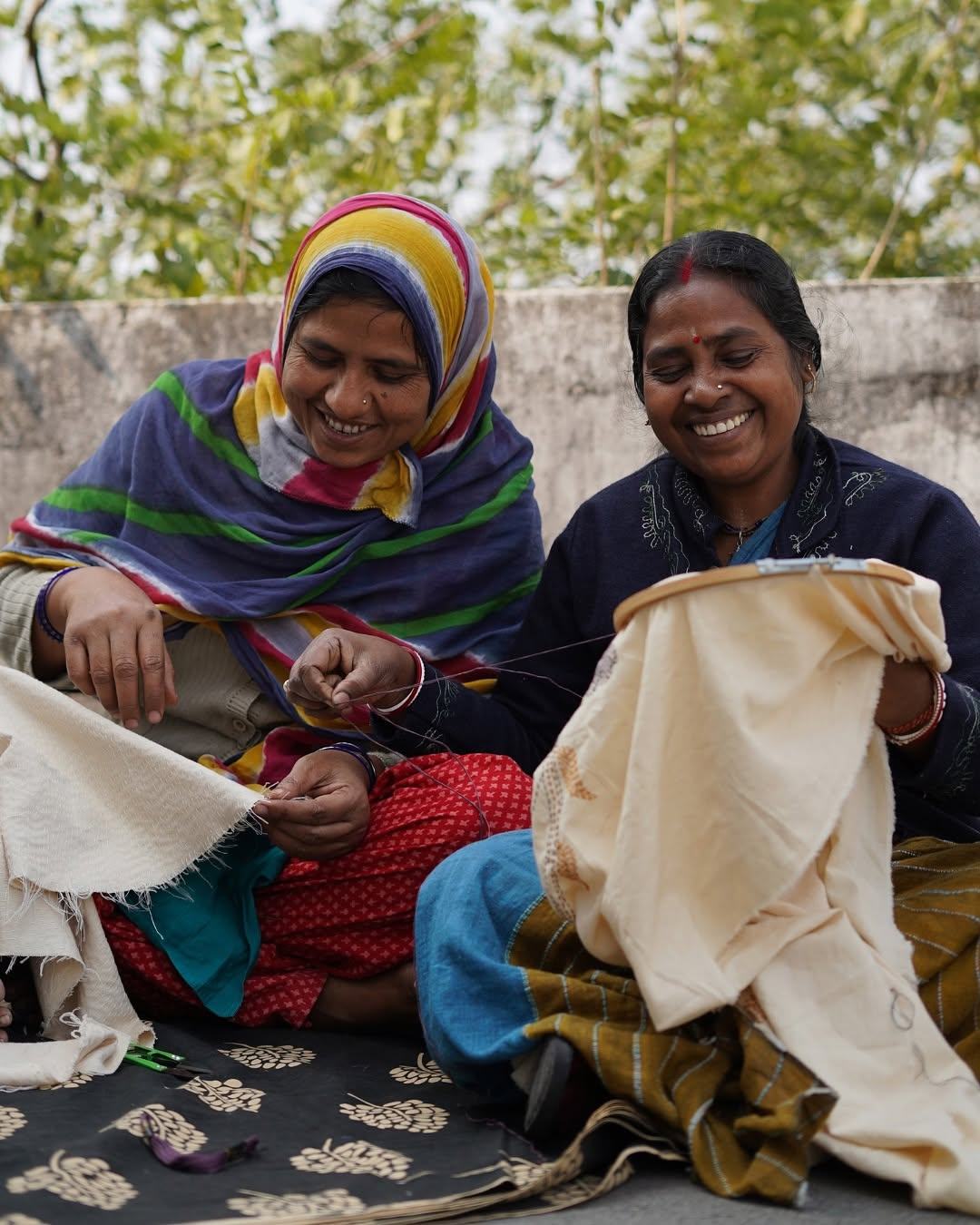
How they work: At Sienna’s clothing unit in Santiniketan, local artisans produce batik, tie-dye, and block prints on handloom fabrics, which are then sent to Kolkata to be crafted into garments by other grassroots embroidery artisans and tailors. Shuli designs all the prints in collaboration with her elder sister Sumona Ghosh-Witherspoon, a designer and print-maker. In addition to apparel, the female artisans at the Kolkata workshop also craft jewellery from repurposed waste fabric and ceramic leftovers. “Over time, this has grown into its own vertical, with greater effort and design going into creating the jewellery,” says Ghosh.
Impact: Prioritising fairness and flexibility, Sienna employs both in-house and remote artisans, providing materials and a design framework, as well as flexible timelines and payment structures to suit their needs. The artisans at Sienna come from diverse backgrounds across Bengal—traditional potters, women looking for financial independence, and even the younger generation of artisans who’ve decided to carry forward their family’s legacy.
At its core, Sienna is about preserving heritage while making it relevant today. And they understand that to do that, they have to honour and support those who make it possible.
Ethical fashion for the win
Brand: Sui
Who they are: Mahima Gujral started Sui in 2018 with a mission to create beautiful, wearable clothing using better textiles and ethical supply chains. Sui has a wide offering of garments from breezy cotton tops to denim skirts and even dresses made of hemp, in earthy tones and minimal floral motifs. They also have a childrenswear line. Sui’s collections can be found online and in select boutiques across the country, and they just opened their first physical store in Singapore early in March 2025.
Origin story: Gujral grew up immersed in fashion, thanks to her family’s brand, Sue Mue, founded by her grandmother in 1968 and continued by her mother today. Spending her childhood in the store, and interacting with artisans shaped her career aspirations. “I adored the industry and loved the way we could tell stories through the clothes we wear,” she says.
But it wasn’t until she was pursuing her master’s in Italy—encountered the fashion revolution movement, sparked by the 2013 Rana Plaza tragedy—that Gujral truly understood the ethical gaps in the fashion industry. “Sustainability wasn’t a common term in fashion school,” she says. But learning about fast fashion’s devastating impact on the environment and vulnerable communities made her resolve to do better when it was her turn.

How they work: For all of their handwoven fabric, custom weaves and block prints, the New-Delhi-based brand collaborates with vendors and NGOs who work with local artisans. Sui has an in-house designer who creates their signature minimal motifs, and once they receive the organic and kala cotton fabrics from the artisans, an in-house tailoring unit crafts them into the final pieces.
Impact: Their sustained work with artisans ensures steady employment and therefore a livelihood for them, as well as provides support to the NGOs with whom they collaborate for the artisanal work. “Kala cotton has grown to be one of our popular fabrics and is woven by Khamir Crafts, with whom we have a rolling order of 100-200 metres at any given time,” explains Gujral. They outsource work to Women Weave, an NGO based in Maheshwar for almost every collection, and have also collaborated with Delhi-based NGOs Pins and Needles and Societymaker, who focus on uplifting female artisans, for accessories.
“Women are often ignored when it comes to the artisan industry, even though they always play a significant role behind the scenes. Bringing them into our ecosystem felt like a natural step,” says Gujral. For Sui, sustainability doesn’t just apply to the materials—it’s about improving the lives of the people who make them too.

It started with a papad
Brand: Happy Threads
Who they are: Mumbai-based Happy Threads was born out of a simple yet powerful idea—to take the intricate crochet work that women in the Dawoodi Bohra community had done for generations, and turn it into a sustainable livelihood for them. The artisans create everything from toys to stoles and accessories like earrings, selling their wares through their website, Hamleys, Crosswords, Amazon and even the Dubai Duty-Free.
Origin story: It all began in 2016 when a little girl offered Syedna Mufaddal Saifuddin, the current spiritual leader of the Dawoodi Bohra community, a papad made by her mom. When he found out this would earn them a mere ₹100 a day, he rallied his family and members of the community to do something so the women could earn at least ₹500. Consequently, a survey that was conducted found that crochet was a common skill among Bohri women, used to make topis that the men wear during prayers and occasions. And thus, Happy Threads was born.

How they work: The initiative is a subsidiary of the Supermoms4u Foundation run by the community. Women work from home or in small groups at the centre near their homes, balancing household duties while earning an income. Salaries go directly into their own bank accounts—never to a male relative—and they’re paid for every piece they make, whether it’s sold or not. The organisation runs workshops for new and skilled artisans, offers professional development in teamwork and time management, and hosts awareness drives to introduce more women to the opportunity.
Impact: What started with just a handful of Bohri female artisans creating small motifs and decorative pieces snowballed very quickly. Today, 5,553 artisans are spread across 190 centres in India. For many women, besides money, it’s about having an identity beyond their household roles. For still others, it’s about embracing community. “Many artisans say the work has helped them overcome depression and find a sense of belonging. Some even say people in the community now recognise them as ‘the Happy Threads lady,’ and that, for them, is a badge of honour,” says Ruqaiyah Harianawala, marketing head of Happy Threads.
Happy Threads aims to reach 50,000 artisans next, empowering more women in the community to earn their own income, make productive use of their skills, and carve out their own identity.