

Not the apocalypse, you need a survival plan for the voice note takeover
Please hesitate to contact me
When humanity went from carrier pigeons to telegrams to the telephone, everyone rejoiced at the ease and speed of communication. But that delight has faded in the last few years thanks to overexposure and the pressure to be constantly available, dividing us into camps — those who prefer picking up the phone and calling and the others who prefer texts so that they can put off responding till the zombie apocalypse.
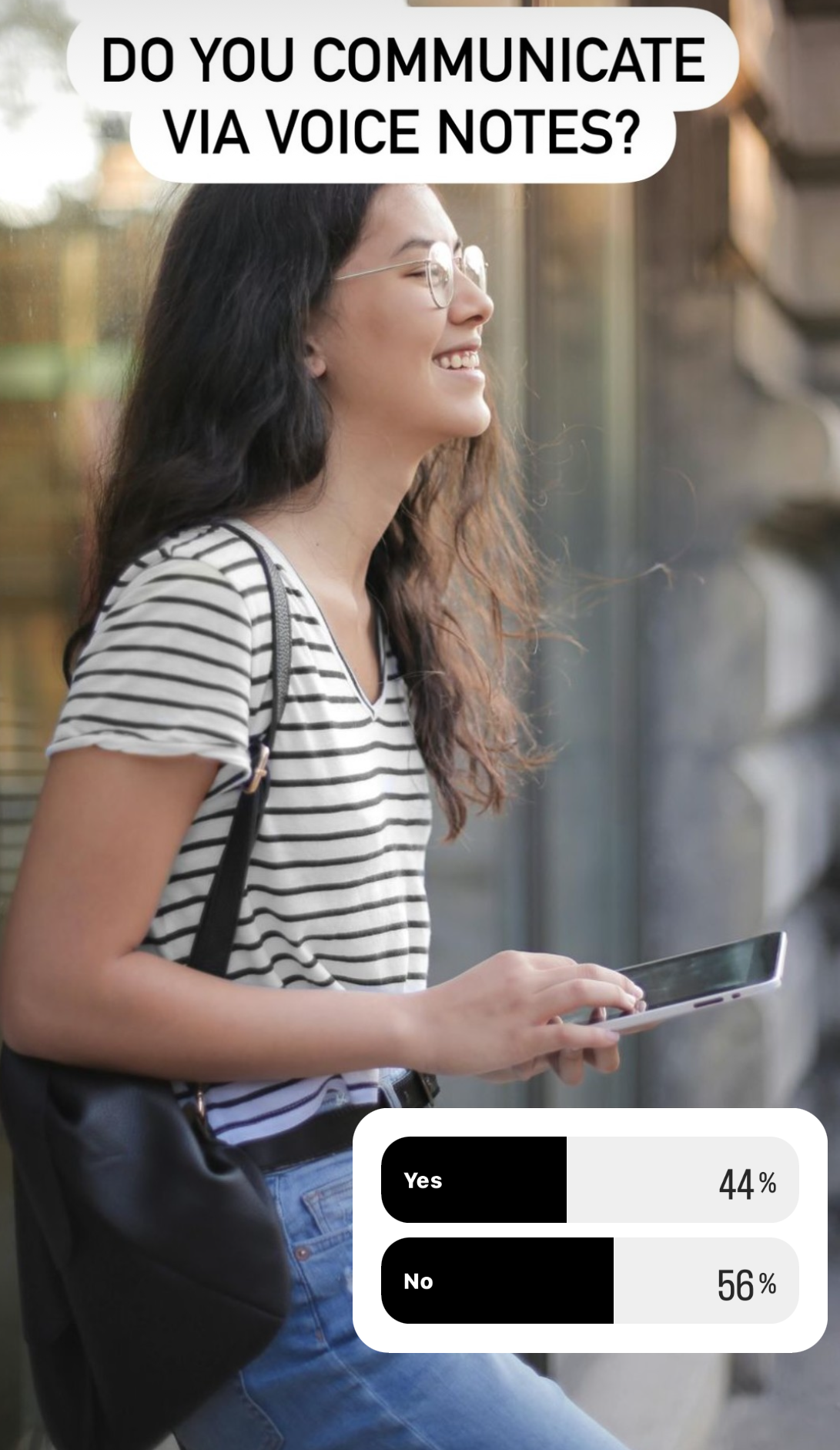
A third, tedious camp emerged when people began communicating via my latest nemesis— voice notes. A message that’s not urgent enough for a call and not simple enough to put into a text finds itself in a voice note. Sometimes it’s a 40-second note from mom sharing her dal-tadka recipe and other times, it’s a 10-minute podcast of everything that has happened in Shefali’s life since she moved to the U.S. to pursue artificial intelligence. Voice notes are like an overcrowded galli of unedited thoughts that have a low probability of pleasing the receiver. We asked Tweak readers if they like communicating via voice notes, 56% said no.
Is it convenient? Of course — when you’re multi-tasking and have no time to type or get on a call. But when it’s yet another episode of your friend’s 3 am boyfriend crisis, where she grumbles about the same issue in a long voice note for the 10th time in a month, the empathy leaves your body faster than the street-side pani-puri you had on a particularly rainy day. Temporary retrograde amnesia about why you love them is bound to set in.

What’s the deal with voice notes?
It may be particularly exciting to receive a voice note from a crush in the middle of the day or understandable when mom’s asking you to pick up dahi on the way home while she is prepping biryani for dinner, but anything beyond that is just a recipe for attention destruction. Even the best-performing Instagram reels – visually stunning with a great hook – are 90 seconds long, anything longer and you’ve lost the viewer’s interest.
Long voice notes are much like that ‘urgent’ email that drops at 5:59 pm just as you pack the work day away. You dread, curse and avoid it, but in the end, you know you’ll have to set aside some time to face it. I usually respond to non-exigent texts when I’m commuting and have nothing better to do than stare at the city’s potholes. But wouldn’t you rather jam to Sabrina Carpenter than try to keep track of a meandering one-way conversation that skips from one point to the next with the swiftness of a cheetah chasing a gazelle?
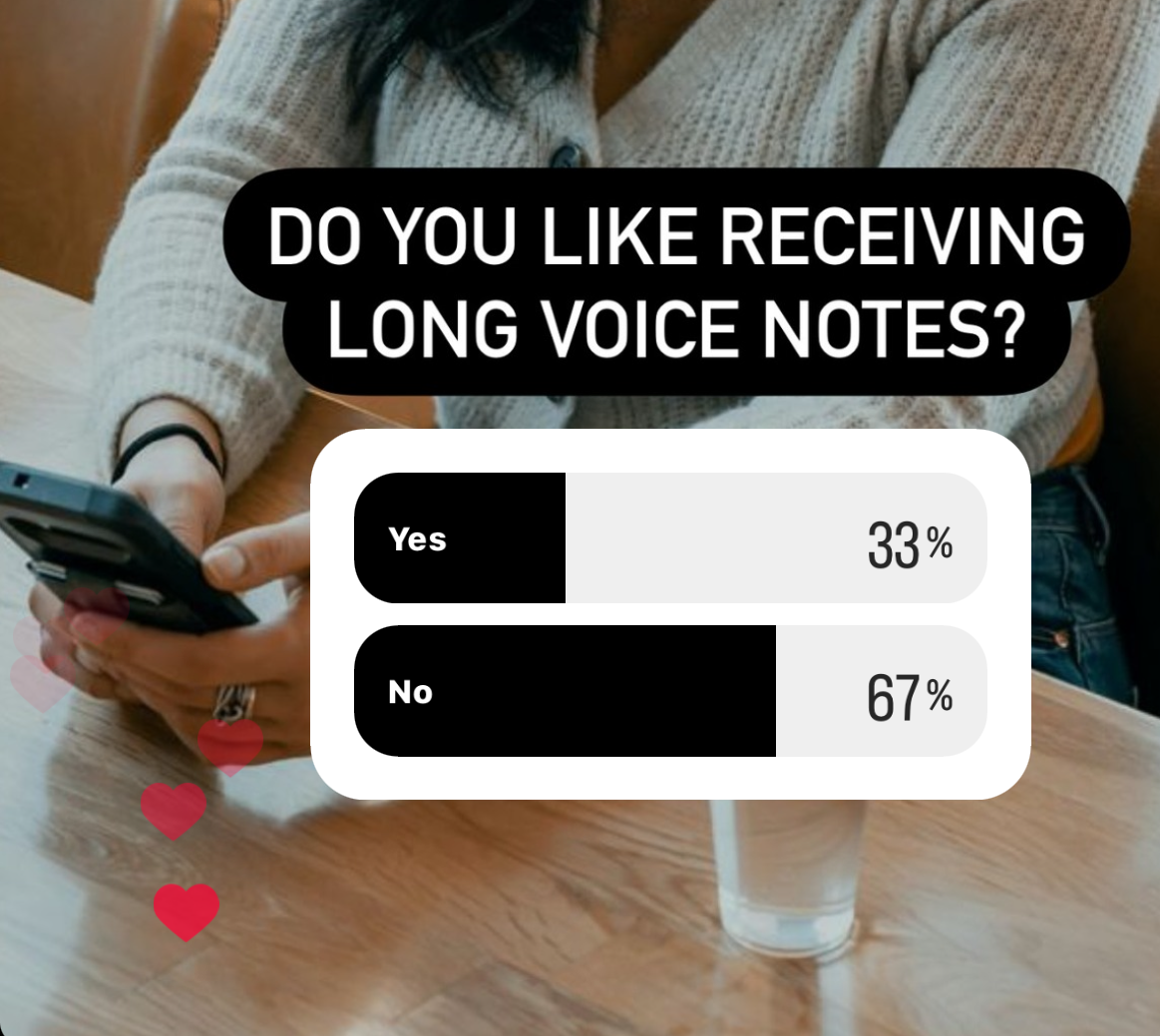
‘What do you think about my 30th birthday plan? Should we have dinner at that new Italian place on M.G. Road? My sister-in-law is driving me crazy with her sasu maa woes. Who’s going to tell her, her mom is no different? By the way, how was your trip? You never updated me…’ and on and on it goes. And it’s not just me, 67% Tweak readers said they don’t like receiving long voice notes.
A conversation is a two-way street, but these main-character energy hoarders expect detailed responses to their self-obsessed monologues, even if five minutes of their message is just ‘uhmms’ and ‘uhhs’. I’m a texter. You can send me paragraphs or a string of texts; I’d much rather reply to everything spelt out in black and white than recall bits and pieces from memory. Also, how do you remember what you said? I treat my chats like a sacred record, written proof that can be used anytime to win an argument — easily discoverable through a keyword search, something you can’t do with voice notes. Yet.
We’re a generation who grew up with character limits and invented the short-form language for texting. So we know, there’s nothing that can’t be said under 200 characters. And as someone who writes for a living, brevity works like magic in communication, whether it’s for brands or family dramas. It’s time we established some voice-note etiquette — no more than two minutes if it’s a general, non-emergent message, with a five-minute upper limit if you really have to get into it and can’t do it over text or call. Keep it short and to the point, don’t skip between subjects like you’re on Takeshi’s Castle. And most importantly, ask the receiver for consent: check if they’re fans of long voice notes or not. Even if the answer is yes, it doesn’t give you permission to spam them with back-to-back five-minute-long podcasts of your life and just give them a call or catch up for coffee.
Voice notes have no age bar
It’s not just the youth; the boomers are thriving on voice notes too. All the random blank voice messages that your Haridwar-wale fufa and Bitty chachi send accidentally to the family group are the shortest route to a panic attack. When all you hear are muffled voices, static or, worse, nothing at all, you expect the worst. Are they having an emergency? Do they need medical assistance? Either way, you reach the same troubling conclusion without any explanation, while they have already moved on to the next episode of Anupama.

There’s something impersonal about sharing life updates as monologues, robbing the relationship of the due attention it deserves because we look at it as a task to strike off and not a conversation to be had. An occasional five-minute life update as a voice memo feels wholesome because you’re all caught up. It gets annoying when people treat it as their time in the spotlight, frequently monologuing their woes or giving unsolicited advice without consideration for the receiver’s time or energy. If I wanted this, I would’ve just gone to my family get-togethers and thrown myself to the wolves aunties and uncles.
I’m tired of being held hostage by one-way rants. So, until people can stop this obsession with long, podcast-like voice notes, I’d like to say, either drop me a text or give me a call; otherwise, please hesitate to contact me.