

'I burnt my journals on New Year's Eve and it was the best I had felt in years'
Sometimes you need to set the old ways on fire
Last New Year’s Eve, I chose to burn all my journals in a havan kund, page by page. It was a long evening, and my plans were very different from my friends’. I would spend it all alone on my terrace in the dark, feeding my journals of the previous four years to the fire, with only their embers for company.
What I burnt was not my treasure of memories or a worthwhile record of the past. It was my burden, my worst experiences lived and rehashed. Instead of clarity, the journals gave me years of rumination.
Writing as release
I began journalling during one of the most uncertain periods of my life. COVID hit while I was in the middle of my Class 12 board exams. Two papers were cancelled. I had spent an entire year doing nothing but studying. I had skipped plans with friends. When relatives visited, I stayed locked in my room solving math problems. My family postponed travel plans for me. I stayed up nights studying, surviving on midnight snacks and sugary coffee, and slowly gained 25 kilos.
The only thing that kept me going was the promise I made to myself: after my boards, life would begin. I would go out with friends, travel with my parents, sit in cafés doing absolutely nothing productive. I would work on myself. I would lose the weight.
Before my boards, I had been diagnosed with PCOS. My body changed faster than my mind could keep up with. I gained more weight. My hair started thinning. Facial hair appeared where it never had before. I was exhausted all the time. I stopped recognising myself in the mirror, and eventually, I stopped wanting to look at it. It felt like I was living in someone else’s body. I had always known myself a certain way, and the speed of those changes left me disconnected from who I thought I was. (Read this bride’s account of how her PCOS wreaked havoc with her wedding planning.)
Then the pandemic trapped me at home with my thoughts, and with a body that felt like it was betraying me. The hormonal imbalance made me moody, sad and angry. I didn’t know how to explain what I was going through. It wasn’t that I didn’t have people who loved me, but everyone seemed busy surviving their own version of lockdown. I felt like they wouldn’t understand even if I tried to share how I was feeling. That loneliness was what eventually pushed me toward journalling.
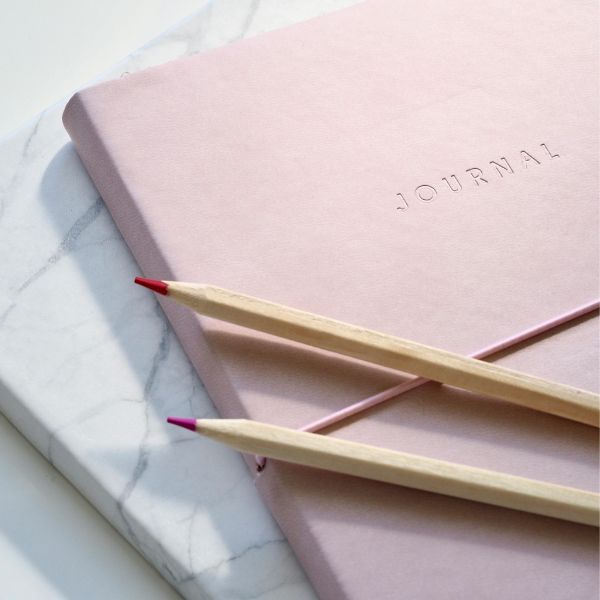
I bought beautiful, expensive notebooks because they made me feel hopeful. They came with stickers with encouraging slogans such as ‘Take it easy’, ‘You can do it’, and ‘Do your thing’. There were also stickers—of emojis, croissants, cupcakes and hearts—that could make your journal look like a mood board. They convinced me that writing could fix what I couldn’t say out loud. So I gave in, and began to put my pen to paper.
I kept a journal every year, from 2020 to 2024, believing that if I stayed consistent, if I poured my heart out every single day, things would get better.
A record of shame
I promised myself I would write daily and I did, even on days I had no energy and especially on days I felt terrible. Which was almost every other day.
My self-image was in ruins. I never thought of myself as particularly pretty to begin with, but after the physical changes, it felt unbearable in my own skin. I became hyper-aware of my body—my arms, my strawberry legs, my thinning hair. My hair was the one thing I had loved about myself, and watching my scalp become visible was devastating. Even now, when I talk to people, I notice their gaze drift upward to my hairline. It makes me shrink.
I missed my period for months, feeling bloated, uncomfortable and emotionally volatile. And that is what filled those pages. My journals were not gentle or reflective but rather angry and bitter. I’d often ask the universe, why was this happening to me. And on page after page, I’d document how much I hated my body and how life seemed unfair. I wrote about being triggered easily, about being exhausted by small things, about hating mirrors, photographs and clothes that didn’t fit.
Those journals didn’t help me process my pain. I would shut the journal feeling heavier than before, convinced that my life was nothing but a collection of problems that needed solving. Those pages became a place where I reinforced my worst beliefs about myself. Even after I started getting therapy in 2023, I kept journalling out of habit. I started trying to write some good things in my journal but nothing seemed worthy enough. For example, if today, a dog came and sat next to me in a park, it’d be the highlight of my day. But back then, I was too pessimistic, too self-loathing, to see the beauty in small joys.
By the end of 2024, I had four journals filled with nothing but negativity. But as therapy slowly began to make me feel better, I realised that I didn’t want to fill diary upon diary with the worst thoughts about myself anymore. And I no longer wanted to encourage the version of myself that did.
Burn after reading
New Year’s Eve always feels symbolic, like the end of an era, and a new chance at a clean slate. This time I wanted to start the new year on a fresh note, to shake off the mental shackles that had been holding me down. On December 31, 2024, I decided I wouldn’t carry those journals into yet another year. I was done with them.
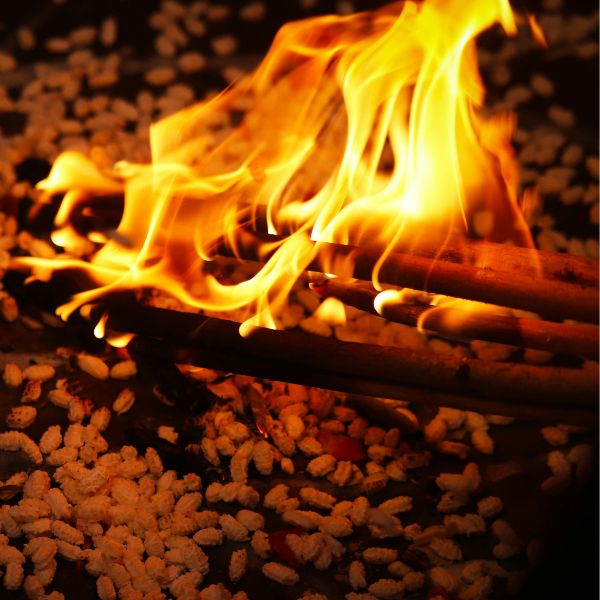
So I took them to my terrace along with a havan kund and wooden sticks. I was going to burn them. Initially, I planned to toss them in whole but then I decided to opt for a slower ending, something that demanded presence and intention. I tore every single page, and burnt them one by one, which felt strangely necessary.
I started at 7 pm and it took nearly four hours. I was alone and it was dark, except for the light of the flames. As the pages turned to ash, it felt like that version of my life was dissolving too. Not because everything was suddenly okay, but because I had finally stopped hoarding my pain. I felt lighter, simply because I had chosen to let go.
That night, I made myself a quiet promise. I wouldn’t stop journalling, but I would do it differently from then on.

A new page
I continued journalling in 2025, but in a completely new way.
Having had pretty journals filled with negativity made me realise the frills mean nothing to me, and you don’t need expensive ones to stay committed. I bought regular notebooks and I started writing three things I was grateful for every day. Some days my gratitude was for embarrassingly small things, like a warm meal or a moment of silence. But I wrote them anyway. It truly made a difference, and supported my therapy.
I also stopped writing only about how I felt and started writing about what I noticed. Small observations, overheard conversations, thoughts that did not revolve around my body or my pain. They were still things I experienced, but when I wrote them as observations, I was able to detach myself and look at situations with clarity. Slowly, this shifted how I looked at the world. It gave me space to breathe and sometimes even inspired short stories and ideas.
I still write about things that go wrong. I still have bad days. But they no longer take over the entire page. There is room now for balance, for the reminder that one difficult moment does not define my entire life. This New Year’s Eve, I will not have a journal to burn because my current one does not feel like a damning record of everything that is wrong with me. I find myself wanting to reread pages that hold proof of growth, even when it was messy and uneven.
I do not have resolutions for 2026, but I do have one intention. I will keep writing. The idea is not to relive my pain, but to make space for myself to exist, honestly and gently. And for the first time, that feels like healing.
As told to Akanksha Narang