
Why Miranda Priestly was never a villain to me
She was a toxic boss, but could you blame her?
I watched The Devil Wears Prada when I was 13. I was alone at home, just back from school and still eating snacks in my uniform, when I switched on the TV to Romedy Now. Remember the channel? It had become my latest obsession as a teen, for watching early 2000s Hollywood rom-coms and catching up with American pop culture.
The movie had just begun, thankfully. As I watched the opening montage—swannish, stylish women, along with Anne Hathaway’s plain-Jane journalist Andy, getting ready for work in New York, hailing cabs and grabbing breakfast—set to KT Tunstall’s earworm ‘Suddenly I See‘, suddenly I did see. I saw a new potential career choice, a lifestyle and an idea of who I could be by the time I was 22.
That night, I discussed the movie’s premise with my parents. My mother was a teacher and my dad had a corporate job, and their work lives couldn’t be more different. While she was used to longer, school-length breaks each year that allowed her to have a life outside as well as spend time with me, my dad worked all the time. He would leave vacations halfway to tend to ’emergencies’, and most of our road trips would be spent with him driving and attending calls on Bluetooth. When I told him about Andy’s predicament, he shook his head, “You will need to make sacrifices if you want to be successful.”
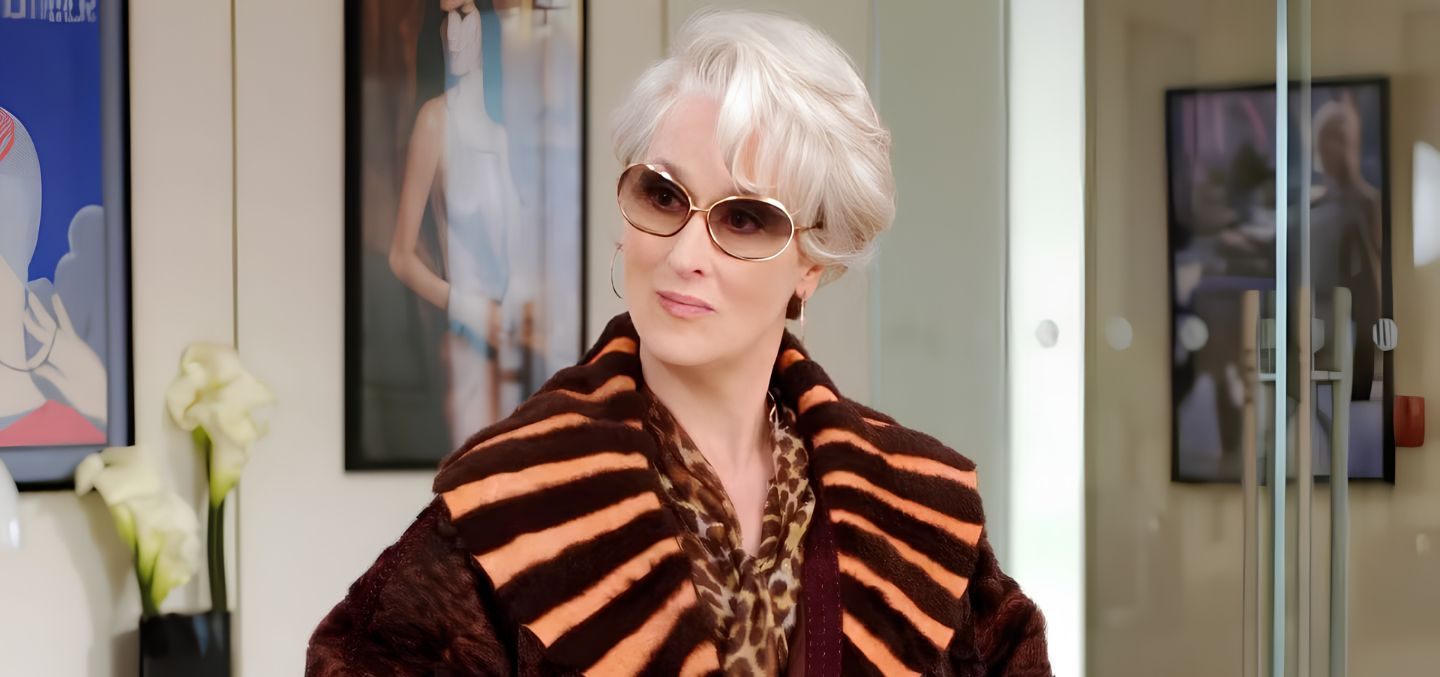
But I already had no interest in ending up in a job that would leave me uncredited like Nigel, the art director (Stanley Tucci), disposed of like the first assistant Emily (Emily Blunt), or broken up with like Andy. The only character who wasn’t an automatic strike off from my list was the boss, Miranda Priestly (Meryl Streep).
But why? Wasn’t she the reason everyone else was miserable? Wasn’t she the film’s villain? Back then I didn’t fully get why I didn’t dislike her even though she was clearly problematic. It’s only with many rewatches over the decade since, that I came to understand why. Allow me to argue the case for my client Miranda Priestly.
The heels are high, the stakes are higher
Sandwiched between the lunch scene when Nigel calls cellulite an ingredient in carbs, and Miranda’s famous cerulean speech, is an elevator scene. Andy and Nigel run into Irv Ravitz, the chairman of Elias-Clarke, Runway’s parent company. He asks Nigel how the September issue is coming along and how much one of the reshoots Miranda has called for is costing him. Nigel casually replies, “about $300,000”.
At first we’re meant to be shocked at this kind of wastefulness from Miranda. But the actual point of the scene comes next, when the chairman smilingly defers to Miranda’s decision. It shows us he knows that $300,000 is a small price to pay for the value Miranda brings to the company.
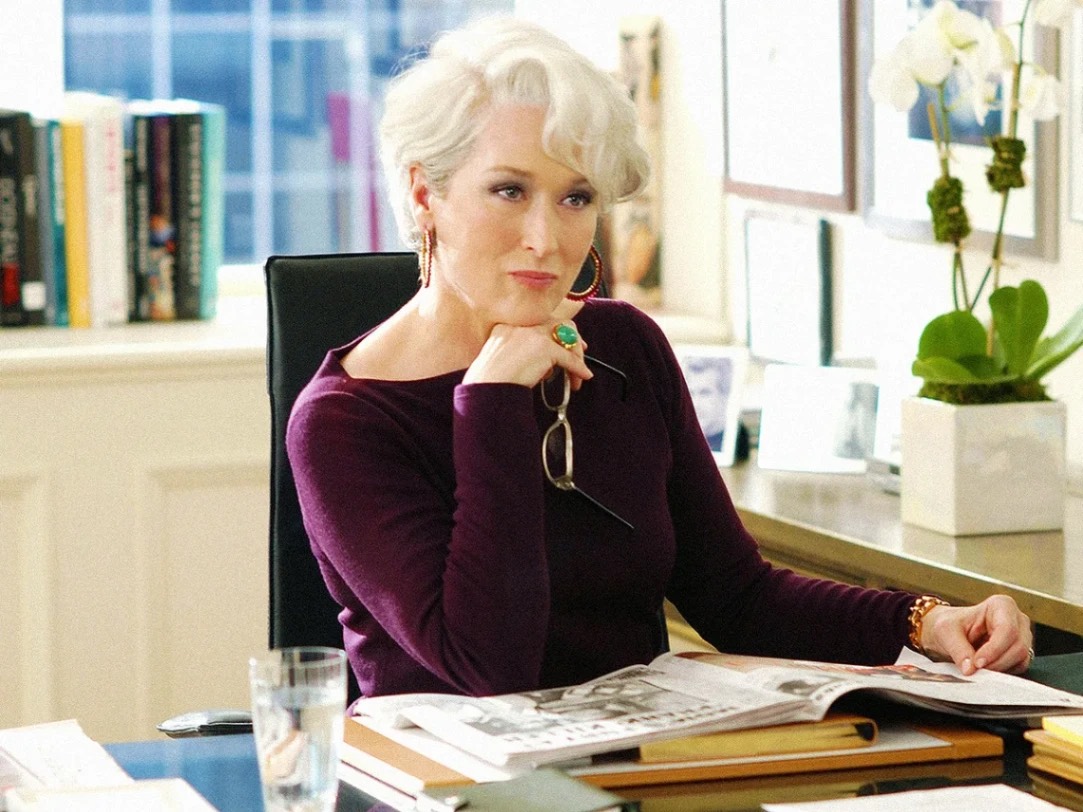
Read another way, it’s an indication of just how high the stakes are for Miranda. Behind the icy exterior, she is handling incredible heat. Not only must she juggle the responsibility of running a globally influential magazine, while also turning profits, but also maintain an impeccable public image while doing it. We also learn she is fighting fires at home, trying to keep her flailing marriage alive and delivering on her children’s expectations. And she must do all this without letting a single piece of hair fall out of place.
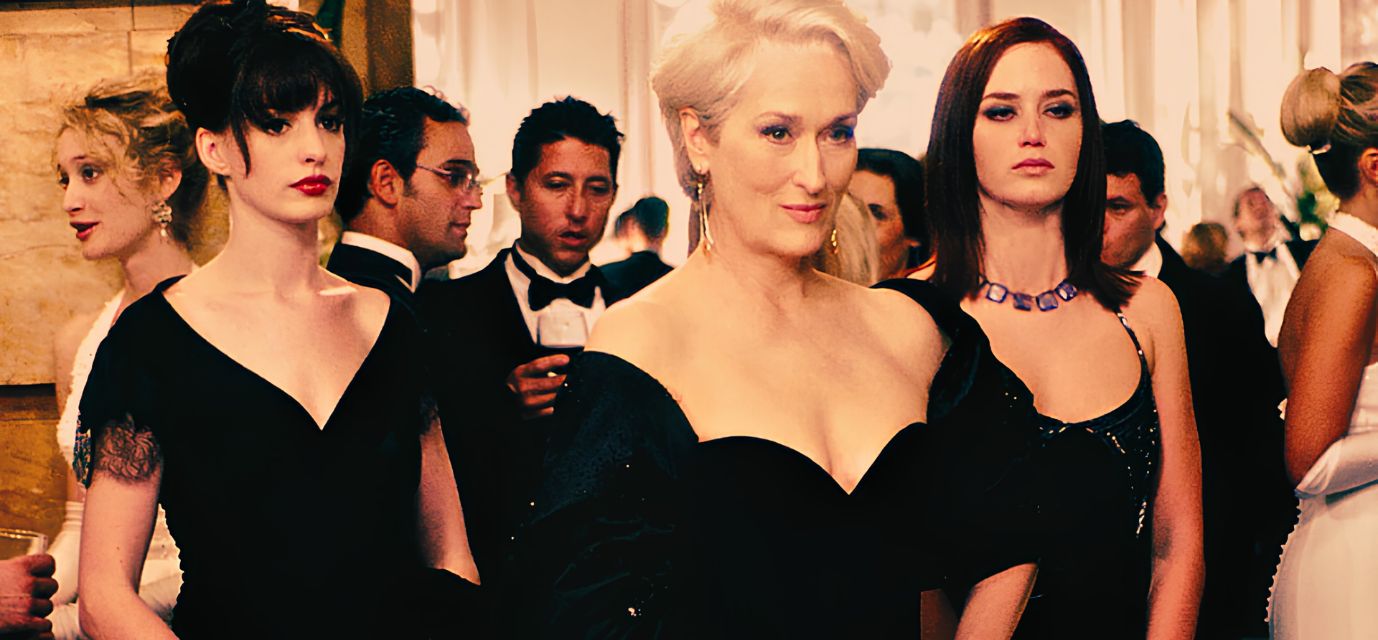
Take the charity benefit she is hosting for the company—it takes two assistants to remember details of every influential guest on the list so they can have it ready for Miranda when she greets them. It’s clear that her getting any of them wrong could have direct consequences for the company. Is it so shocking then that she doesn’t have time for Emily’s “tales of incompetence”?
When I did a rewatch at 22, I still wanted to grab Andy by the shoulders and shake her for not leaving Runway (or Nate, her Burnt-Toast boyfriend). But that’s when I also realised that for Andy, the job as Miranda’s assistant is simply a stepping stone to a career in journalism—“just one year and I can get a job anywhere else”—i.e. she’s only biding her time. But for Miranda, the magazine is everything. It’s literally her legacy. When things go wrong, she has so much more to lose.
The toxic boss’s toxic boss
The film’s first half portrays Miranda as both a peerless tastemaker and punishing task master—but the second half reveals how vulnerable her professional position actually is. The chairman smiles fondly at her expenses and air-kisses her at events, but it seems the company is gearing up to replace her with the younger, more cost-effective editor of French Runway, Jacqueline Follet.
Even after dedicating decades to the magazine and neglecting her personal life for it, in the end she will have to fight to keep her place and maintain her relevance. While I don’t personally understand why anyone would dedicate their lives to work to the extent Miranda did, I just know that work was that important for her. And I can see how the fear of losing that one constant might cause a person to become calculating, manipulative and trample upon others, in order to hold on to it. It’s do or die, and flows from top to down.
Meryl Streep echoed this idea in her defence of Miranda in a Vogue Australia interview on the 10th anniversary of the film, stating, “[…] With certain professions you put aside your feeling gene, your tendency to feel the other’s pain, in order to be efficient and get the day’s work done. A certain amount of work has to be achieved during the day, you want a direct order and follow through on that order.”
In the midst of this much pressure and stress, Miranda puts aside her “feeling gene”. For example, when she finds out her husband is divorcing her—a day before he’s supposed to join her in Paris to attend an important event as her +1, mind you—the mask drops briefly, but is quickly recovered.
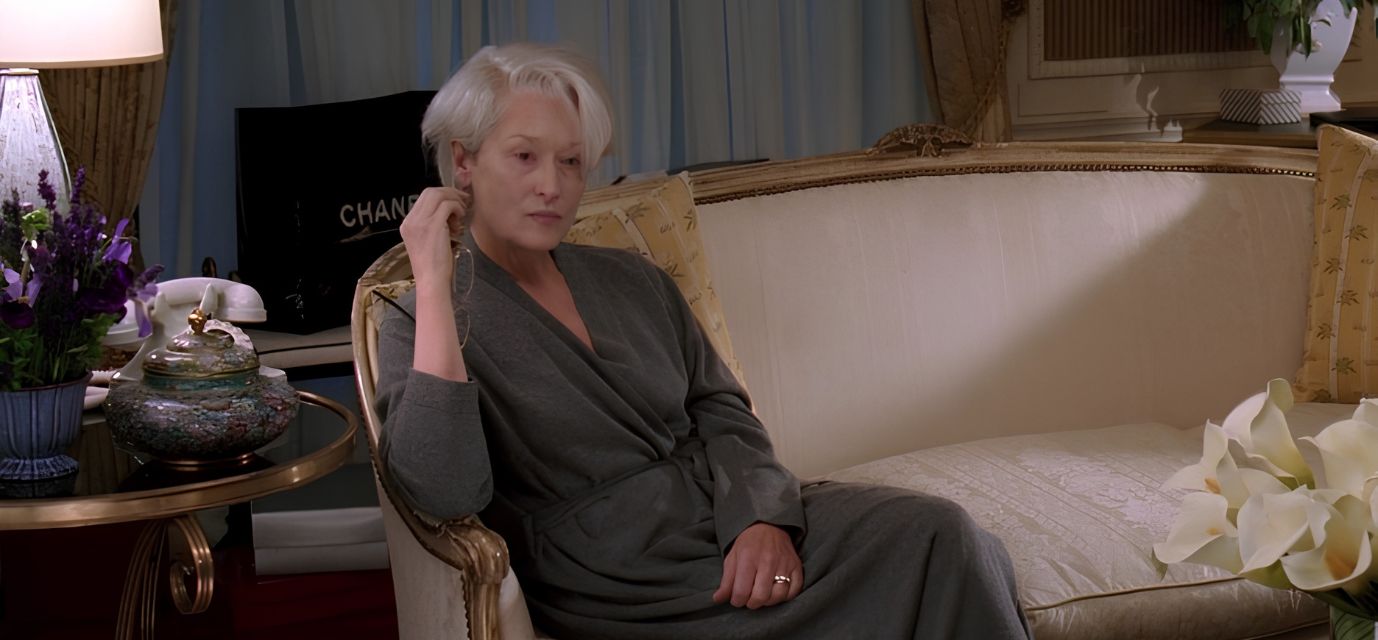
Accountability? For Spring?
Twenty years on, The Devil Wears Prada remains a cautionary tale about bad work-life balance. The characters’ decisions at the end of the film remain our options today too. Andy walks away from the job for her peace of mind. Miranda keeps her job and loses her marriage (a consequence that made me cringe even as a teen).
Except, now the culture has caught up, too. The conversation about the perils of centring work to the exclusion of everything else, is loud. Gen Z especially is rejecting the stereotype of a toxic genius like Miranda Priestly.
But earlier this month, after attending the 20th-anniversary screening of The Devil Wears Prada with a friend, we felt a little differently. We had both worked for toxic bosses in the past, but now, as ambitious adults who are big on boundaries, you couldn’t catch us working for bad bosses again. Unless. Unless they were a visionary like Miranda, and could teach us things about work—and life—that no one else could. Maybe for someone like that, we could endure a little bad behaviour.
I’m curious to see how the sequel, releasing on May 1, reflects with these new realities. My guess is that it will attempt to hold Miranda accountable by giving her actions external consequences. Maybe an ex-employee writes a damning exposé (which is what Lauren Weisberger’s original 2003 novel allegedly was).
And while that will be super entertaining to watch—this time on the big screen, instead of at home on cable with a packet of Kurkure—I hope it pokes at the system that gives birth to someone like her, too. *Cue Miranda Priestly voice* That’s all.