


“Watching the news is making me anxious, but I can't stop”
When knowledge is both power and a burden
Last night, across countless homes in India, families gathered in living rooms, eyes fixed on news tickers and looping visuals of drones in the night sky. The ongoing conflict has taken over our screens and our minds, from intercepted missiles and blackouts to the abrupt evacuation of the Himachal Pradesh Cricket Association Stadium during an IPL match. Every headline feels urgent. Every update, a jolt.
News in times like these is a double-edged sword, both essential and exhausting. We want to stay alert, stay prepared. But with each notification, we feel ourselves spiralling, consumed by worst-case scenarios, longing for resolution, fearing escalation.
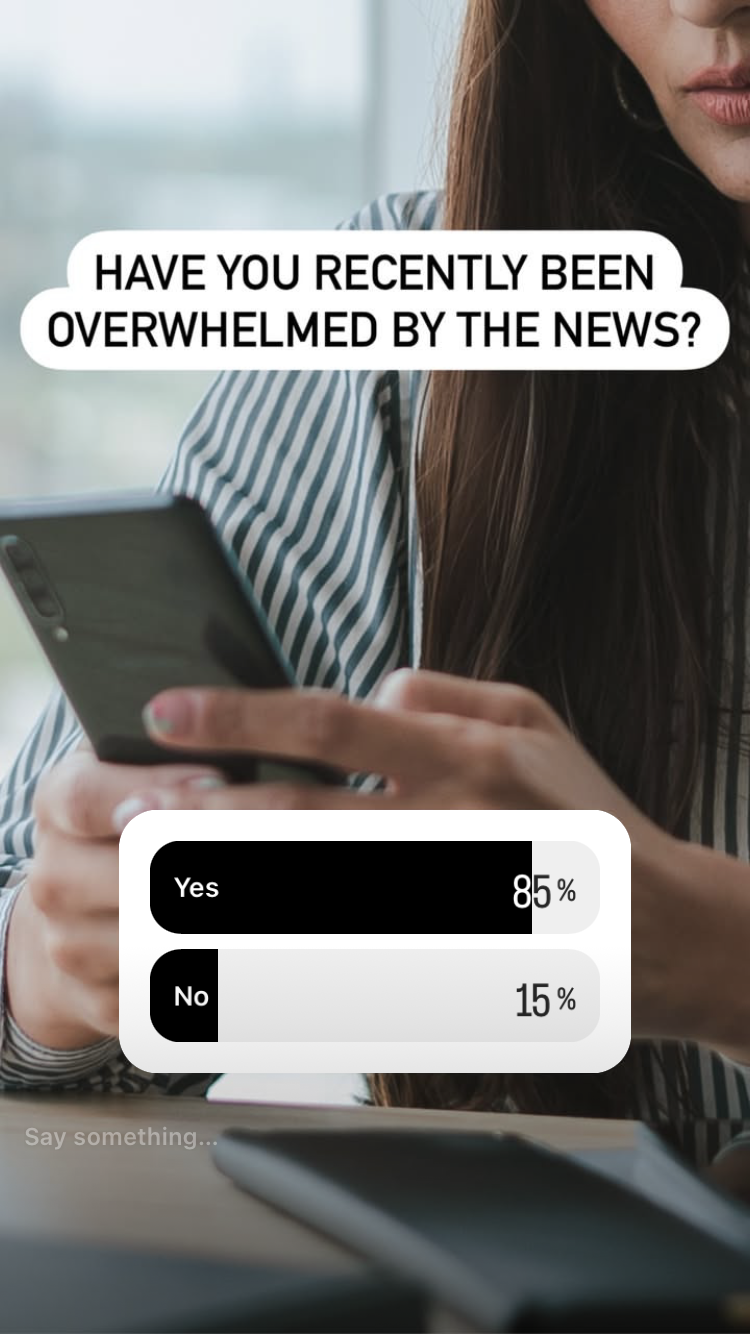
There’s a fragile balance between staying informed and preserving our mental wellbeing. But, in a world where fake videos flood social media and speculation masquerades as fact, it becomes harder to find that balance. When we asked Tweak readers if they’re feeling overwhelmed by the news right now, 84 per cent of the 1,753 respondents said they do. Can we ever be truly prepared for a crisis of this magnitude? Especially when knowledge, in such moments, is both power and burden.
To understand how everyone is navigating this emotional tightrope, we spoke to individuals as well as experts across cities in India about their news anxiety, the toll that round-the-clock coverage of the conflict is taking on their everyday lives, and what they’re doing to cope with it.
6 Indians share how they’re coping with news anxiety right now
Anushka Sharma, 35, Gurdaspur
“With no access to TV during a blackout, we were relying entirely on the internet for updates. My parents, who live in Nangal Dam, sent us news updates. While the atmosphere was pretty tense, the news did offer some relief. Staying informed gave us a sense of protection. Without it, the uncertainty would’ve been overwhelming. It also helped us stock up on essentials and follow the government’s safety guidelines in time.
I still worry—what if a missile hits us or someone nearby? That thought is hard to shake. In times like these, having moral support means everything. Especially during blackouts, staying connected helps us not panic. I know I’m not alone in feeling this way and many of us are anxious, and talking about it is our way of coping.”
Rohit Sehgal, 32, New Delhi
“There’s so much going on, it’s hard to keep up. Watching the news last night made me deeply concerned for those in the targeted areas. I work with an airline, and our team’s WhatsApp group hasn’t stopped buzzing with updates on flight delays and cancellations. It’s a constant reminder of the gravity of the situation.
Even though watching the news makes me anxious, I can’t stop. I want to stay informed, sometimes it brings me comfort. Personally, I’m not talking much about this with others right now. That’s just how I deal with stress.”
Bikram Bumrah, 31, Amritsar
“I’ve lived in Mumbai for the past 10 years, but in Amritsar, my home is just 32 kilometres away from the border. The first night, I was still able to keep my phone aside and fall asleep, but when I woke up at 6am, there was an influx of messages from friends and family, sharing updates from Amritsar.
My parents usually wake up at 8am, and I would have waited for a couple hours before calling them. But they hadn’t replied to my messages from the previous night, and waiting for their reply in the morning felt torturous. Luckily, they’re okay, but I still can’t articulate my feelings from that day.
Since then, I’ve been watching the news so diligently, it’s ruined my sleep and peace of mind. But, how can I stop? How can I tune out? I can stay away from my phone for maybe 5 minutes, maybe even 20 minutes, but none of us can fully escape this. Even if you don’t actively try to stay informed, the news will trickle in through even the smallest cracks. I hope it ends soon.”

Ashwini Malgi, 29, Mumbai
“There is a lot of uncertainty and anxiety, mainly because of the influx of news from multiple sources. I find myself being chronically online to get updates on what is happening, and trying to figure out which news source to trust.
My husband and I have been talking about the overwhelming feelings we have been experiencing these last few days. Living with someone is better, it must be scary for the ones who are on their own.”
Shagun Gupta, 34, Jaipur
“It’s been tough to find a balance between staying informed and protecting my mental health. A part of that struggle is in trying to express how I feel after reading the news. I feel sad, isolated, and at times, almost delusional—as if this can’t possibly be real.
However, I really want my parents to turn off the news because I’m worried about how it’s affecting their mental health. I think our generation has a much better filter for fake news, propaganda, and manipulation. But I know that’s not always true for their generation.”
Alena Kapur, 18, Chandigarh
“I don’t watch the news and prefer reading about current events on Instagram, or getting updates from my parents and relatives. Watching it feels very harmful to my mental health, unless I’m in the right headspace. There’s so much misinformation, terror and hate speech on social media, watching Reels is also becoming toxic.
It’s tough to find that balance though—I feel ignorant if I switch off the news, and obsessed if I’m staying updated. In the face of uncertainty, I try to remember that nothing is in our control but our own minds, so I try to keep that in check.”
This is how you can be informed and still keep your sanity intact
Determined to stay informed, you anxiously flip through news channels and tap on every single Instagram story that pops up on your screen. Until you’re drained, both mentally and emotionally, aching to be far, far away from all the cacophony. And yet, your fingers seem to move of their own volition—you can’t get yourself to stop.
“News of war is frightening,” agrees Lisha Chheda, a counsellor and psychotherapist and the director and co-founder of Rubaroo Breaking Silences Foundation. “It can make us feel powerful emotions, like news anxiety, fear, helplessness, anger, and frustration. When this happens, it’s normal for us to try and seek out more information to feel a greater sense of control. But, once we give in to the urge to doomscroll, we end up stuck in a negative thought spiral.”
So, what do you do? How do you zone in without burning out? According to trauma psychotherapist Rhea Kishnani, our nervous systems are not wired for incessant and copious amounts of distressing information, so it’s okay to give yourself the permission to pause. She recommends checking in with yourself from time to time. “Very often, we’re unaware of our feelings and physical sensations, so it’s crucial to identify, label, and even use imagery to understand what our body is feeling,” she says.

Setting a time limit for how long you can engage with the news can also help you reclaim a sense of agency and consume content more deliberately. “Once you’re done, try a recovery ritual to feel better. Ask yourself: ‘Does my body need to meditate, talk to a loved one, engage in breathwork, listen to music, journal, or move after I have heard or read this?’” says Kishnani.
If you’re bothered by insensitive opinions and hateful content, she recommends muting, unfollowing, and restricting accounts that do more harm than good. “Rely on credible sources and outlets and engage with the content critically. In testing times, we have to remind ourselves that we are humans with limitations, bandwidths, and trauma histories, not news guzzling engines,” she adds.
While it may be tempting to self-isolate and marinate in your own misery, Chheda urges people, especially those living in affected areas, to reach out to those around them. “If connectivity is feasible, try speaking to your neighbours and loved ones living in the area. Check in on them and have a heartfelt conversation—it’ll remind you that you’re not alone in this,” she suggests.
And if all else fails, try a few simple breathing techniques, like the physiological sigh or box breathing (or this one), to remind your body that you’re safe and okay. “Spending time with a loved one, moving to another spot in the house, having a glass of cool water, going for a short walk, tending to a plant—these are all ways to bring your awareness back to the present,” she explains.