


Why female killers don't scare, but satisfy us
The villain is the victim first
In season one of the 2019 TV anthology Why Women Kill Beth Ann Stanton is a woman in 1960s America, perfectly content being sweet, polite, and accommodating. Until she discovers her husband’s infidelity and that his mistress was responsible for her child’s fatal accident. Then she plots his murder.
The narrative does not linger on the crime so much as it does on the slow erosion of her sense of self that leads Stanton there. It shifts focus from what she does to what was done to her. Female viewers too didn’t take issue with the murder as much as with her husband’s audacity.
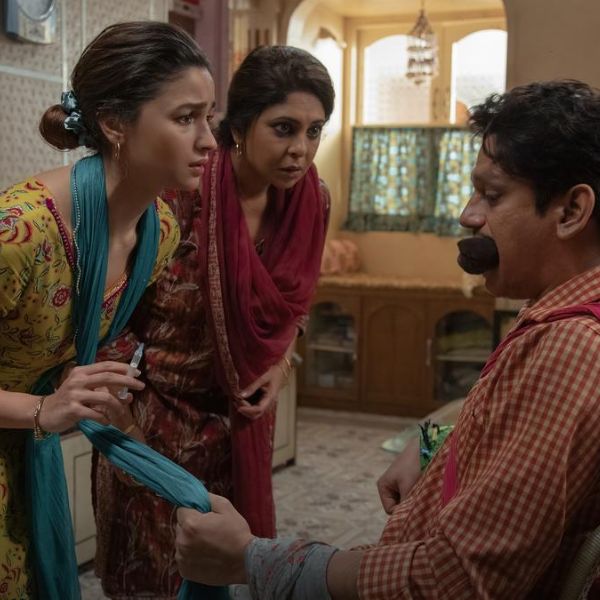
There has been a proliferation of films and shows about women fighting back—Mrs Deshpande (2025), All Her Fault (2025), Do Patti (2024), and Darlings (2022) are just some of the more recent ones. But even earlier predecessors (like the critically-acclaimed Lajja (2001) where various women rise against their perpetrators, and NH10 (2015) where the hunters become the hunted) helped establish the trope of women who kill, with a cause.
And unlike male violence in fiction, these female-led stories invite our sympathy, and even make us feel vindicated. They satisfy our moral need for justice. Whereas, violence perpetrated by men onscreen is more likely to disturb us, make us recoil and make our blood boil.
Context is everything
Globally, men are and have always been the primary perpetrators of violence. According to a 2025 report by the WHO in partnership with the UN, nearly 1 in 3 women globally have experienced partner or sexual violence during their lifetime. In the past year alone, an estimated 316 million women were subjected to these types of violence, and even this figure is likely an undercount. Cinema simply mirrors this bleak reality.
When the fictional murderer is male, the narrative usually centres on the crime itself, without too much interest in the backstory. Think the ruthless, remorseless Anton Chigurh in No Country For Old Men (2007), or the depraved Gokul Pandit in Dushman (1998), who violates and kills women, or the psychopathic Shiv Prasad Yadav in Mardaani 2 (2019).
By contrast, female-led violent films are nearly always revenge dramas, and context is integral to the plot. They linger on the backstory, and more often than not, it is rooted in sustained abuse.
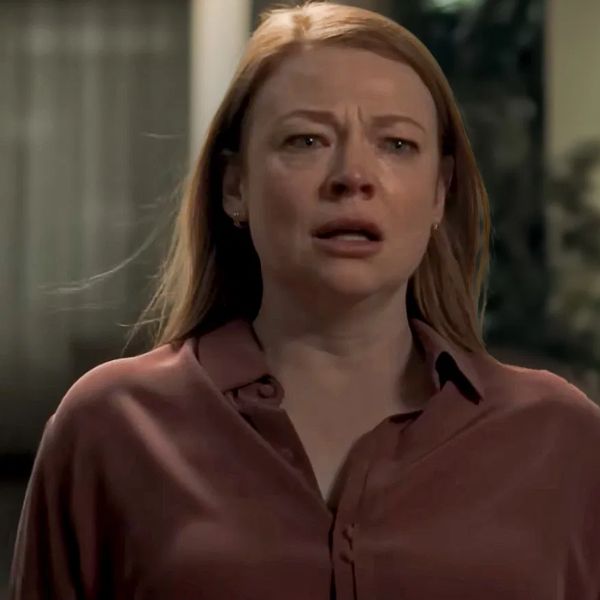
In Do Patti, Saumya is beaten and betrayed repeatedly by her husband. In Darlings, Badru spends years blaming alcohol for her husband Hamza’s violence until he assaults her while sober and causes her to miscarry. In All Her Fault, Marissa, stretched thin by motherhood and a controlling marriage, reaches her breaking point when she realises her child is no longer safe with her husband.
These women are not written as monsters. They are written as survivors who were pushed past the point of endurance. Their stories land because they echo the lived realities—physical, emotional, and psychological—of countless women.
This is why female villains occupy a different place in our cultural consciousness. We instinctively understand their crimes to be acts of self-defence, moral outrage or last resort. Their retribution is justified.
Women in male-dominated fields
Is it any coincidence then, that women form the majority of the true crime audience. We have quietly grown out of rom-coms as our post-work decompression ritual. After long, emotionally draining days, we are pressing play on serial killer documentaries, queuing up crime podcasts, and adding murder mysteries, fiction and non-fiction alike, to our TBR lists.
According to experts, this could be attributed to women having higher empathy levels as well as a tendency to identify with victims. And perhaps, it also functions as an informal education in danger. After watching true crime drama Believe Me: The Abduction of Lisa McVey (2018), we make mental notes to leave DNA behind as evidence, memorise exits, and observe every detail.
But beyond that, these narratives of female violence offer a safe catharsis for women’s rage by flipping the lens. They don’t position women only as victims, but as agents—however morally compromised—who take control of impossible situations. They dismantle the idea that patience, silence, and forgiveness are the only virtues available to women.
So when these characters kill, it becomes difficult not to understand the impulse, even if we do not condone the act. “Watching her (Jenny) and Marissa grow and get rid of both their deadbeat husbands and sit happily together at the end with their children playing, was everything,” one Reddit user wrote about All Her Fault. Another, reacting to Darlings, noted, “It showcased what some women have to put up with. It was dark, and I liked the ending because it was unanticipated.”
In Mrs Deshpande, Madhuri Dixit plays a woman temporarily released from prison to help catch another serial killer. Characters like hers disrupt deeply ingrained gender expectations and expose how narrow our ideas of femininity really are.
The catharsis does not come from the violence itself, but from the release it affords us of watching a woman refuse to absorb one more blow.
The discomfort we should not look away from
Movies and series featuring women who stop absorbing harm resonate deeply in a moment shaped by exhaustion and quiet rage. That so many women empathise with these characters—and perhaps even privately wish for the courage to take a stand themselves, without crossing into violence—is telling, and should trouble us.
It begs the question: women find release onscreen, but will that relief remain confined there? And why is women’s rage only treated as legible and narratively satisfying when it erupts in these acts of retribution and violence?
If violence becomes the only language through which women’s struggles are taken seriously, it does not signal progress. It exposes a failure of a world that recognises female agency only once it turns destructive.
Like Kajol’s transformation into Kali in Maa (2015) to protect her child, or Joyce taking on Vecna in Stranger Things, these women are portrayed as justified because they are fighting monsters. The threat in these may be supernatural rather than human, but the logic remains the same: female fury is acceptable only when it takes on catastrophic proportions, when it becomes ‘do or die’.