

I jumped off a mountain to test my fitness
A bungee jump with Jumpin Heights changed my fitness journey
As I stood on the edge, my jumpmaster said, “Don’t overthink, just jump. The longer you think, the harder it will get.” It wasn’t the first time someone had told me not to overthink something. But I never don’t overthink. In fact, sometimes I feel like that’s the only option available in my brain.
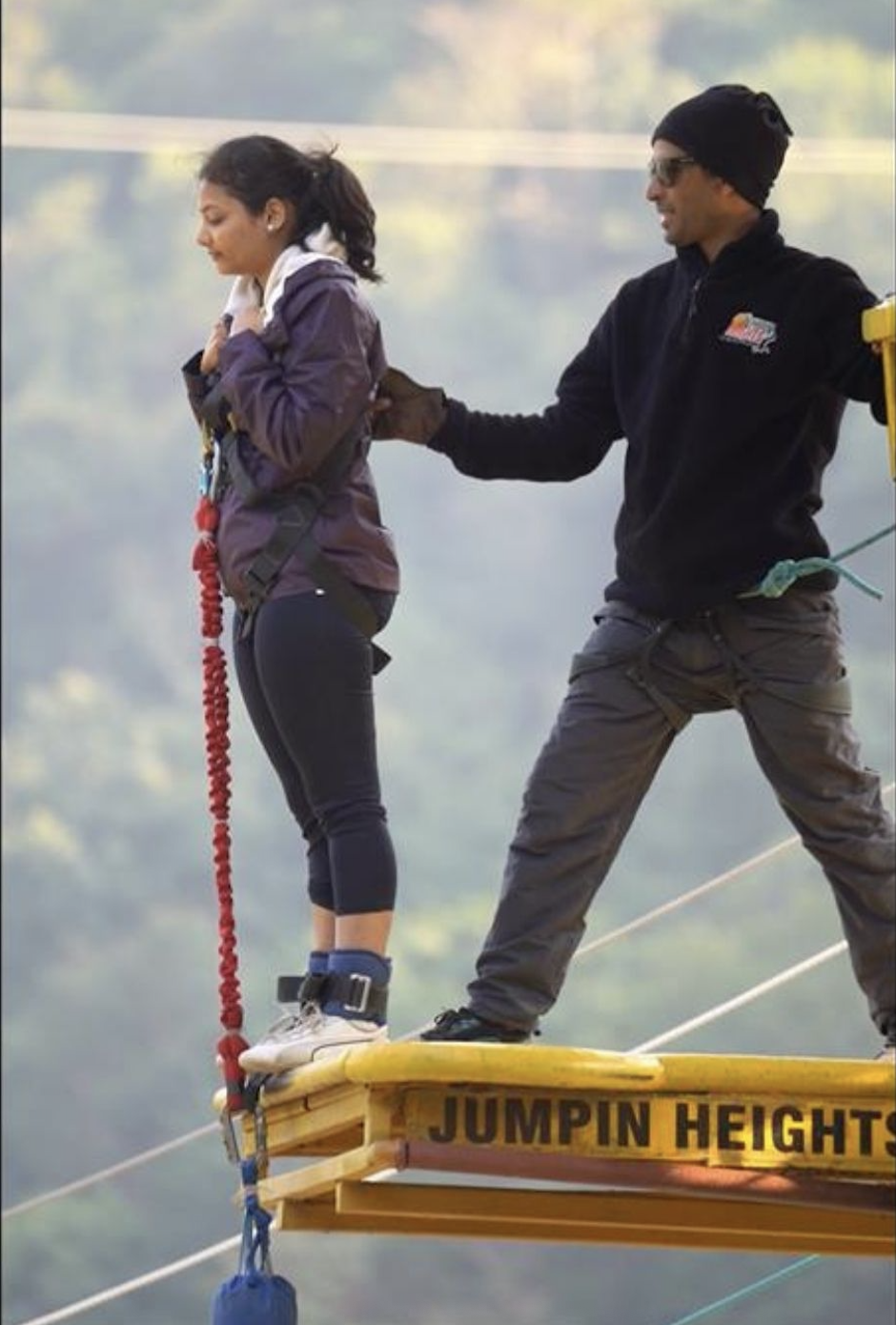
So there I was, thinking about all the ‘what ifs’ before jumping from 83 metres high (roughly the height of a 23-storey building). Voluntarily. What if I didn’t make it back? What if I made it back, but with broken bones? I hadn’t even told my parents about this little adventure.
Right then, Hrithik Roshan’s Mountain Dew ad flashed before my eyes. Darr ke aage jeet hai. I gripped my harness tightly and pushed my body forward. The next moment, I was in the air, plummeting at top speed, as if all my trust issues had suddenly ceased to exist.

The reality check
Four years before, on a solo trip to Mussoorie, I had signed up for valley crossing. But midway through the adventure activity that had me hanging from a rope over a deep gorge, I had to drop out because I was struggling to move my body forward. That was the first time I realised how physically unfit I was. Still I remained largely unbothered, moving on with my life, hustling my way through the corporate maze, never exercising, and continuing to feed my body anyhow.
Then last year, in Feb, it became impossible to look away any longer. My body had been changing in unexpected ways. My B12 levels dropped drastically, my hormones went for a toss and my skin and hair started paying the price. One morning, I was getting ready to go to work and while combing my still-wet hair, I realised I had left behind a trail of hair. It sent me into shock and disbelief—losing my hair was my worst nightmare. It was my sign to finally see a doctor.

I was diagnosed with PCOS, which is not surprising considering an estimated 1 in 5 Indian women suffer from it. It finally gave me answers to why I hadn’t been feeling my best, why my skin health was getting worse day by day, why I constantly felt low on energy, and most importantly, why my periods had become irregular. (This to-be bride shares her struggles with PCOS)
After wallowing in self-pity for a day, I decided it was time to change things. I cut out the cheesecakes and pizza, cut down on chai and everything else that brought me joy. I started going for regular walks, doing home workouts, and added the current superstar of the fitness industry—protein—to my diet.
Within four months, my body went from feeling its worst to feeling stronger, lighter, and more energised than it had in years. So when the opportunity to do something really adventurous like bungee jumping came my way, it almost felt like I had been preparing my body for that moment.
Saying ‘yes’ to the jump
I was aware bungee jumping was different from other adventure activities I’d done in the past, like river rafting, zip-lining and parasailing; it had less of a sense of control. Yet something inside me said yes instantly. The fact that it would be organised by Jumpin Heights, Rishikesh—a company that follows rigorous safety standards and has over 2,00,000 safe jumps with zero incidents—convinced me to take the plunge.
Before I knew it, I was on a flight to Dehradun, and then in a car heading to the village of Mohan Chatti with four other journalists. On the way, I asked ChatGPT about the health hazards of bungee jumping and to give me reasons why people shouldn’t jump. I was still debating whether to back out when we were called for a briefing session on the jump and the precautions we needed to take to complete it safely.
When it was our turn to ask questions, mine was simple: “What if something happens to me mid-air? What if I get a heart attack?” The guide calmly responded, “The toughest part of the jump is deciding to jump. Once you’re in the air, there’s no fear. It’s completely safe.” He did add that they don’t encourage people above 45 years of age, or those with heart conditions, high blood pressure, epilepsy, or recent injuries, to jump. “But if you don’t have any of these conditions,” he said, “It will simply be thrilling for you.”
Before the main jump, we tried another activity called the Flying Fox. In this activity, you’re harnessed horizontally and zipline across the valley at speeds of up to 140 km per hour. While harnessing us, the jumpmaster said only one thing, “Leave all your worries with me.”
Moments later, I was flying through the air above a river, surrounded by mountains. I could hear birds chirping as if they were engaged in deep conversations. It was thrilling and afterwards I thought, I’ll be able to do bungee jump too.
The joy of flying
Finally, it was time for the real deal. There were three different styles of jumps we could choose from: cut-cord bungee, valley rope jump and classic jump. Most people opted for the first two since they are considered slightly less intimidating. I consciously chose the classic jump. If I was going to do this, I wanted to experience everything—the fear, the adrenaline, and the uncertainty.
When it was my turn, I stood on the platform, fully geared up, and trying to gather my courage. The Jumpin Heights team conducted three safety checks, which calmed my nerves slightly. But my brain was still racing with thousands of thoughts. Then suddenly, I was ready.
I let myself go, screaming only one word: “Mummy!”
I was free-falling for around 10-15 seconds. When they pulled me down, I could still feel the adrenaline rushing through my body. My eyes were watery and it took me about 15 seconds to snap back to reality. I felt unbelievably light.
That’s when they told me something that made my soul almost leave my body: we had to now do a 700-metre trek back up to collect our belongings from the lockers at the Jumpin Heights office. As someone who has struggled with breathing issues, I find no joy in walking uphill and feeling like I’m 70.
Armed with a water bottle and a badge we received after the jump that read ‘You Have Got Guts,’ I started the journey. I focused on my breath, stayed hydrated, took small steps and to my surprise, I was able to finish the trek without giving up or taking multiple breaks.
As I gathered my belongings at the top, one question kept running through my mind: would the Eshika from 2022 have been able to do what I did today? The answer was a clear no. And the only difference between then and now, was my health. After a lifetime of rarely prioritising my health, I realised how much working out had changed my perspective. Exercise doesn’t just transform your body. It pushes your limits and trains your mind to do things you thought were impossible. And once you cross that boundary, there’s no going back.
I’m taking this entire experience as a sign, a reminder to stay committed to my dumbbells and to seek out more adventurous experiences.