


"Varanasi disorients you, but then the madness starts to make sense"
The founders of Tilfi give us the insider’s tour of the ancient city
“Varanasi is one of the most intense places I’ve ever visited,” wrote Katie Couric, an American journalist and presenter, in an Instagram post about her trip to the city. “I will never forget our day in Varanasi from sunrise to nightfall.” On Reddit, too, one comment read, “Time just seems to warp when you’re in Varanasi. The city just has its own way of existence and I really don’t think there is quite a place like it in the world.” And much like Dehradun in Ruskin Bond’s novels and Hong Kong in Wong Kar Wai’s films, Varanasi with its swarming crowds and lively streets, exudes main character energy in countless Bollywood films.
Seemingly, everyone is in agreement that Varanasi has a soul of its own. Powerful and magnetic, it’s a city of ancient temples, boat rides at dusk, cremation ghats—where hundreds of bodies are burned on pyres along the edge of the Ganga, and transcendental music festivals with some of India’s finest classical singers.
Perhaps it’s also the fact that it’s one of the oldest continuously inhabited cities in the world—with a history spanning over 3,000 years—that makes it seem… strangely alive. The city once bore witness to the first Aryan settlement in the Middle Ganga valley, followed by the Mughal rule, and later, the colonial era—during which it continued to be a religious and commercial hub.
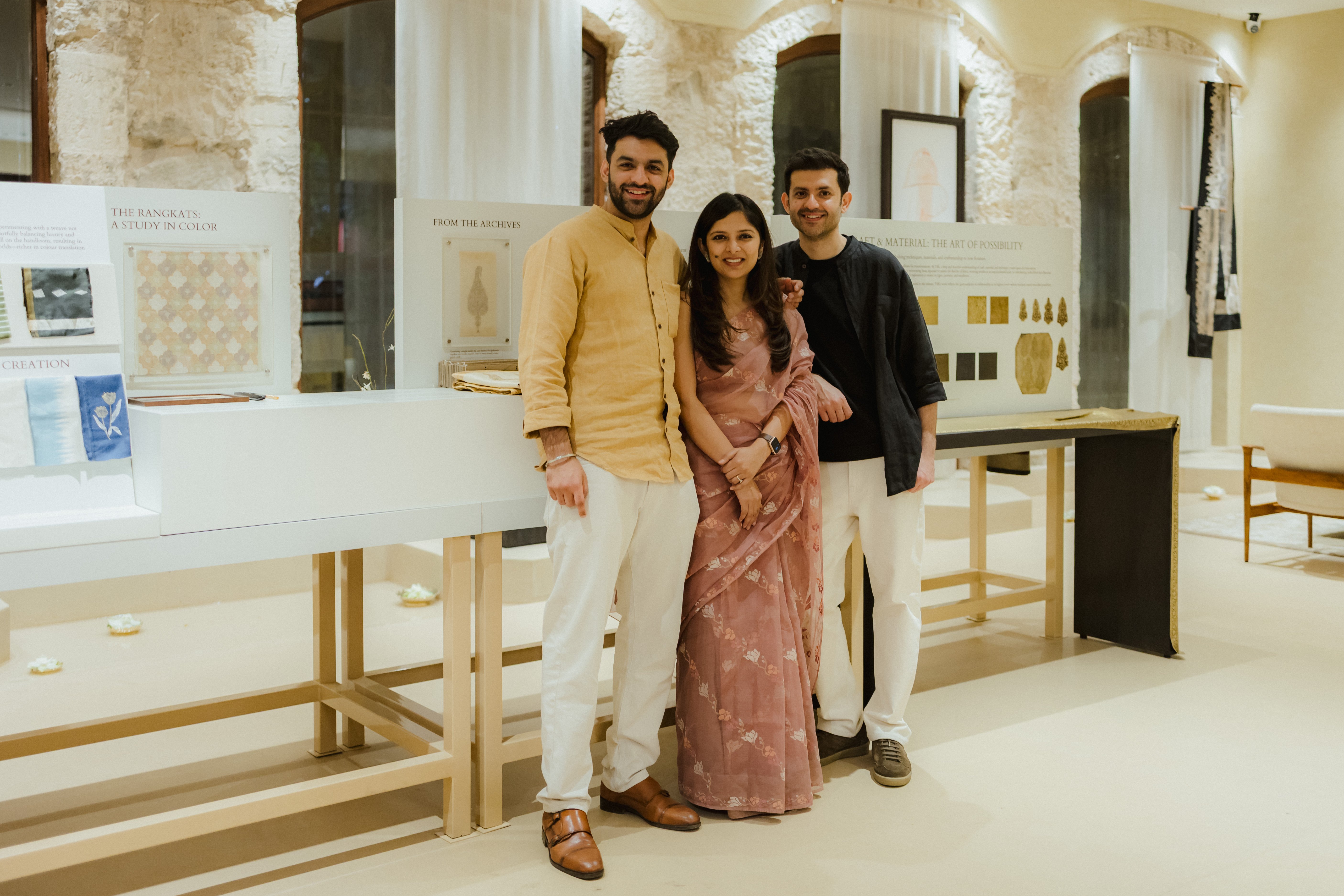
Udit Khanna, the co-founder of Tilfi, a Varanasi-based textile brand that’s rooted in regional craftsmanship, cautions that the city can be overwhelming initially. “It’ll take a day to get used to the noise and the traffic,” he says. “At first, the city disorients you, but then, the madness starts to make sense.”
But, don’t let its intensity throw you off—Varanasi is as much a haven for gastronomes, melophiles, and sari aficionados, as it is for those seeking spiritual enlightenment. Our conversation with the founders of Tilfi, Udit Khanna and his wife, Aditi Chand, confirmed as much. Tilfi was born in 2016, when the couple, along with Udit’s brother Ujjwal Khanna, left their international careers and decided to carry forward the legacy of their family’s 50-year-old handloom business. Now, they have a strong focus on exports and are committed to taking Banarasi craft to the rest of the world.
Initially, the three founders lived in Varanasi, with Aditi moving to the city after marriage. Later, Udit and Aditi started afresh in Delhi while Ujjwal stayed behind. “When I got married to Udit, it was on me to discover the city,” explains Aditi. “So I’d say the three of us are very familiar with Varanasi, just in different ways.” We asked Udit and Aditi to share with us their ways of exploring the city, and came away with a list of hidden gems, iconic must-sees-and-dos, and delightful local snack options to keep our strength up.
Welcome to ‘the city of learning and burning‘
For the food lover
Do you eagerly plan a day’s worth of sightseeing, only to discover that the one persistent thought at the back of your mind is, “Khaane mein kya hai”? For the gastronomes, Aditi recommends starting your day at The Ram Bhandar. “It’s a really old shop in Thatheri Bazaar—they serve local snacks like kachori, jalebi, chai—and run out pretty quickly,” she explains.
For those with more extravagant tastes, Taj Ganges is a five-star hotel in Chaukaghat that promises local cuisine with a touch of luxury. “They have a signature dish called dal dhuaan. It’s a very, very nice dal,” says Udit. Whole green lentils simmered in a pot with clove and cumin, this dish will give you that fuzzy ghar-jaisa feel, but with a rich, smoky mouthfeel.
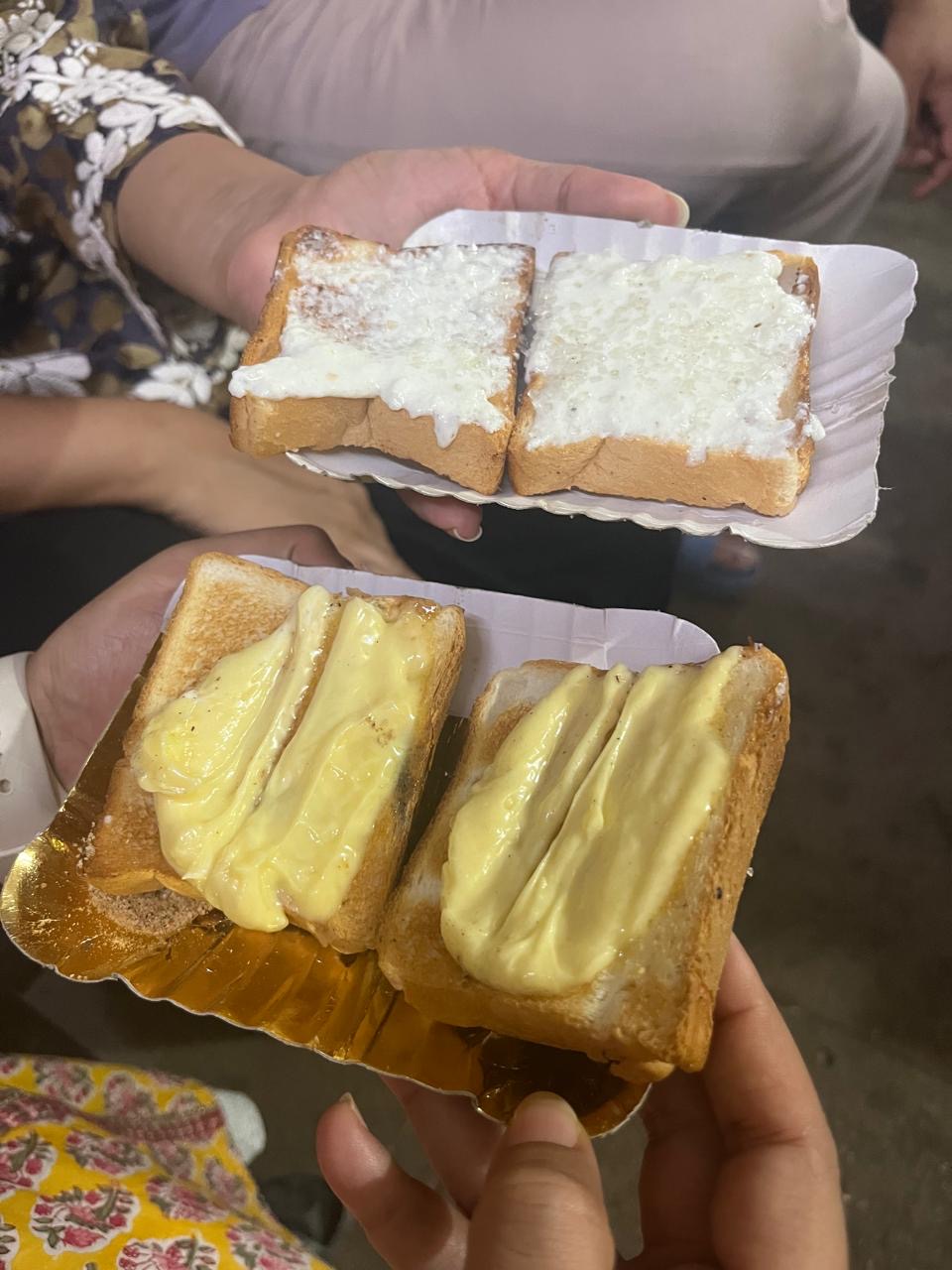
Once you’ve eaten your fill, end your day at Laxmi Chaiwala in Govindpura, a no-frills roadside stall that whips up mouth-watering treats. Picture this: you’re sinking your teeth into a thick, fluffy slice of white bread with a generous dollop of fresh butter or malai that melts on your tongue, washed down with a cup of their sweet, milky chai…. a different kind of spiritual awakening.
“I belong to the category of people who don’t like malai and I never expected that kind of flavour from a humble thing like a malai toast, but it truly is an experience,” laughs Udit. Remember that most people frequent Lakshmi Chaiwala at midnight, so it’s best reserved for a post-dinner indulgence.

For the history nerd
If you’re better acquainted with the Indus Valley Civilization than your own family tree, you’re probably a history nerd. In which case, you’ll be pleased to know that every nook and cranny of Varanasi is brimming with stories of bygone centuries. Aditi recommends visiting Alamgir Mosque in Panchganga Ghat, which was built by the Mughal emperor Aurangzeb in the 1680s. Punctuating the skyline of the city, it’s apparently the one monument that can be recognised from any part of the city.
Next up, Man Singh Observatory in Godowlia is a historic observatory from the 1700s that is attached to a palace and offers a stunning view of the Ganga from its roof. It also has a virtual experiential museum, which offers a light and laser show, depicting the river Ganga’s mythological journey from the heavens to the Earth, making it a deeply emotional and enthralling experience for viewers. Beware, though, you won’t be allowed to enter once the show begins, so try reaching at least 10-15 minutes earlier than the scheduled time.
While the monuments are fascinating, the truth is that no part of Varanasi is untouched by history. “Honestly, just start walking. Even if you turn left or right, you’ll end up seeing something of significance there,” says Udit. You could do it, guided by Roobaroo Walks, run by a team of historians, anthropologists, scholars, musicians, poets, and yogis, who conduct walking tours in Varanasi and other Indian cities. “If someone’s visiting the city for the first time, I’d recommend signing up for a Roobaroo tour because it’s actually a great way to uncover stories that even locals—someone like Udit who’s grown up there—may not have known,” says Aditi.
They take you through narrow alleys and bustling markets, from the Manikarnika Ghat to the house of poet and saint Tulsidas, and ultimately, help you gain a deeper understanding of Hindu philosophy, why Varanasi became India’s spiritual hub (hint: its proximity to the sacred river Ganga plays a role), and the ideas of death and moksha that form its very crux.

For the culture vulture
If you’re a fan of Hindi literature, don’t pass on a trip to author Bhartendu Harishchandra’s old house in Govindpura, which now lies in a dilapidated state, but still has several of his possessions on display. “It’s places like these, more than the monuments, that are often very interesting,” notes Aditi.
Bharat Kala Bhavan, located in Banaras Hindu University (BHU), is another unmissable stop if you’re fond of Indian art, culture, and architecture. Built in 1920, it’s one of the oldest museums in India and harbours a wealth of paintings, Buddhist sculptures, textiles, costumes, and artefacts from India’s past. In fact, a point of pride for the museum is that Mahatma Gandhi was a fan of their extensive collection and visited the museum thrice.
But if classical music or dohas are more your beat, head on down to Kabir Chaura, a neighbourhood in Central Varanasi, which is the birthplace of the mystic and poet Sant Kabir and home to many generational classical musicians. “You can just walk down the streets and you’ll hear people practising music in their houses,” says Udit. “Often, those people will invite you in and allow you to sit down while they perform or play. It’s very unique to Varanasi, the way you’re welcomed in—you never feel like you’re intruding on their personal space,” he adds.
And who knows, you might find yourself sitting shoulder to shoulder with a celebrity, too. “The government has done a good job of outlining the lineage of all the residents living in the Chaura. Somebody may have received national acclaim for the sarod, someone for the tabla, another for Kathak, and you’ll be able to find that out pretty easily,” says Udit.

For the spiritual seeker
To experience the Varanasi of raging embers, swirling smoke, and indescribable collective energy, a boat ride during a Ganga aarti is a non-negotiable, according to Udit and Aditi. “You should ride along the river in the old city, preferably in the early morning or late evening, when the aartis are happening,” shares Aditi. Thousands of people show up to celebrate the river Ganga with ringing bells, conch shells, incense and prayer chants. Needless to say, the experience can be a bit intense, so make sure you’re in good company and aren’t feeling too overwhelmed to begin with.
You can also explore your spiritual side at the Sankat Mochan, an annual music festival spread out over six days in April. With nearly 60 concerts by artists from all across India, it’s a festival unlike any other. Many reputed classical artists, the likes of Rakesh Chaurasia and Pandit Birju Maharaj, perform free of cost in the temple’s premises. “Although, I actually love Sankat Mochan because it has delicious pedas… not the spiritual inclination as much,” jokes Aditi.
For the fashion forward
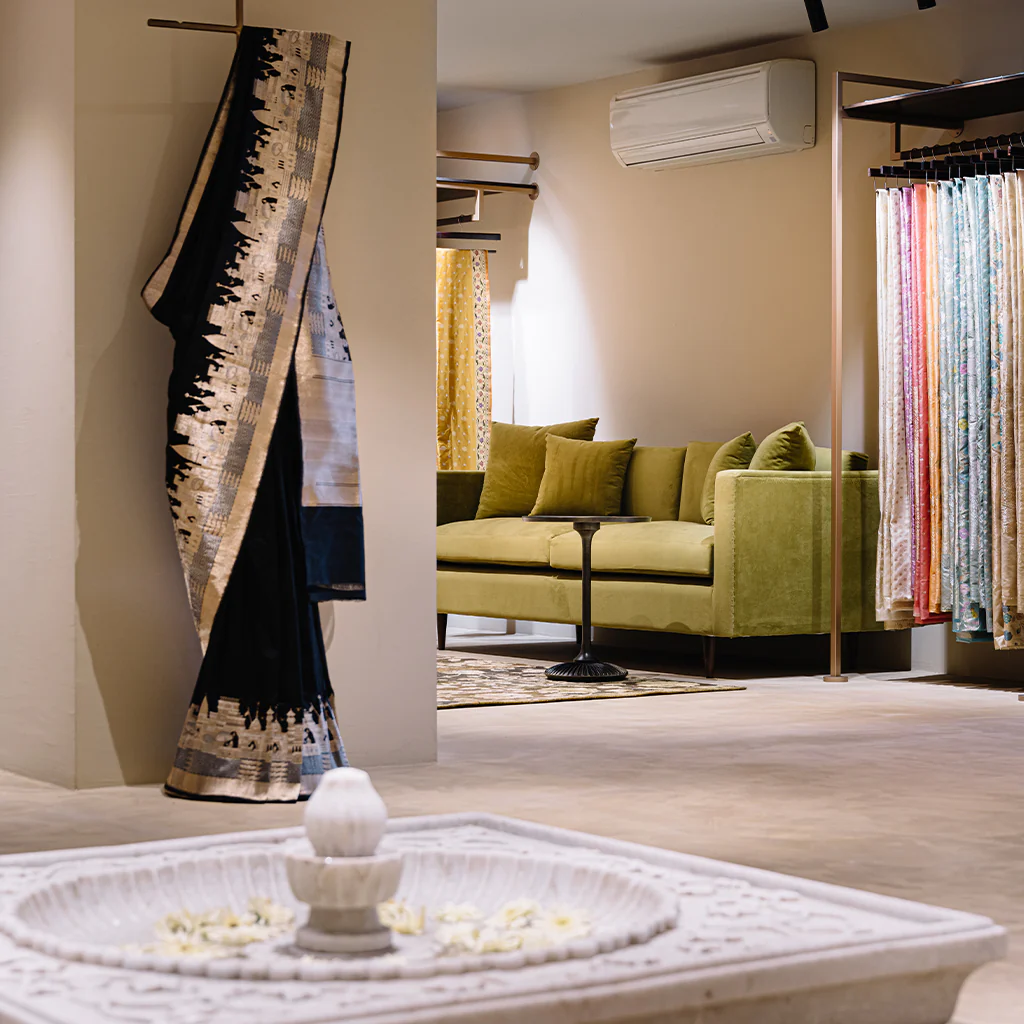
Travelling to Varanasi and coming back without picking up a traditional handloom sari is like visiting the dentist and returning home without getting your cavity filled—which is to say that it’s utterly pointless. And, what better way to get a glimpse of Banarasi craft than to visit Tilfi’s store in Mahmoorganj?
Upon entering, it becomes crystal clear that the store is as much a part of their artistry as the saris and collectibles on display. It features an earthy ochre palette which is reminiscent of the Old City’s sandstone buildings, and if you wander around the space, you’ll get to appreciate hand paintings on the walls, courtesy of an award-winning miniature and mural artist who happens to be a long-time inhabitant of Banaras.
From saris (here’s a gifting guide for the sari lover in your life), lehengas and jackets, as well as rare collectibles, Udit, Aditi, and Ujjwal have created a brand that manages to do both—create products that would be at home in any modern setting, but also retain their traditional heart. Their most iconic sari features the landscape of the ghats woven in gold zari. What’s more, at Tilfi they handle every step of the process—from first sketches to the finished product—in-house, while working directly with over 2000 highly skilled kaarigars based in and around Varanasi.
“We’re a very craft-first organisation,” explains Udit. “When you enter Tilfi, team members won’t start talking about fashion or how a sari will look on you—the starting point of a conversation is always the craft behind the textile.” Occasionally, they also conduct textile tours, where people are taken through the entire production process. So, if you’re a lover of the weave, a Tilfi-led tour could be the perfect way to get a peek into the rich and intricate world of Banarasi handicraft.
The final verdict? Varanasi can be…well, a lot. But, if you do your research beforehand and keep your wits about you, it can feel like your senses have feasted on a gigantic platter of sights, sounds, smells, and flavours. You’ll come away full, forever changed, and with a gallery full of memories.