

5 books that let you discover countries through the eyes of their female authors
These stories will expand your horizons—and your heart
If you really want to know how much a country has progressed, ask the women who live there. What are the power dynamics they face? What are their everyday struggles, and how do they navigate them? Many female authors have captured these nuances by setting their stories in their home countries or cultures. While books from the US and UK often dominate our shelves, a truly global perspective requires stories rooted in places and moments that stretch as wide as the sky.
There Are Rivers in the Sky by Elif Shafak, our Tweak India Book Club ‘Book of the Month,‘ does just that. The novel follows the lifespan of a single raindrop, which connects the lives of its three protagonists who live along the river Thames in London and the river Tigris in Turkey—Shafak’s homeland—across different eras. Particularly moving is the modern-day story of nine-year-old Narin and her grandmother, one of the last Yazidi families living on the Tigris, who are being forced to leave their home. Through their struggles, Shafak offers a tender, grounded view of life there and paints the need for belonging amidst displacement—a common theme of all her literary works including The Island of Missing Trees, which was shortlisted for the Costa Novel Award and the Women’s Prize for Fiction, as well as the British Book Awards and the RSL Ondaatje Prize.
If you want to discover cultures and lands through perspectives that are not always mainstreamed but are every bit as insightful, tender, and universal in their humanity, this list of fiction by female authors who weave brave and brilliant stories of their homelands, is where you could begin.

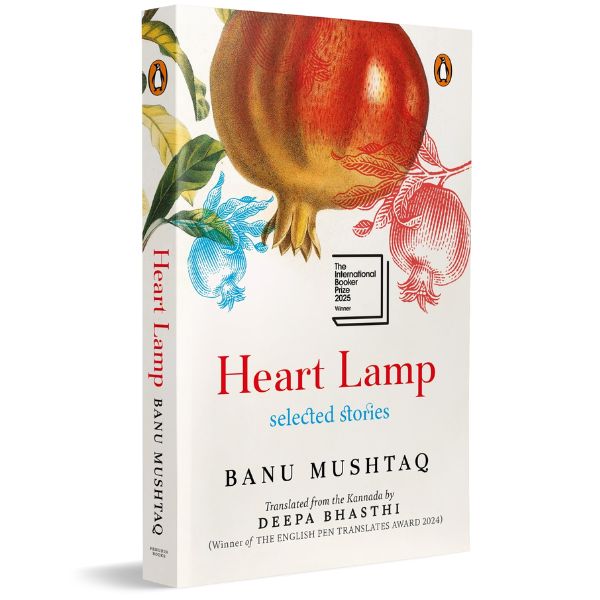
Heart Lamp by Banu Mushtaq, translated into English by Deepa Bhasthi
Heart Lamp, which won the International Booker Prize earlier this year, is a selection of short stories from the last three decades of their author Banu Mushtaq’s long, rich writing life. The stories which capture the texture and trials of the lives and culture of Muslim women in Southern India, especially Karnataka, were originally written in Kannada, and drawn from true incidents she witnessed as a journalist, lawyer and social justice activist in Karnataka since the 1980s. Like the heart-stopping tale of a mother of three, Mehrun, who douses herself in kerosene after she discovers that her husband found another woman but is intercepted by her adolescent daughter in the nick of time.
75-year-old Mushtaq, who began writing at the age of 29, as an outlet for her post-partum depression, rose as an important voice in South Western India’s protest literary movement in the 80s. Mushtaq’s literary trademarks are alive as ever through the book: a clear-eyed skewering of the evils of caste, class, patriarchy, wrapped in richly etched characters and evocative dialogue—and always the attempt to give voice to those on the margins, especially women. Heart Lamp is the first Kannada-language work and short story collection to ever win the International Booker because as the judges put it, “…these vivid stories hold immense emotional and moral weight”.
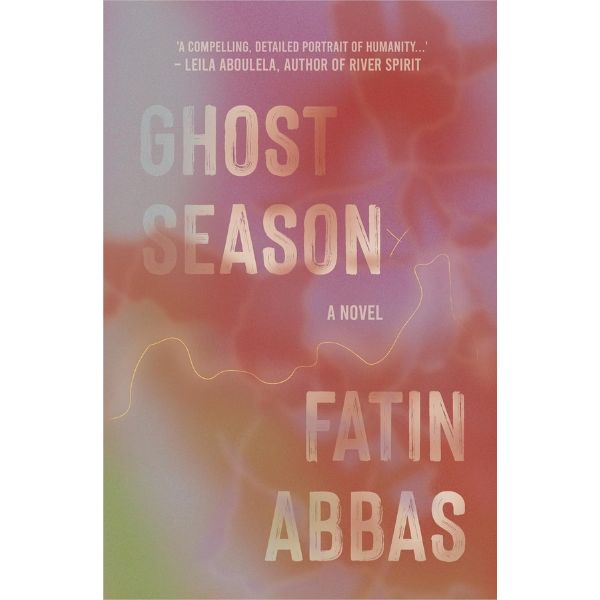
Ghost Season by Fatin Abbas
In her searing debut Ghost Season (2023), Fatin Abbas brings to life a fictional border town between north and south Sudan on the cusp of the ethnic war that would break up the country. Through five strangers—including a local translator, a nomadic woman, a visiting filmmaker, a midwestern aid worker, and a cunning 12-year-old—living in the compound of an NGO, the novel explores the complexities of identity, love, and survival in a war-torn land. The book begins disconcertingly, with a corpse, but the visual storytelling and captivating characters reel you in…before all hell breaks loose and they’re in the throes of an all-out war. Abbas writes not as an outsider, but as someone deeply entwined with Sudan’s history and terrain, making her portrayal of conflict and community all the more haunting and real.
Abbas hails from Khartoum in Sudan, where she lived with her family till the age of eight until political tensions (her father, an English literature professor, opposed the new regime and was imprisoned for a year on that account) compelled them to emigrate to the US in 1990. She went on to pursue a PhD in Comparative Literature from Harvard university but her heart remained in her native country, which became the springboard for her writing. “I am intrigued by this history not only because it has shaped my own family heritage, but also because it sheds light on some of the inequalities that have characterised the relationship between the two Sudans. In the north, to this day, the derogatory term for a South Sudanese is ‘abid – literally, ‘slave’,” she writes.
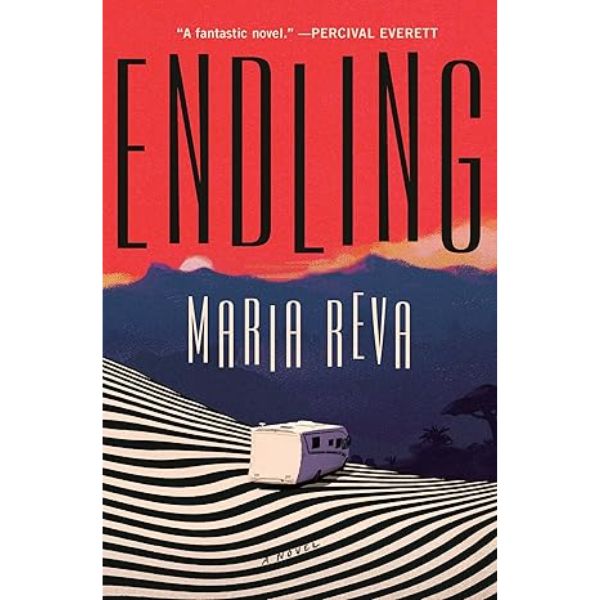
Endling by Maria Reva
In Maria Reva’s debut novel, a satire set against the backdrop of a crumbling Ukraine, women defy expectations and exploitation in unexpected ways. Two sisters pose as a hopeful bride and her translator while secretly searching for their missing mother. A biologist tries to breed rare snails while her relatives urge her to settle down. Three women defy the romance tours that enable foreigners to find “docile” wives from Ukraine by being the ones in control, using the tours for their own benefit. Through these characters, Reva examines Western perceptions of Eastern European femininity, while grounding her story in the grit, absurdity, and resilience of Ukrainian life. The book offers humour in otherwise dark situations (Reva says humour is a form of Ukrainian resistance), the writing is easy to follow, and the story progression makes you fall in love with the female leads.
Born in post-Soviet Ukraine riven with inflation and unemployment, Reva and her family moved to Canada in the late 90s, in search of better prospects. But she is still drawn to her roots—not in the least because her grandfather still lives there (he refuses to leave despite the Russian attacks). In this book, she tries to rescue her grandfather in fantasy, as the characters find themselves in the middle of the Ukraine-Russia war. Her debut collection of short stories, Good Citizens Need Not Fear (2020) too was set in a fictional Ukrainian town of Kirovka in the last days of the Soviet Union, and based on her family’s experiences there, before they emigrated and during the trips they took back to Ukraine. It was nominated for several literary awards such as the 2020 Writers Trust Fiction Prize. The book won the Kobzar Literary Award—which recognises books that develop a Ukrainian-Canadian theme in literature—in 2022.
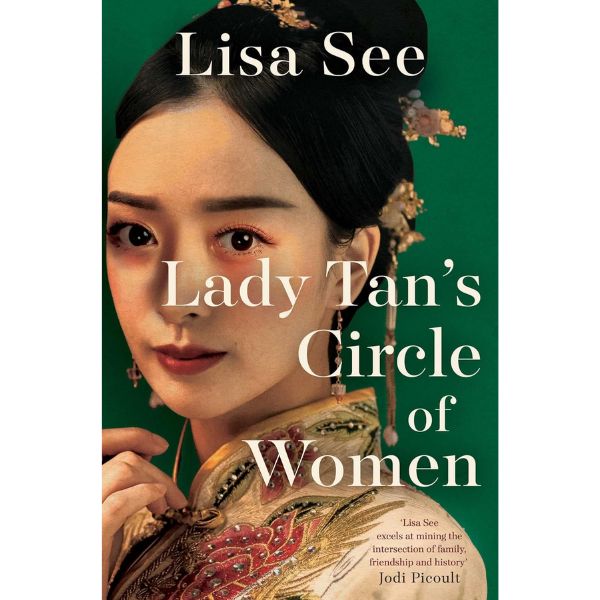
Lady Tan’s Circle of Women by Lisa See
Lisa Lee’s historical novel is based on the real-life story of Tan Yunxian, an elite-born woman in 15th-century China, who learns all about women’s illnesses as she apprentices for her grandmother, one of the few female doctors in China. But this is a rigidly patriarchal, classist society, and her hopes of becoming a doctor herself, and helping all kinds of women, are dashed by her obligation to marry and produce sons. It’s only with grit, determination and the support of a group of female conspirators (including a long-lost friend and midwife, a concubine, her grandmother)—that she fights to keep her dream.
This novel shows how Chinese women, bound by tradition, forged powerful networks of care, learning, and resistance, a theme that is characteristic of a lot of American-Chinese author Lisa See’s work (Snow Flower and the Secret Fan, 2005; Shanghai Girls, 2009). See lived with her grandparents a lot as a child, and would help out at the family antique store in Chinatown in Los Angeles, California where she’d spend time playing with her Chinese cousins and hearing stories of their culture from her aunts. See says in an interview, “All writers are told to write what they know. My family is what I know.”
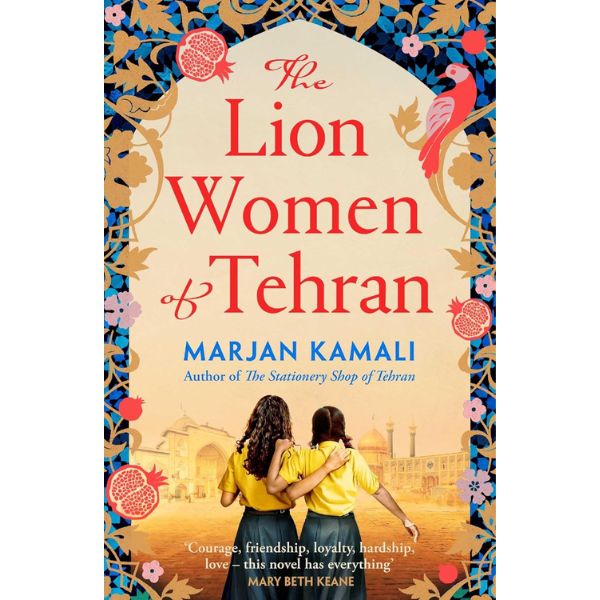
The Lion Women of Tehran by Marjan Kamali
Young Ellie’s privileged life in Tehran is upended by her father’s sudden death, forcing her and her mother into a modest downtown home. Isolated and burdened by her mother’s bitterness, Ellie longs for connection until she bonds with her classmate, Homa. The two become inseparable, sharing laughter, dreams, and adventures in the vibrant city. As they chase their ambitions amid Iran’s growing unrest, one devastating betrayal changes everything. This story is both an ode to Iranian girlhood and a reckoning with the costs of ambition, silence, and loyalty in a changing Iran.
The book was born as an homage to author Marjan Kamali’s childhood best friend, who she was abruptly separated (and here’s why friendship separations hurt the most) from when her family left Iran for the US to escape the autocratic regime and war. Even at the age of 10, as she got onto that plane with her family, Kamali could sense her privilege and never stopped thinking of those who were left behind. “I knew I had to live doubly hard for both of us,” she says. It is her literary purpose to makes sure the people of Iran are neither forgotten nor dehumanised, evident in her other novels such Together Tea (2013) and Stationery Shop (2019).