


Are you in an I-don’t-know-ship this Valentine’s Day?
Not friends, nor lovers, but a secret third thing
Two years ago, Ved Khopkar*, who’s based in Chhattisgarh, was in a situationship with a girl he’d met on Bumble. What started out as a racy fling soon turned into an inexplicable, boundaryless equation because even though they weren’t exactly compatible, they’d started being vulnerable with each other, falling asleep together, and settling into a predictable rhythm. The girl was ready to put a label on it, but Khopkar was resolutely against it. On Valentine’s Day that year, he recalls, they’d already been seeing each other for several months, but neither of them wished the other or even acknowledged it. “I was trying not to do anything out of line, or even care—when I very much did,” he admits.
Khopkar’s experience isn’t uncommon. If capitalism powers Valentine’s Day, pop culture has injected it into our veins, convincing us that it is the romantic highlight of the year. In the iconic rom-com Sleepless in Seattle (1993), Annie and Sam finally meet atop the Empire State Building after a long-drawn-out chase on Valentine’s Day. In Eternal Sunshine of the Spotless Mind (2004), too, exes Joel and Clementine erase their memories but mysteriously find their way back to each other on February 14.
But what happens IRL, when you’re actually caught in a loosely-defined entanglement on V-Day? When love isn’t sweet and tender, but uncertain, with lots of potential for messiness? We’re talking situationships, talking stages, friends with benefits, live-in arrangements with exes, scheduled breakups. Let’s just say, there are worse things to be on Valentine’s Day than single.

To wish or not to wish
If the doctors were worried about sodium spiking our blood pressure, just wait until they find out about this question: should you wish your I-don’t-know-ship on Valentine’s Day? Send them a reel of two cats cuddling and say “Us”? Surprise them with an elaborate dinner plan? Or seek sanyasa for 24 hours? Frankly, even ChatGPT doesn’t have the answers.
Some, like 22-year-old Reya D’Mello, aren’t afraid to wear their hearts on their sleeves. The Mumbai-based UI/UX designer shares that she once celebrated Valentine’s Day with a long-term situationship by hosting an intimate candlelight dinner in her bedroom. “It was really fancy,” she laughs. “We cooked together for hours, had wine and crab, and it turned out to be sweet and romantic.”
On the other hand, there are folks like 24-year-old Dev Patil, a gay man studying in London, who has multiple friends with benefits whom he meets on a regular basis. “In gay hookup culture, there are seldom any ‘What are we?’ conversations,” he explains. “It’s sort of mutually understood that it’s a casual thing unless explicitly mentioned otherwise. So no, none of my ‘friends’ will be getting any special wishes or texts from me on Valentine’s Day. My approach is simple: I don’t engage with Valentine’s Day and I usually forget it exists.”

Playing it cool
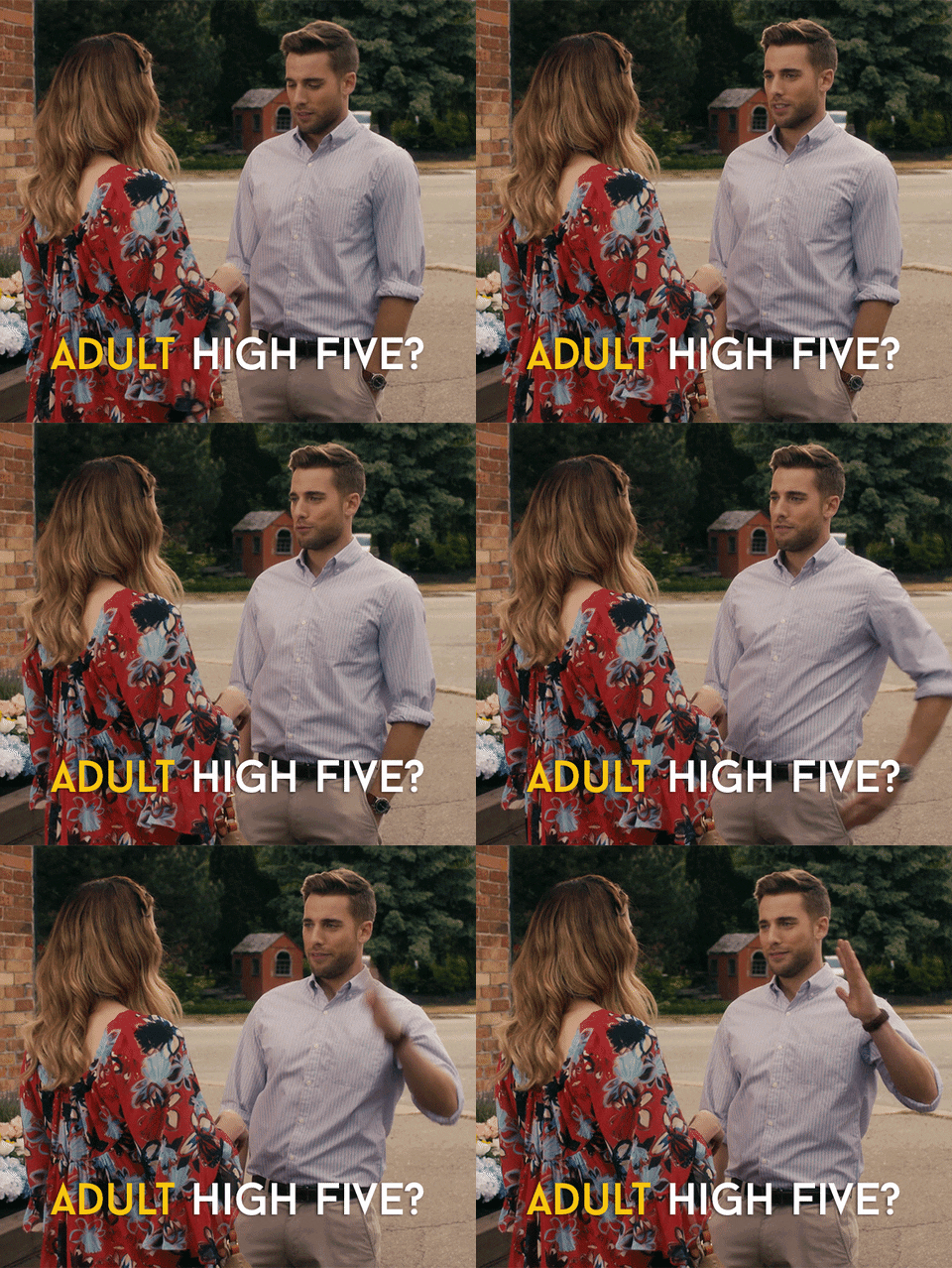
Here’s the thing, though: not acknowledging the day at all is one thing, but acknowledging it and then trying to act unbothered when your warmth isn’t reciprocated is a whole other game. Remember Amy Dunne’s ‘cool girl’ monologue from Gone Girl? When she goes on a tirade about having to act easygoing and nonchalant as a woman, when, in reality, all she wanted to do was kick and scream and throw a tantrum? Valentine’s Day forces some of us to embody the cool-girl trope. Like when your situationship sends you a brainrot reel instead of replying to the sappy text you took an hour to draft, or when he conveniently has a boys’ night scheduled for V-Day. Internally, of course, you’re up in flames, but you still find yourself sending a “No worries, have fun!” text, lest you come across as over-eager or desperate.
“I’ve definitely struggled with the pressure to act ‘chill’ in a situationship, especially on special occasions like birthdays and Valentine’s Day because it obviously stings if they don’t go out of their way to do something special,” agrees D’Mello. “In fact, it can feel like both of us are competing to be the one that cares less. But now, I’m finding it increasingly difficult to act nonchalant, so if something bothers me, I’ll bring it up even when I know they won’t do anything about it, just for my own satisfaction.”
Post-love paralysis
And then, of course, there is the other end of the spectrum: when a relationship is nearing its end, making Valentine’s Day a purgatory of sorts.
Goa-based Samar Arora* is currently going through a scheduled break-up with his girlfriend of one year. The 25-year-old musician broke up with his girlfriend in January, just a couple weeks after he got accepted into a Master’s programme in Europe. While he isn’t due to leave until July, he was keen on ending the relationship earlier so he could mentally prepare for the big move. But when his girlfriend asked if they could stay together until March to have a ‘weaning off’ period—and slowly get used to being apart—he agreed, if a little reluctantly. “It was a great relationship and now we’ll technically still be together on Valentine’s Day,” he says. “But if I’m being honest, I already feel single because I’d begun mentally disconnecting in January. I still love her as a friend, but it just doesn’t feel romantic anymore, so I probably won’t wish her or celebrate Valentine’s Day this year.”
Yet not all endings have to make for an awkward or painful V-day. Sometimes even though the relationship didn’t work out, the love remains, and it finds a new iteration that is only underscored on occasions like Valentine’s Day.
Sanjeevini Singh, a 32-year-old Mumbai-based media professional has been living with her ex for six years; the two have managed to successfully leave behind their romantic past and create a meaningful life together. “We do wish each other on Valentine’s Day because we live together and care for one another,” she explains. “But we’re also grateful we broke up and don’t have to put on a facade anymore. Now, I encourage my ex to attend events on Valentine’s Day so he can meet new people, and I even help him shop so he can look his best.”
The bottom line is that relationships can be complicated and nuanced, and instead of Valentine’s Day being some kind of litmus test of love, we can allow it to just reflect that complexity. While that means you won’t always have a steamy date night to look forward to, or grand proclamations of love, maybe you’ll have something true-er, like long-awaited closure. And that’s too is a step forward, towards the love you deserve.
All names have been changed for anonymity