


Is your mango really giving you acne?
An official fact-check of alarming food-skin WhatsApp forwards you’ve received
Somewhere between March and May every year, the forwards start, and the supposed king of fruits, the mango, always takes the first hit (great power, great responsibility, right?). A screenshot, a string of alarmed emojis, and a firm instruction to put down the Alphonso immediately because your chachi‘s cousin’s dermatologist apparently said so. Too heating. Too sugary. Guaranteed breakouts. Let’s ignore that it’s the absolute best thing about summer; the verdict is in, and the mango is cancelled.
It doesn’t stop there. Lemon water will clear your skin. Bhindi and dahi should never share a plate. And don’t even get us started on what oats are apparently doing to your thyroid.
Our food habits come with their own unofficial rulebook—part Ayurveda, part WhatsApp University, part something your grandmother said with so much authority that nobody ever questioned it. To get to the truth, we took six of the most persistent food and skin beliefs to Dr Kiran Sethi, dermatologist and founder of Isya Aesthetics in New Delhi, and Tulip Rodrigues, a Mumbai-based nutritionist and wellness coach, and asked them to settle the argument once and for all.
6 common food beliefs fact-checked

Eating mangoes triggers acne
Verdict: Myth
Mangoes are hardly the skin villain they’ve been made out to be. “They contain plenty of Vitamin A and C and can actually be good for your skin,” says Rodrigues. Dr Sethi backs this up, pointing out that mangoes are rich in mangiferin, a polyphenol that neutralises UV-induced damage.
The real reason your skin breaks out every summer? “UV radiation, humidity, and heat increase sweat production, which mixes with sebum to promote bacterial growth,” explains Sethi. The mango is innocent. The summer heat is not.
What’s worth knowing is that mangoes have a glycemic index of 51–60, so if a high-sugar diet already triggers your acne, moderation makes sense. Also, many commercial mangoes are ripened with calcium carbide, whose chemical residues can irritate the skin around the mouth and face. These are often mistaken for breakouts. Soak your mangoes for 15–30 minutes before eating, and peel instead of eating directly from the skin.

Collagen powder gives you younger-looking skin
Verdict: Fact
“Your body breaks collagen down into smaller peptides which enter the bloodstream, and then uses it where required,” explains Rodrigues. Which means the collagen you ingest orally isn’t making a beeline for your face—your body decides what to do with it. “But it can improve skin health if you aren’t consuming enough protein,” she says.
Sethi cites a 2021 meta-analysis of 1,125 participants published in the International Journal of Dermatology, which found that 90 days of oral collagen supplementation significantly improved skin elasticity and hydration. “In topical creams, the collagen molecule is far too large to penetrate the skin’s surface,” says Sethi. “Creams work only as a surface moisturiser, they cannot structurally repair anything.”
A better approach would be to eat to up your collagen levels. “Your body makes collagen from protein—eggs, chicken, fish, paneer, tofu, lentils, Vitamin C-rich foods, and nuts and seeds,” says Rodrigues. Her personal go-to: a rajma salad with bell peppers, corn, rocket, cubed paneer or roast chicken, walnuts, pistachios and a mango dressing.
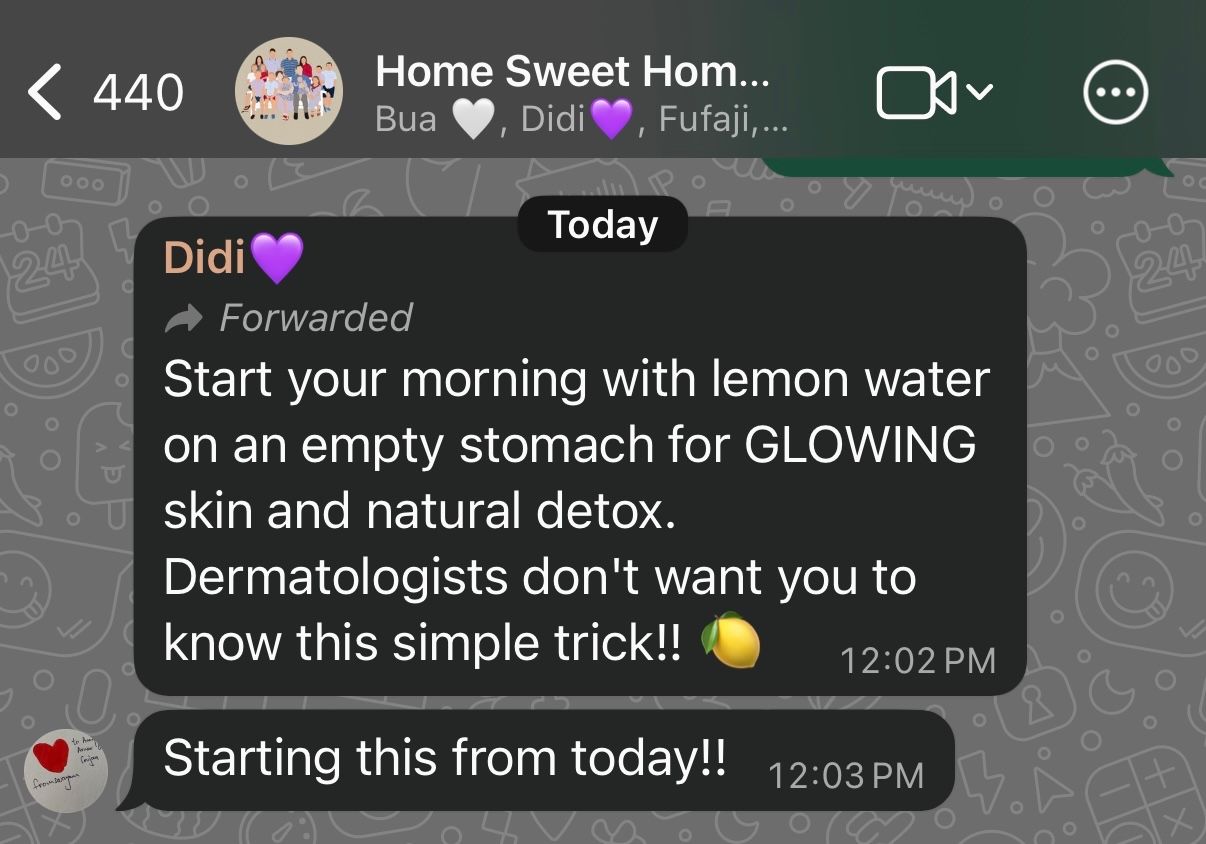
Lemon water first thing in the morning is a natural detox
Verdict: Myth
“Not really, and not if you just have a few squeezes,” says Rodrigues plainly. Whatever glow you think you’re getting is from hydration from the water, not the lemon. “Your body has its own built-in pathways for detoxing. Food may help those systems work more efficiently, but it’s your body that is doing the detoxing, not the lemon,” she says.
The experts warn that drinking undiluted lemon juice can erode your tooth enamel over time. And if citrus juice touches your skin right before sun exposure, it can cause burns and hyperpigmentation. Always dilute your lemon juice with water or your drink of choice.

Carrots are natural retinol for your skin
Verdict: Myth
We hate to be the ones to break it to you, but put the carrot salad down. Or at least stop expecting it to replace your tretinoin cream. “Carrots contain beta-carotene, which gets converted into retinol in the small intestine, and is then stored in the liver, not the skin,” explains Sethi. “Dietary beta-carotene simply cannot reach the concentrations required to match even a 0.05% tretinoin cream.” Worse, eating excessive beta-carotene doesn’t give you better skin—it turns your skin orange (yes, we know who you’re thinking of). This condition is called carotenemia.
The silver lining? Eating antioxidant-rich foods does offer some systemic photoprotection. Dr Sethi estimates a natural SPF of around 2 to 4 from lycopene and beta-carotene combined. It doesn’t replace your sunscreen, but it’s a bonus.
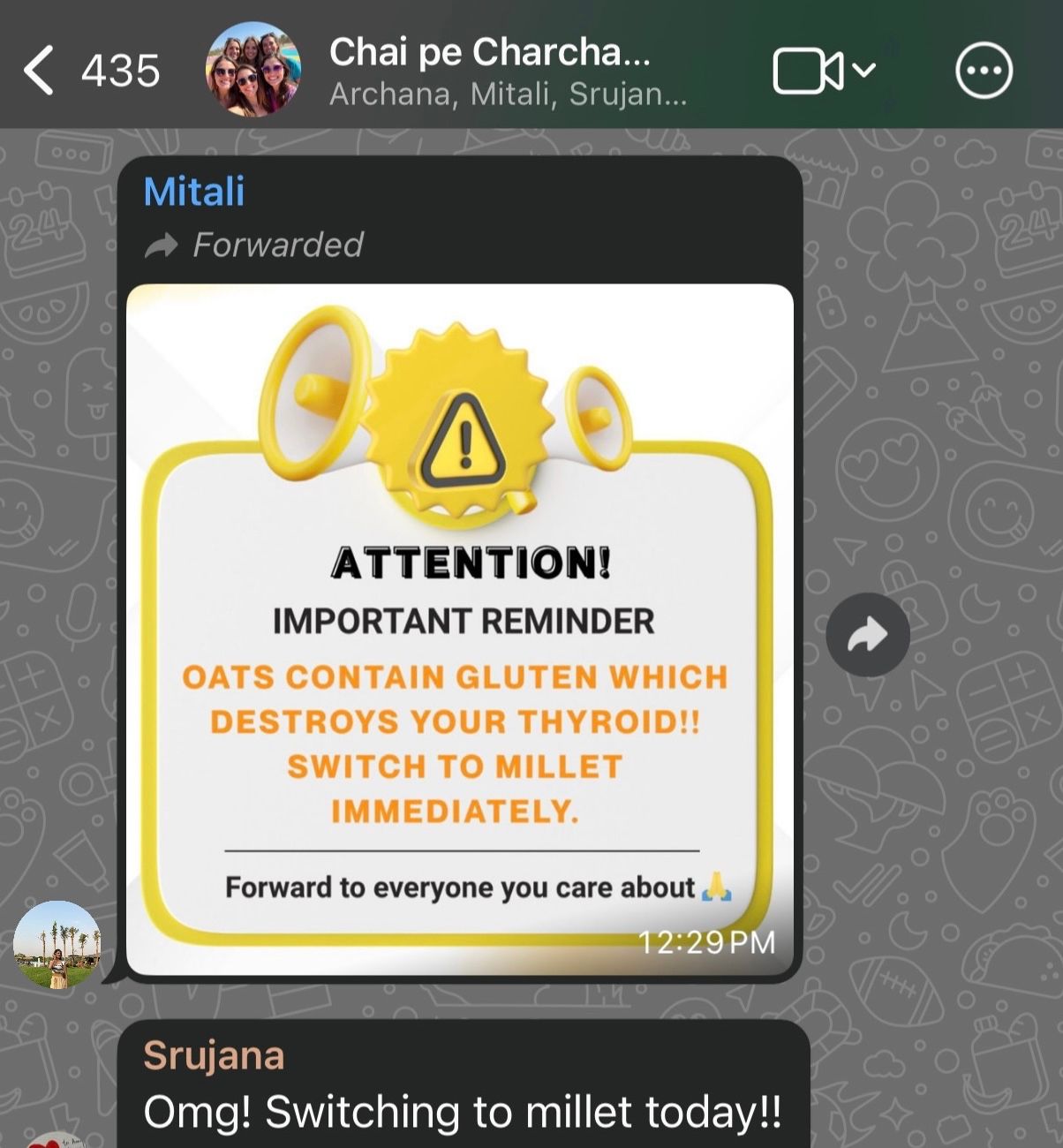
You can’t eat oats if you have thyroid issues
Verdict: Myth
“Large studies confirm that oats are not goitrogenic, meaning they do not interfere with iodine uptake or thyroid function,” says Rodrigues. Sethi adds, “Oats are actually a source of selenium, a trace mineral essential for the conversion of T4 to T3 which is a key step in thyroid function.” Your overnight oats may be actively supporting your thyroid, not destroying it.
However, it’s worth noting that the gluten-thyroid connection doesn’t come out of nowhere. But it applies specifically to people with Hashimoto’s thyroiditis who have a confirmed gluten sensitivity. If that’s you, opt for certified gluten-free oats.
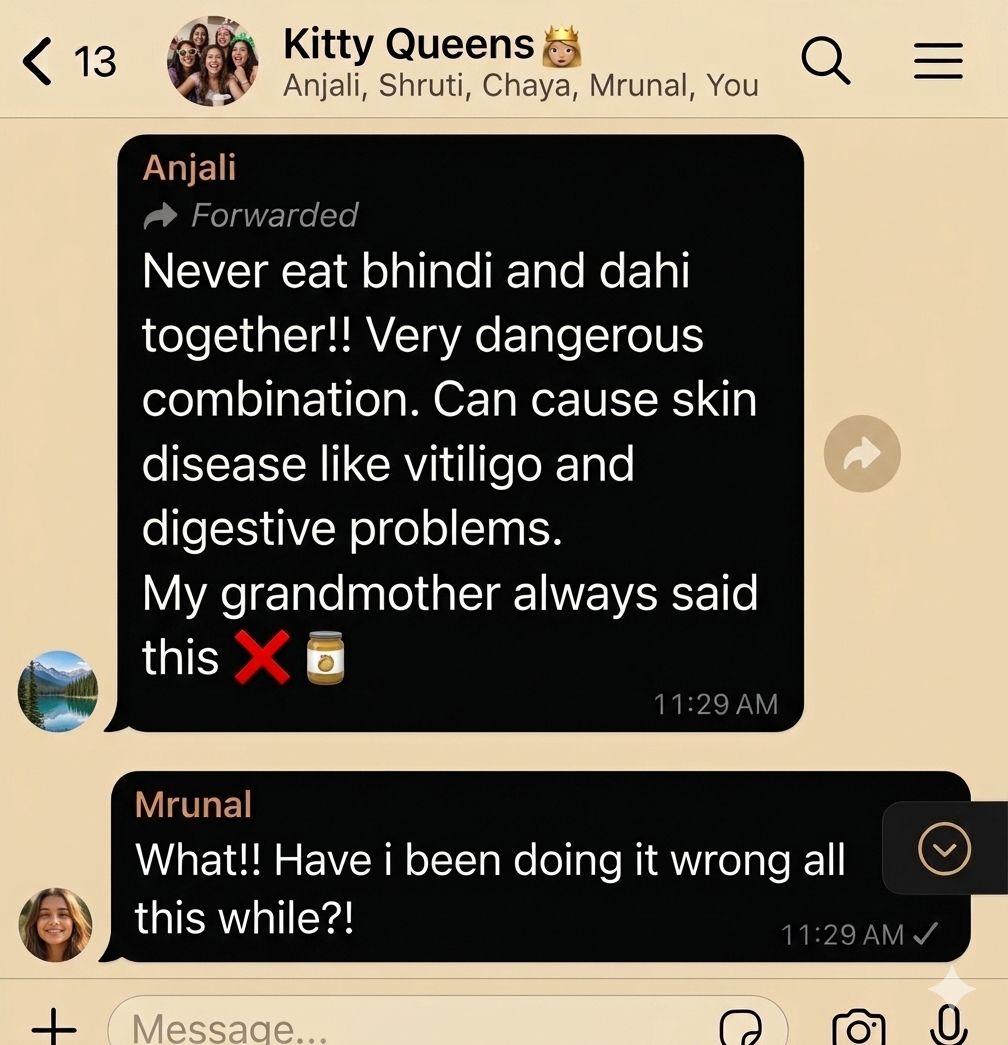
Eating a combination of bhindi and yoghurt can lead to skin issues
Verdict: Myth
“Vitiligo is an autoimmune condition—there is no biochemical pathway by which eating bhindi and dahi together can trigger it,” says Sethi. Rodrigues agrees, and raises the point that nobody’s forwarding: bhindi is gentle on the gut and dahi is a probiotic. Together, they’re arguably one of the better food combinations you could eat. The rule stems from the Ayurvedic concept of viruddha ahara (incompatible foods) where the combination is thought to disturb digestive fire. “There’s a lot of intelligence in Ayurveda and I draw inspiration from it,” says Rodrigues, “but my practice is grounded in evidence-based science.” Your bhindi kadhi is fine. Your grandmother meant well.
Now that you’re armed with the knowledge to fight back the Ayurvedic aunties and wellness influencers who tell us that everything we love is bad for us, go forth and nourish yourself, fear-free. Some things are sacred and Alphonso season, short and sweet as it is, is one of them.