

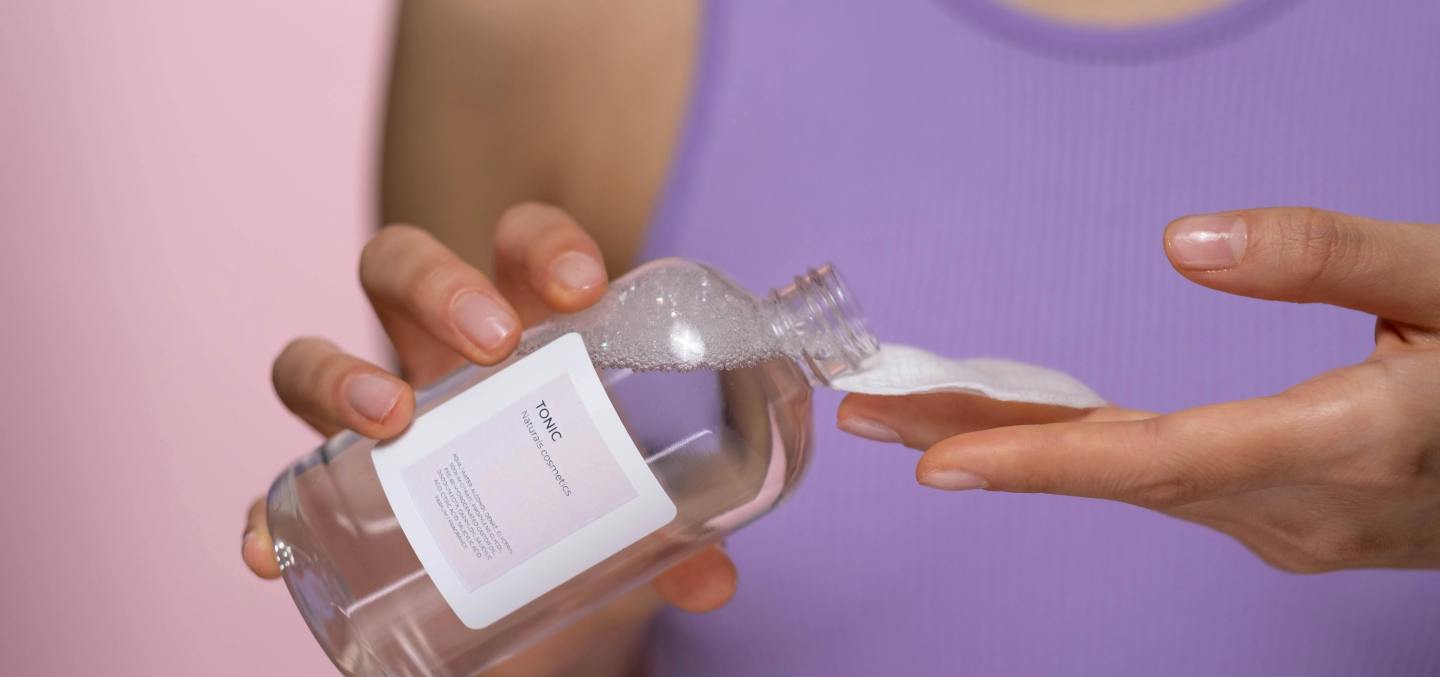
What if your hormones picked your beauty products?
Your skin changes every week, maybe your routine should too.
For as long as I can remember, I’ve had skin so oily, my friends joked they could fry a fresh batch of McDonald’s fries on it. My beauty routine evolved around it: mattifying foundations, pore-minimising primers and lightweight moisturisers have been standing strong in my beauty arsenal for over a decade. So you can imagine my disbelief when I woke up one morning to skin so dry and tight, I’d scratched it raw in my sleep. I dismissed it as a one-off—maybe I’d over-exfoliated, maybe it was the weather or maybe it was because I was nearing 30. I slapped on a sheet mask and carried on.
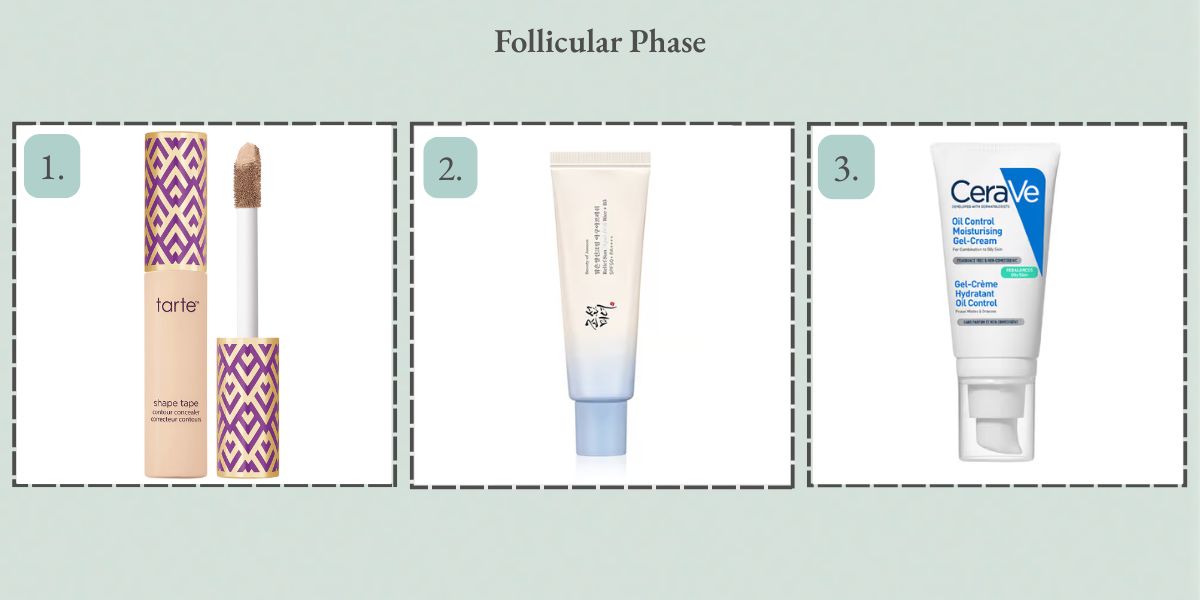
But then it happened again. And again. Every month, like clockwork, there was a phase where my skin transformed from an oil slick to something resembling dragon scales, forcing me to juggle between the creamy and normal textures of Tarte’s famous Shape Tape concealer. A little note-taking later, I realised every time my skin turned dry, it was always the week before my period.
“Fluctuations in hormones like estrogen and progesterone make your skin behave differently during your cycle,” explains endocrinologist Dr Anshu Alok. “Estrogen increases collagen synthesis, which improves hydration, regeneration and overall structural strength of the skin. Progesterone, on the other hand, stimulates the oil glands.”
Armed with this information, I stopped blaming my moisturiser and started adjusting my routine to match where I was in my cycle.
How I synced my beauty routine with every phase of my cycle
Follicular phase: best skin ever
You know how they say women have one normal week in the month where your mood and energy levels are up, and your skin has the best glow? Well, this is it. In the days right after my period, my skin is soft, supple and slightly oily, making it look like glass skin minus a 14-step routine.
“The follicular phase is where estrogen levels rise,” explains Dr Alok. “Estrogen stimulates collagen, elastin and even hyaluronic acid production, which naturally plumps the skin and strengthens the barrier. Because testosterone is relatively lower at this time, oil production stays more balanced,” adds Dr Kiran Sethi, dermatologist and founder of Isya Aesthetics in New Delhi.
My Routine
A simple cleanser, gel-based moisturiser and sunscreen do the trick, along with a dab of my matte concealer to control my general oily skin type. To optimise your glow further, Dr Sethi recommends vitamin C-based serums and light exfoliants like lactic and glycolic acid. This is also an ideal window to introduce new ingredients or schedule treatments like lasers and chemical peels, as healing capacity is higher and skin sensitivity tends to be at an all-time low.
Ovulation: the mid-cycle paradox
Here’s where things get tricky: in the middle of my cycle, my skin feels plump, radiant and hydrated. Biologically speaking, this is the ‘you’re meant to look your most attractive’ window. Yes, my skin glows, but it can also tip into oilier territory. My T-zone gets shinier by late afternoon, and I can feel subtle bloating creeping in, especially around my jawline and cheeks.
According to Dr Sethi, this mid-cycle puffiness is incredibly common and usually peaks right as estrogen levels hit their maximum during ovulation. “High estrogen causes the body to retain more sodium and water, which translates into that tight feeling in your abdomen, a bit of breast tenderness and even facial swelling. At the same time, the surge in luteinising hormone (LH) can slow down your GI tract, leading to slightly stalled digestion and gas buildup.” She adds that the actual physical rupture of the follicle can release a tiny amount of fluid or blood into the abdominal cavity, briefly irritating the lining and making you feel temporarily bloated. This can also trigger a brief oil spike—which explains why my skin can look luminous at 10 am and borderline shiny by 4 pm.
My Routine
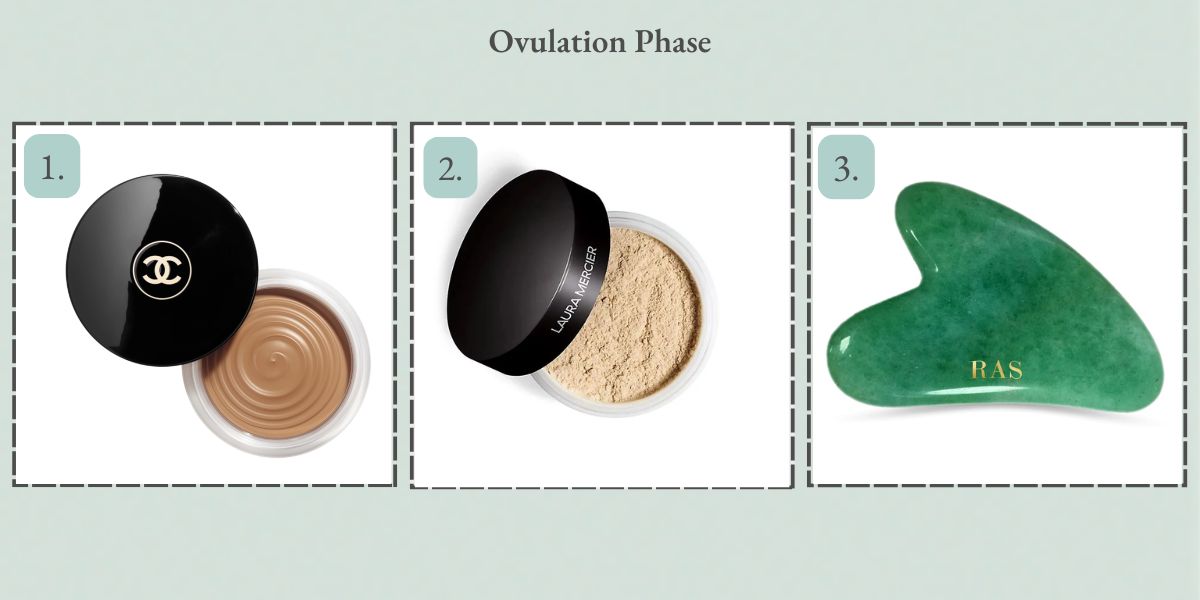
I stick to my lightweight, gel-based skincare formulas and avoid anything too heavy that could nudge me into greasy territory. “This is also the best time to schedule extractions and deep-cleaning facials to clear pores before they turn into pimples,” advises Sethi.
I also introduced a gua sha tool to help with the bloat and encourage lymphatic drainage. To ensure my makeup doesn’t slip off by mid-day, I seal my concealer with a translucent powder. And when I’m dressing up, a little contour with my trusty Chanel bronzer goes a long way in restoring definition to my face and jawline.
Luteal phase: the onset of dryness
The luteal phase, right before my period, is where things start going downhill. My skin starts becoming dull—so dull that all my colleagues can tell I am going to get my period before the cramps set in. My energy levels dip too and eight hours of sleep are non-negotiable. When I wake up, my skin still doesn’t feel like a Disney princess’s. Instead, it’s dry, dehydrated and I often wake up with scratches that make it look like this sleeping beauty was attacked by the beast. My trusty concealer, too, starts creasing and flaking, especially around my jawline and cheeks. And of course, that one big pimple that pops up every month makes its dramatic entrance too.
When I first noticed this around 27, I thought my skin type was changing permanently as I inched closer to 30. But over time, I couldn’t ignore the pattern. That’s when I realised this wasn’t ageing. It was hormonal.
“Progesterone can increase sebum production for some people and clog pores and cause breakouts during this phase of the menstrual cycle,” explains Dr Alok. “At the same time, it also raises core body temperature,” explains Dr Sethi. “That can increase transepidermal water loss for some women. If your barrier is already compromised, moisture evaporates faster than oil can compensate, making your skin feel drier or more sensitive.”
My Routine
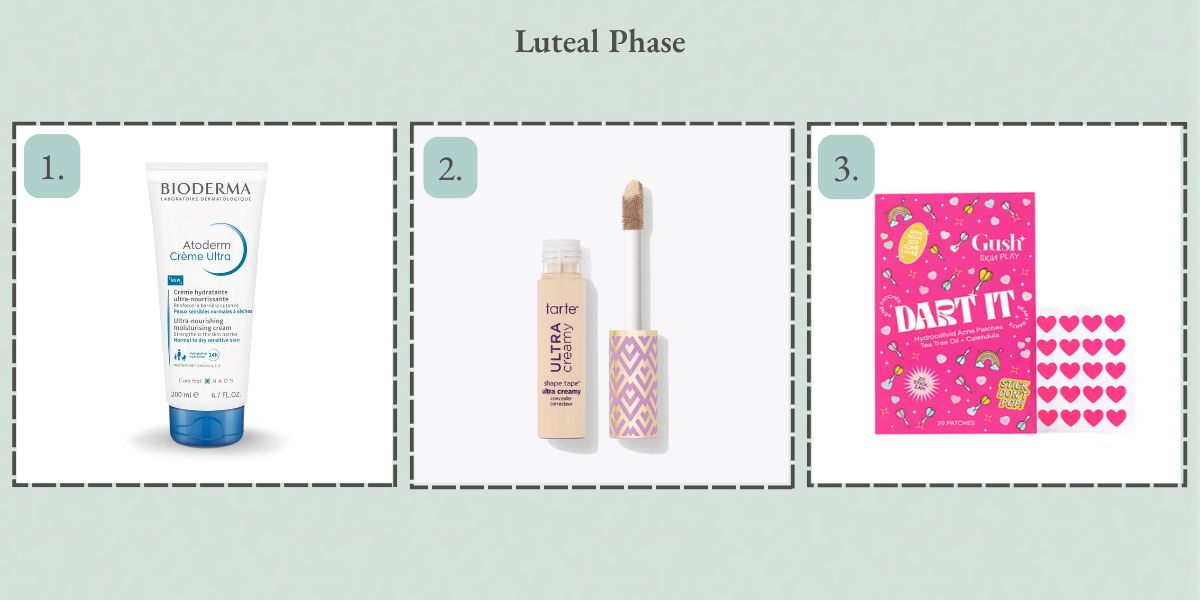
I consciously pivot and swap my lightweight moisturiser for a richer, creamier one with niacinamide and omega-3 acids to support my barrier. While I instinctively want to scrub off the dry, flaky skin, I don’t introduce any exfoliating acids or harsh scrubs. “These can feel stingier than usual as your nerve endings are more sensitive during this phase, your barrier is thinner and pain tolerance is lower,” adds Dr Sethi. This is the same reason she recommends steering clear of laser treatments, waxing or retinol-based products at this time.
I also switch my sunscreen and concealer to a creamier texture. This helps everything glide on more easily. Instead of mattifying, a reflex built over years of oily-skin survival, this time I focus on boosting glow with a strobe cream. And for the dreaded pimple? A salicylic-acid based acne patch truly does wonders.
The menstrual phase: closure and a reset
While most women dread getting their period, for me it calls for a celebration. I like to think my uterus shedding blood is metaphorically the death sentence to the dullness and dryness that comes with the luteal phase.
Hormonally, though, this is when my skin is at its most vulnerable. “During the menstrual phase, estrogen and progesterone levels drop,” explains Dr Alok. “This decrease impacts collagen synthesis and can leave the skin dehydrated and more sensitive.” There’s less natural oil cushioning the surface, which is why makeup can suddenly appear cakey. Even the skin’s surface pH shifts slightly during this phase, which can affect how well long-wear formulas bond, says Dr Sethi.
My Routine
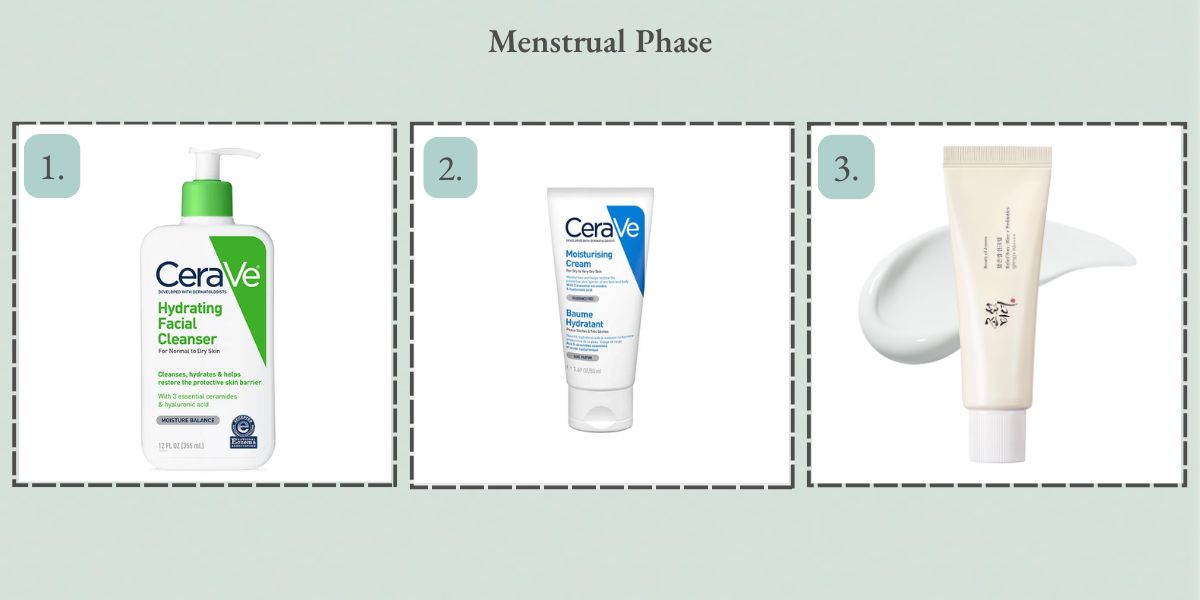
This week calls for skincare comfort food with ceramides, glycerin and creamy cleansers to repair and cushion the barrier. I keep the makeup and actives minimal.
Tracking is a game-changer
It’s worth noting that skincare isn’t identical for everyone.“Multiple factors determine how skin reacts to hormonal changes,” says Dr Alok. “Genetics, your inherited skin type and receptor sensitivity play a role as some people’s skin simply reacts more strongly to hormonal shifts than others. Lifestyle matters too: diet, sun exposure and chronic stress can amplify changes. Underlying medical conditions such as PCOS or thyroid disorders can alter patterns significantly. Even your skin microbiome influences how these fluctuations show up on the surface,” he adds.
“Tracking moves you from reactive to proactive skincare,” says Dr Sethi. That idea of a skincare wardrobe rather than a fixed routine has changed everything for me. Instead of asking, “What’s wrong with my skin?” I now ask, “Where am I in my cycle?” The rest follows.