

Why do we still settle for men we hope to change?
He’ll kill her spark
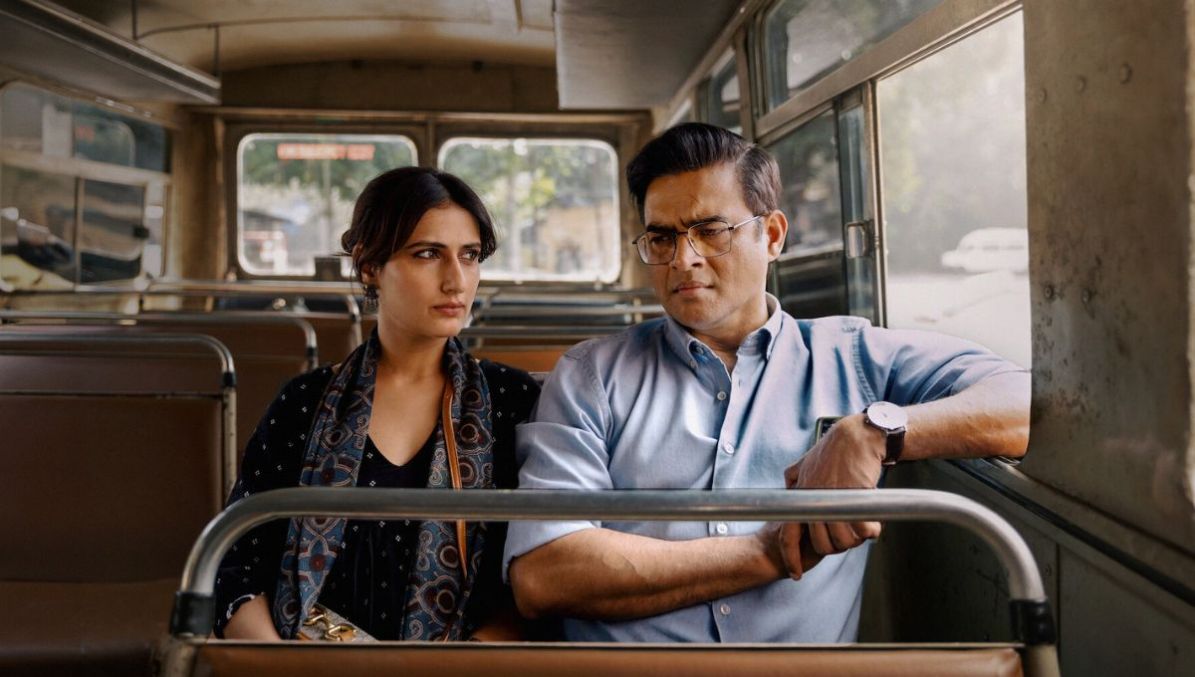
I have not been watching a lot of romantic films. Maybe because there is a dearth of good ones. Which is why last weekend, I was excited to watch the recently released Netflix movie Aap Jaisa Koi, which stars one of my favourite actors, R. Madhavan, alongside Fatima Sana Shaikh. I had watched the trailers and was prepared for the expected romance fare: personality clashes, age-related conflicts, and miscommunication. What I wasn’t ready for was how the film unfolds its central premise: a woman trying to find love in a patriarchal world, standing up for herself briefly but giving in soon in the hope that her partner will change.
The film follows Madhu, an ambitious, confident French teacher raised in a progressive family; and Shri, a mild-mannered Sanskrit teacher who prides himself on being “simple” and morally upright. Their relationship starts with an arranged marriage meet-cute but soon spirals into a muddle of judgment, boundary violations, and deep-seated patriarchy. Turns out, they have met before—virtually. Their first interaction was on an app for people looking for phone sex. Both had signed up and had fun. But when Madhu reveals she is the same woman from the app, Shri is upset and slams herfor something they both indulged in. His justification? Men are like that, but a woman shouldn’t be sexually available to multiple people. He calls off their courtship, leaving her baffled by this seemingly nice man’s audacity.
Madhu is distraught. This isn’t the first time she is encountering a man with sexual double standards; she broke up with her ex, Namit, because he had wanted to know if she was a virgin as they were about to get intimate. But then Shri comes back, catching her in a moment of vulnerability. He agrees to learn how to be a progressive man. She forgives him. They get back together. There goes our Madhu.

When simplicity masks entitlement
Shri is introduced as adecent man—a teacher of one of the most complex, beautiful languages, and supposedly a calm, grounded presence. But he often says the most outrageous things with unsettling ease. He slut-shames Madhu for being on a dating app he himself signed up to, accuses her of “offering services” (implying sex work) for the same behaviour he indulges in, and labels her a “loose character”. We assume that a man who is a little sweet, nerdy, and doesn’t know how to flirt will be a safe bet. But generations of social conditioning don’t spare a man just because he prefers Sanskrit over English.
Sure, he is not as bad as his regressive brother who mistreats Shri’s maa-sammaan bhabhi by demeaning her in front of people—but should he get a medal for it? Recently, Usher said in an interview that leaving the toilet seat down is a “grand sign of love”. Where is the bar? Has it been devoured by the earth? You’ll see men talking about how they are such amazing partners because they didn’t cheat. Dads will receive a shower of praise because they changed one diaper, while moms have been doing it all along. Many men feel they should be revered for doing the bare minimum and I am afraid that’s exactly what Madhu settled for.

He’s too familiar
Shri is not some villain out of fiction. You see him everywhere—in the office colleague who thinks “woke” is an insult, in the male friend who jokes about “body count,” in the guy who says he respects women but resents them for having agency. He is disturbingly real, and the film does a brilliant job showing how such men can weaponise gentleness, how kindness and cruelty can coexist in the same person when women don’t fit their idealised standards.
Shri wants a sanskaari daughter-in-law for his family while casually ignoring his brother’s abusive behaviour. He believes that being “traditional” gives him moral authority, which he uses to forgive Madhu for things she didn’t even do wrong.I’d understand if he was upset with her for keeping him in the dark about their first interaction. But ‘forgiving’ her for the interaction itself? Please. Madhu lets him know that he is not in a position to forgive her. And when he lovingly tells her that going forward she can do whatever she wants but within limits, she also confidently reminds him she has the agency to decide her own limits. You could see the confusion on his face because this concept is so new to him. I liked that the film touched upon such a nuanced aspect of sexism and had Madhu calling it out.
But if you think Bollywood has finally learnt to eschew sexist tropes, think again. One of the most disturbing parts of the film is how Shri repeatedly breaches Madhu’s boundaries, and it’s depicted as love. He shows up uninvited to her workplace, spies on her, and stalks her during a meeting with her ex. If this was a thriller, we’d call it what it is: obsession. I could see glimpses of Maddy from Rehna Hai Tere Dil Mein (2001) here. I may have been too young back then to know the obsessive lover trope is problematic but now I see it clearly. But because it’s masked by soft lighting and romantic music, it’s framed as earnestness.

A lose-lose situation
As Shri continues to be a self-righteous nightmare, Madhu’s suave but sexist ex Namit, re-enters, apologising for his earlier behaviour. The narrative then almost nudges Madhu into choosing between two flawed men. This is enraging, because why must it be either of them? Why must the film present it like a coin toss between patriarchy in modern packaging and patriarchy in khadi? Madhu deserves more than the luxury of a man who says he’ll try to change.
In an ideal film—like Queen (2013), where the jilted bride chooses herself in the end—Madhu would’ve walked away, rediscovered herself, and realised that partnership should not come at the cost of peace. But Aap Jaisa Koi reminds us that reality isn’t always so generous. Many women do settle, not because they don’t know better, but because they’re tired of hoping someone might meet them where they are, and have to content themselves with having it a little less bad than it could possibly be.

The invisible labour Madhu signs up for
At one point, it seems like Shri has a moment of clarity. He apologises, listens, and seems to reflect. But here’s the thing: one healthy conversation doesn’t undo a worldview. The man who was easily able to say “loose character” will likely say it again. He probably won’t say it out loud, but in judgment, withdrawal, or resentment the next time his fragile ego is bruised. Conflict resolution is not a destination; it’s a muscle you build over time. And from what we’ve seen of Shri, he’s barely begun the workout.
In eventually choosing to stay with Shri, Madhu did not just choose a partner but signed up for the full-time job of emotional tutor, therapist, cultural translator—in addition to breadwinner, as she also earns more of the two of them. Here, patriarchy unfolds as per Shri’s convenience. He is not okay with a woman having sexual fun but is perfectly fine if she is taking the pressure off him to be the provider. The relationship dynamic is tilted from the start. She’s more financially independent, more sexually confident, and emotionally self-aware. We’ve seen her speaking her mind, taking charge, being unapologetic, and living life on her own terms. And what happens when she finds out about how a mediocre man like Shri perceives her? We see her crying and losing her spark.
If we have to imagine it, how does such a relationship progress? What happens when kids come in? When in-laws make demands? When ambition calls and she needs support, not resistance? Would a man like Shri still be willing to learn and adapt, or will he retreat into the comfort of his “simple” values?

The real mirror the film holds up
The film shines a light on how quickly seemingly good men turn bitter when women step outside the mould set by society. It exposes how society critiques women more harshly for cheating, for having desires, for having a past, even when their male counterparts are doing the same or worse. And still, maddeningly, the end takes us a few steps back because Madhu ends up with Shri.
We’ve normalised male mediocrity for so long that any man who’s not openly abusive is seen as a catch. But if you watch closely, you’ll see that the problem is not just men like Shri and his brother. It’s the entire ecosystem that teaches women to be forgiving, patient, and endlessly adaptable while teaching men that change is a favour they do for us. The bhabhi accepted the bare minimum she got from her husband for years. Shri’s niece was wise enough to make him realise he shouldn’t give up on Madhu, but is not brave enough to tell him that he’s being sexist. Namit thinks he can waltz in, apologise, and she’ll start speaking to him again. And the worst part? She actually does. Shri’s friend too supports him. Probably, because he has a similar mindset. Shri doesn’t have any good male role models around him and the women are also conditioned to accept many aspects of patriarchy. In the end, when Madhu accepts Shri, she too conforms to the expectation that women must be forgiving. And while this maybe the ground reality, we can’t hope for change if we’re not even willing to depict an alternative in fiction.
So no, I don’t think Madhu should’ve stayed. I don’t think he was a catch. I think she deserved better.
I hadn’t watched a romantic film in a while, and after this one, turns out, I still haven’t.