

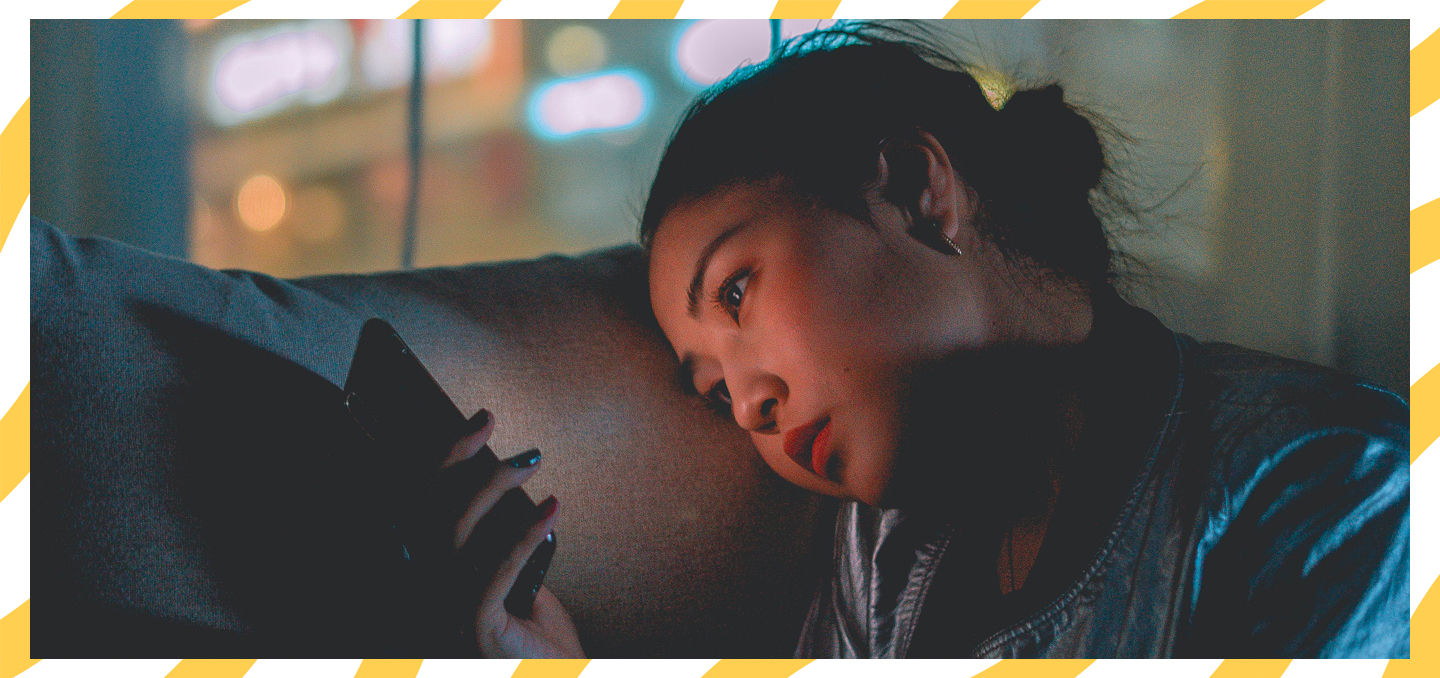
Should we be discussing our mental health on social media?
Experts on the pros and cons of Instagram therapy
“You either die a hero or live long enough to see yourself become the villain.” It holds true for Batman and social media. One minute we’re using social media to share photographs and ideas, spark protests and bring about change – the very next we’re discussing it as a breeding ground for vitriol, misinformation and deteriorating mental health. Social media platforms began to digitally connect people, but over dependence and overuse have vilified them. So where do we stand on discussing mental health on social media?
Who is discussing mental health on social media?

According to WHO, around 20% of the world’s children and adolescents have a mental health condition, with suicide the second leading cause of death among 15-29-year-olds. This is also largely the demographic that grew up side by side with social media. If millennials grew up with chaddi pehen ke phool khila hai, Gen Z grew up with #rudyardisaracist.
Naturally, they discuss mental health on social media, like they discuss all aspects of their lives. Catering to a growing online audience, mental health experts are using social media as a tool to spread awareness and market their services. Influencers who tap into their personal lives for content, have been transparently sharing their struggles with mental health online.
Even I, as a millennial, and my parents, boomers, have a screenshot or two (hundred) that includes “7 behaviours that prove you have an anxiety disorder” or “5 reasons you’re feeling seasonal depression”, or at the very least “9 ways you can increase your dopamine levels when you’re feeling sad.” And we’ve got them in our DMs too.
Instagram therapy, in fact, has evolved as a real concept, as explained in this article on Psychology Today — it encompasses ‘instant’ help, i.e by connecting with your therapist digitally, looking for verified information online and connecting with people who are having similar experiences (and of course, being able to instantly make yourself feel a little better).
Why are we talking about it?
Clinical psychologist, psychotherapist and certified clinical trauma professional Prachi Vaish, and consultant at the psychiatry department of SRV Hospital, Mumbai, Dr Sanil Sinhasan are both active on social media.
Vaish says “I mostly share my thoughts about certain psychological phenomena like trauma (since I’m a trauma therapist) and post content that prompts people to think about what is happening within them and then seek professional help.”
Sinhasan posts short videos posts providing basic information on psychiatric illnesses, for raising awareness regarding mental health issues and emphasising the recognition of warning signs.
Both want to discuss mental health on social media openly to destigmatise it. They don’t diagnose conditions via social media, or dole out advice, instead, their goal is to encourage people to recognise their own struggles and reach out for expert help.
When content consumers discuss mental health online, it may be to connect with like-minded people. When content creators discuss their mental health it could be for transparency, relatability and camaraderie. As long as they’re not offering advice like an ill-advised Indian influencer attempted a few years ago, it’s a worthy cause, say both the experts.
Vaish highlights Deepika Padukone as a perfect example, “She talks so openly about her experience with depression, but she’s not going around dispensing advice on how to cure it. She strongly advocates therapy for it!”
Are mental health conditions being trivialised via Instagram therapy?
I have OCD, social anxiety and probably suffer from impostor phenomenon. My ex-boyfriend was a narcissist. My mother is definitely in a toxic relationship with my father. If you instantly believe posts about mental health on Instagram, most people will find they have at least some afflictions.
Says Vaish, “When a psychologist trains on mental illness, they go through years of training to understand every facet of that illness. And more importantly, what is not that illness. When someone simply tries to make content on it, they will pick up info from a couple of blogs which will be dangerously generalised. Lately, the phrases ‘narcissistic abuse’ and ‘narcissistic personality disorder’ have become common terminology. People in their relationships are being attacked with these phrases, whereas reality is very different.”
This tracks, based on the number of times I see captions and posts that refer to adult ADHD, anxiety issues, OCD and more. But mental illness is not easy to diagnose, as often symptoms blur into each other. Sinhasan explains, “Instagram therapists may lack detailed knowledge of the specific diagnostic criteria for these conditions. This can lead to the mislabelling of minor symptoms as indicative of more severe illnesses. For instance, a tendency toward cleanliness or frequent handwashing, which might be a personality trait of Obsessive Compulsive Personality Disorder (OCPD), could be erroneously labelled as OCD.”
What are the benefits and pitfalls of discussing mental health on social media?
Considering the ultimate goal is to create awareness, offer support and de-taboo it, how bad could it be to discuss mental health on social media?
Vaish says, “As long as a qualified expert is making mental health content, it is beneficial. It may seem simple to look for answers in a thousand short reels rather than do sustained deep work in therapy and bring about adaptive change. But when you try and find answers through content, your mind will invariably find ways to show you what you want to hear and only look for information congruent with your thoughts. That’s why therapy can never replace social media content because this content will not challenge you!”
Sinhasan and Vaish have both had patients self-diagnose based on posts shared online. But if you feel a kinship with someone sharing their experiences or relate to a post even if it has been shared by an expert, reach out to a doctor.
You wouldn’t start antibiotics because you had the same infection symptoms as a food blogger, nor would you start migraine medication because a doctor posted its symptoms online — same goes for mental health conditions.
Of course, the pros of discussing mental health on social media include feeling a sense of kinship and community, support and finding the right therapist by connecting with their posts. While some believe that posting about mental health means making therapy more accessible, this only works if the information is coming from a trained professional.
Explains Sinhasan, “The utilisation of social media platforms by health professionals like psychiatrists, therapists, and other experts to offer advice on health-related matters is a valuable application of technology, provided certain precautions are taken. It serves as a beneficial means of delivering fundamental health information directly to the public, which is particularly crucial in contemporary times.”
Another pro is that well-crafted social media posts have the ability to reach thousands of people rapidly and this equips people with information, enabling them to better address health-related problems that come up for themselves, friends or family.
Who to (and not to) follow for mental health advice:
We may be used to discussing everything (and their towel skirts and grocery bag purses) on Instagram, but to allow social media to be your mental health hero and not the villain you seek for superficial validation, here’s what you need to remember.
Vaish and Sinhasan highlight how to pick and choose who you follow for mental health advice:
– Examine the profile of the content creator. Check for expertise, relevant degrees and years of experience.
– Distinguishing between content creators who share personal experiences and those who offer advice is important. A content creator should share personal experience with the disclaimer that they’re not offering advice. An expert will share information, not advice, and will suggest you seek them out personally for advice.
– Be cautious when content creators give advice, especially if it includes home remedies or medications. Medications should be taken with a valid prescription from an expert. Home remedies, while sometimes beneficial, can be misleading and potentially harmful.
-“Another quick indicator is that a true expert will be less inclined to be dancing in their reels based on trends,” says Vaish, tongue firmly in cheek — but she does mean it!