

Looking for serious art for your walls? You could hang these hankies
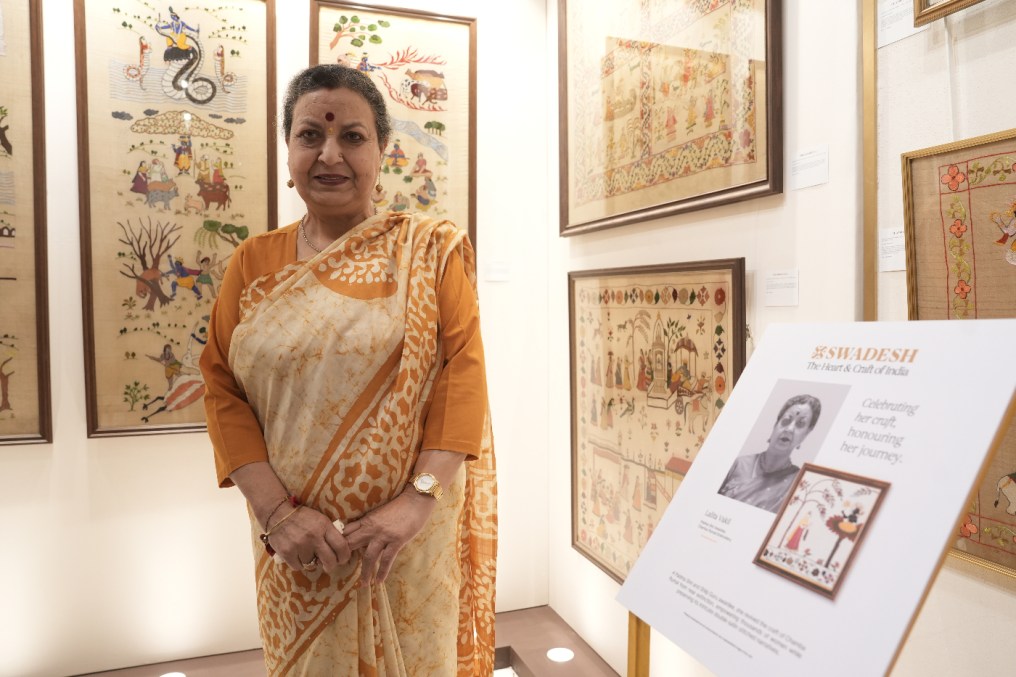
Meet Lalita Vakil, the woman who transformed the art of Chamba Rumal
Lalita Vakil, 74, is a pioneering craftswoman who has spent almost 60 years reviving, preserving and promoting the near-lost art form of Chamba Rumal. And this Padma Shri (2022), Nari Shakti Puraskar (2018), and a Shilp Guru (2009) awardee happened to be sitting just a few feet away from me one afternoon in March.
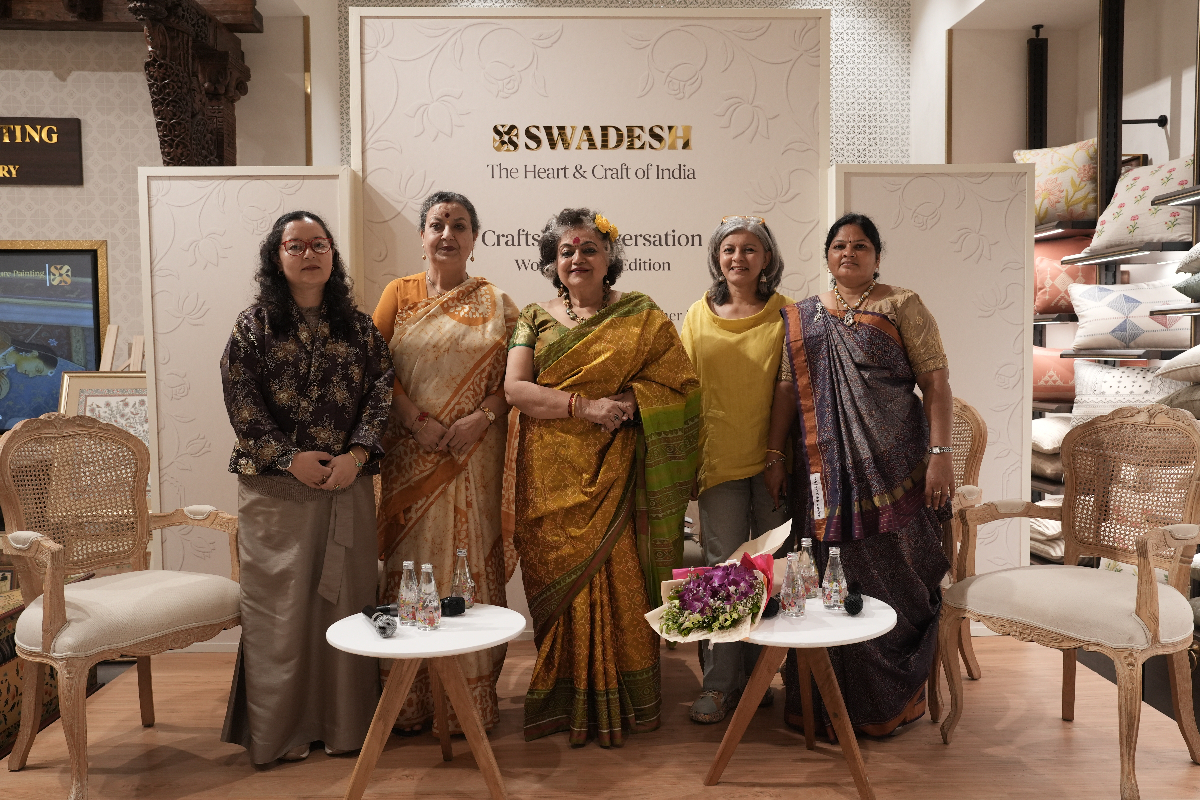
It was the eve of Women’s Day, and we had gathered at the Swadesh store in Mumbai to celebrate women powering Indian handicrafts and to listen to them speak. The room was filled with women artists, interior designers, architects and luxury journalists, most of whom had started their careers in male-dominated fields back when I was still learning how to multiply numbers. This included the panel moderator, Dr Alka Pande, an art historian and curator, as well as the panelists—Thangka artist, Tashi Dom Tshering, Patola master weaver, Nynaben Mukeshbhai Rathod, interior designer Shami Goregaoker, and Lalita Vakil.
When Dr Pande mentioned Chamba while introducing Vakil, I instantly thought of the movie Taal and a young Aishwarya Rai, playing a Chamba local, frolicking across the green hills. As if she read my mind, Dr Pande quickly stated, “Chamba is not the ghaats that Bollywood shows, but a real town in Himachal Pradesh.”
And Chamba Rumal is a centuries-old handicraft comprising of vividly embroidered handkerchiefs that originated in that town around the 17th century. Often described as “painting by thread”, it featured vivid scenes from epics like Ramayana, Mahabharata or tales of Radha-Krishna rendered on muslin handkerchiefs in the distinctive do-rukha (double satin stitch) technique which makes the embroidery look identical on both sides. Dr Pande pointed out, that unlike a lot of other handicrafts, Rumal had been a female-led craft from the very beginning, first done by queens and noblewomen to give as gifts and wedding dowries.
Rumal art was largely sustained by the patronage of the kings of Chamba until Independence, when modernisation and the availability of cheaper, machine-made alternatives threatened to make it obsolete. A few local artisans did their best to keep the art form alive, but Vakil has probably been the most successful at it. Without her decades of tireless advocacy and teaching, Chamba Rumal may not have been the globally-recognised, GI-tagged handicraft that it is today.
A hub of handkerchiefs and hope
Growing up in the remote, impoverished mountain town of Chamba, Vakil was the only one of her siblings to finish school. “I saw poverty everywhere around me, and we were taught sewing and stitching as a survival skill. We would have to sew together torn clothes to hold on to them for longer. Before winters, I would help people in my neighbourhood sew together warm clothes and blankets just to get by. Ever since then, I have always loved helping people.”
Fortunate enough to marry into a well-off family in the 1960s, she credits two people for setting her on the path that would go on to define her life’s work. First, Maheshwari Devi—a close friend of her mother-in-law and the key figure in the preservation of Chamba Rumal before her, who encouraged her to take up the craft when she was a new bride. “The first time I tried it, I was drawn to how beautiful it looked,” she says.
Later, it was her father-in-law, a well-regarded doctor, who encouraged her to look at Rumal beyond a recreational skill. “When my father-in-law told me to start teaching, I felt seen. He asked me to use my drive to help people, to help women become more self-reliant. I saw that he never charged his patients for treatment, so I made sure to never take fees for teaching either.”
Vakil began gathering students, and would source scrap cloth and discarded fabrics, to teach embroidery and sewing. She adds,“Back then, Chamba wasn’t as progressive as it is now, but my father-in-law’s reputation eased so many parents into sending their daughters. To this day, I still run classes from our house. That additional homely security added peace to parents’ minds then, and even now.”
She has trained hundreds of women in the last five decades—some even of a third generation—who became self-reliant as a result. And has gone a long way in preserving the art of Chamba Rumal in the process.

Sewing jazbaa and creativity together
Refreshingly, Vakil balances her altruism with pride in her own hard work. She’s humble enough to credit the people around her when due, but she never dulls her own shine for it. “I’ve always had this drive, this jazbaa to keep doing, to keep working and serving people around me. That drive is what has brought me here.”
By the time Vakil was awarded the Padma Shri in 2022, she told The Tribune that the local government had started paying Rumal artisans ₹300 a day. But apart from positively impacting the community and honouring the medieval art form, Vakil also gave it a modern update.
“I noticed the older iterations of the Rumal used thick threads and chunky outlines. They made the image look flat and quite dead,” she says. “I took inspiration from paintings and added the shading method to the old do-rukha, which added dimension. It resulted in the Rumal looking alive and vibrant. I think these innovations were necessary, not just for me as an artist, but also for the art form to become relevant again.”
In January this year, at the MSME exhibition in Shimla, when a piece by Vakil’s daughter-in-law, Anjali Vakil, fetched nearly seven lakh rupees, she credited her mother-in-law for teaching her the nuances of the craft.
While preparing the next generation to take forward the Rumal, Vakil has also continued to innovate by adapting its embroidery techniques to larger fabrics, including scarves, dupattas, saris and even curtains.
A life and family dedicated to art
Nowadays, Vakil does find herself slowing down with age. “When I was younger, I would not sleep for more than an hour or two at night, that’s just how much I loved this and the cause I operated with. Now, of course, I’m older and my body doesn’t always support such habits, so I sleep more,” she says. Then adds, “But I don’t compromise on the craft.”
Her “bacchis“, she says—referring to the girls and women who train with her—keep her inspired. They are deeply woven into the fabric of her life, and she, in theirs. Her students rely on her not just as a teacher, but as a guiding spirit in the town; from dealing with nagging husbands to figuring out childcare, her supportive presence puts many of them at ease.
Financially, too, she’s maintained one practice: whatever she earns from her exhibitions and selling her personal pieces, a portion of it always goes towards the workshop and sustaining their lives. Along with training them in this work and helping them enrol in government schemes in order to become commissioned artists, she also supports those who need extra help with running their homes or with education aid.
“This level of success was never my aim, to be honest. I’d never imagined that it could get this big. I only did it for the women in my town. I wanted them to become independent and live for themselves.”
An hour later, as I left the store after thanking Vakil for her time, I found myself thinking, “I hope I’m as cool as her when I’m older.” I’ve always had older women role models whom I looked up to, like my mother’s friends or international artists like Vivienne Westwood. But I had never considered artists who were making a real impact in my own country.
Meeting Vakil was just one step towards learning more about the crafts we are constantly surrounded by but fail to notice. And how it takes the commitment, hard work and vision of a few, to keep them going against all odds.