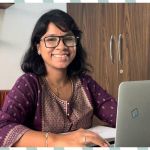


"The kashidakari art my grandmother taught me became my light in dark times": Fashion designer Ruma Devi
In our series Leading Ladies, we profile change-makers whose pursuit of excellence and challenging of conventions has inspired many to speak their minds
A naive, young girl from a quaint village making it to Kaun Banega Crorepati, Harvard University, and fashion shows across the world sounds like the plot of a masaledaar Bollywood movie. But for Ruma Devi, a fashion designer from Barmer, Rajasthan, this is simply reality. After losing her mother at the age of two, being forced to drop out of school in the eighth standard, and getting married at 17, she was left with no choice but to resort to the one thing the women of Barmer knew best: embroidery.
When she started earning money through selling her handicrafts, she decided to uplift the women around her as well. She went from door to door, encouraging the women in her village to start working, until she had a dedicated team of 10 women who chipped in money to buy a sewing machine together. Over the years, they’ve grown into a network of more than 30,000 artisans, selling stoles, handbags, sarees, dupattas, and other handmade products. Ruma Devi was honoured with the Naari Shakti Puraskar, the highest civilian honour for women in India, in 2019 by then-President Ram Nath Kovind for her work towards women’s empowerment.
In a society that upholds regressive beliefs, this is no small feat. After all, Ruma Devi’s story is not only one of grit and resilience. It’s also a story about the power of sisterhood, and how women—when they resolve to join hands and never give up—can fight the patriarchy, one stitch at a time. In a poignant conversation, the fashion designer tells us her inspiring story of grappling with loss, grief, and adversity, but eventually coming out stronger than ever before.

Fashion designer Ruma Devi on how to become self-reliant
What has changed from the day you started until now?
Initially, I lacked confidence, and the biggest barrier was language. I could only speak Marwari and had to drop out of school in the eighth standard. When I stepped out of my village, I learnt Hindi, which helped me gain confidence. I never paid much attention to naysayers—that’s my mantra for life. I knew what I was doing and that I wasn’t doing anything wrong. As I started gaining recognition, people gradually began to join in and support my journey.
What does a typical day in your life look like?
I travel a lot for work, but when I’m in the office, I’m there from 9am to 10pm. I streamline projects, check updates, and spend most of my time with the women at the training centre to keep their spirits high. Sometimes, I go into the field to talk to community members, understand their issues, and discuss solutions. If someone is getting married, I make sure to prepare a gift for them—small gestures like these strengthen our bond as a community.
What’s your process for helping women become self-reliant and start their own businesses?
Whenever a woman comes to us, my team and I first understand her challenges, provide training, and help her set up her own business. Most women already have basic knowledge, but we ensure they receive proper training to create products that meet market demands. We also guide them in exploring different opportunities, such as, how they can start their own businesses, market their products, and use social media to increase visibility for their skills, so they can become truly self-reliant.

What was the most challenging part of your journey?
Losing my baby was the most difficult time of my life. I had already lost my mother, and when my father remarried, my childhood became even more challenging. The loss of my child shattered me completely. I reached a point where I felt like giving up.
During those dark times, I remembered that my grandmother had taught me kashidakari, a traditional embroidery art. I picked up my needle and thread again, and embroidery became my refuge. In Barmer, embroidery is a tradition in almost every household, and slowly, it became my way of healing and rebuilding my life.
Do you remember your first income?
Yes, I made a bag and sold it for 70 rupees. I spent 50 rupees on raw materials and earned a 20-rupee profit. That small amount felt like a huge achievement and gave me the confidence to trust my skills. However, I was doing everything by hand since I didn’t have a sewing machine. So, I reached out to other women in my community, and together, we formed a Self-Help Group (SHG).

Who was your biggest inspiration when you first started your journey in this field?
When I stepped out, I met well-educated women who were working and earning for their families, and that motivated me. If they could do it, why couldn’t I? During my initial days, I also learned a lot from my female customers. Every interaction taught me something new and inspired me to keep going.
What was your family’s reaction to your journey?
Coming from a society where women aren’t typically the breadwinners, my decision to step out and work wasn’t easily accepted. Initially, I had no support from my family and had to build everything from scratch. But today, they stand by me and support everything I do.
What’s been a defining moment in your career?
Going to Harvard was my greatest achievement. When I first received an invitation to speak at Harvard, I was sceptical and initially declined the offer. Having never studied beyond the eighth grade, it felt like something beyond my wildest dreams. Travelling to the US was also quite expensive, but during a trip to Mumbai to accept an award, an organisation stepped in to support me and covered my expenses.
On the day of the event, I was incredibly nervous. But when the university students picked up a needle and thread, and I had the chance to teach them basic embroidery, I felt immense pride and confidence. I was honoured to represent our country and culture.
How do you unwind after a tough day?
Whenever I feel low, I meditate to align my thoughts. I also love listening to folk music. Every evening, we sing bhajans at our training centre, sometimes inviting folk artists to perform. It’s a tradition that helps us relax and gives local artists a platform to showcase their talent.
And, of course, nothing beats homemade food. Bajra ki roti with kadhi, chutney, and chaas—that’s my ultimate comfort meal. Kha kar mann khush ho jata hai (the heart feels happy after eating it).

What advice would you give to young women entering the workforce?
Many women I work with think that because they are uneducated or come from small villages, they can’t achieve anything. But I tell them—if I can do it, so can you. The key is to have confidence in your skills and start with whatever resources you have. Once you take that first step, everything else follows.
Can you share a story of transformation from the women you’ve worked with?
Sugni Deviji came to me with only one skill—embroidery. We trained her at our centre, and today, she not only supports her family but also travels to different cities and colleges to train students. She has sent all four of her children to school, proving that ek mahila apne poore parivar ko saksham bana sakti hai (One woman can empower her entire family). Seeing her family thrive fills me with happiness and purpose.
What is your life philosophy?
Just try once—you never know what you’re capable of until you give it a shot. I always wear handwoven clothes as a way of honouring my craft and the hard work of the women in my community.
*This interview was conducted in Hindi and has been translated into English. Some sentences have been paraphrased for clarity and readability.