
“The bigger the competition, the more I enjoy it”: Para athlete sprinter Simran Sharma
In our series Leading Ladies, we profile change-makers whose pursuit of excellence and challenging of conventions has inspired many to speak their minds
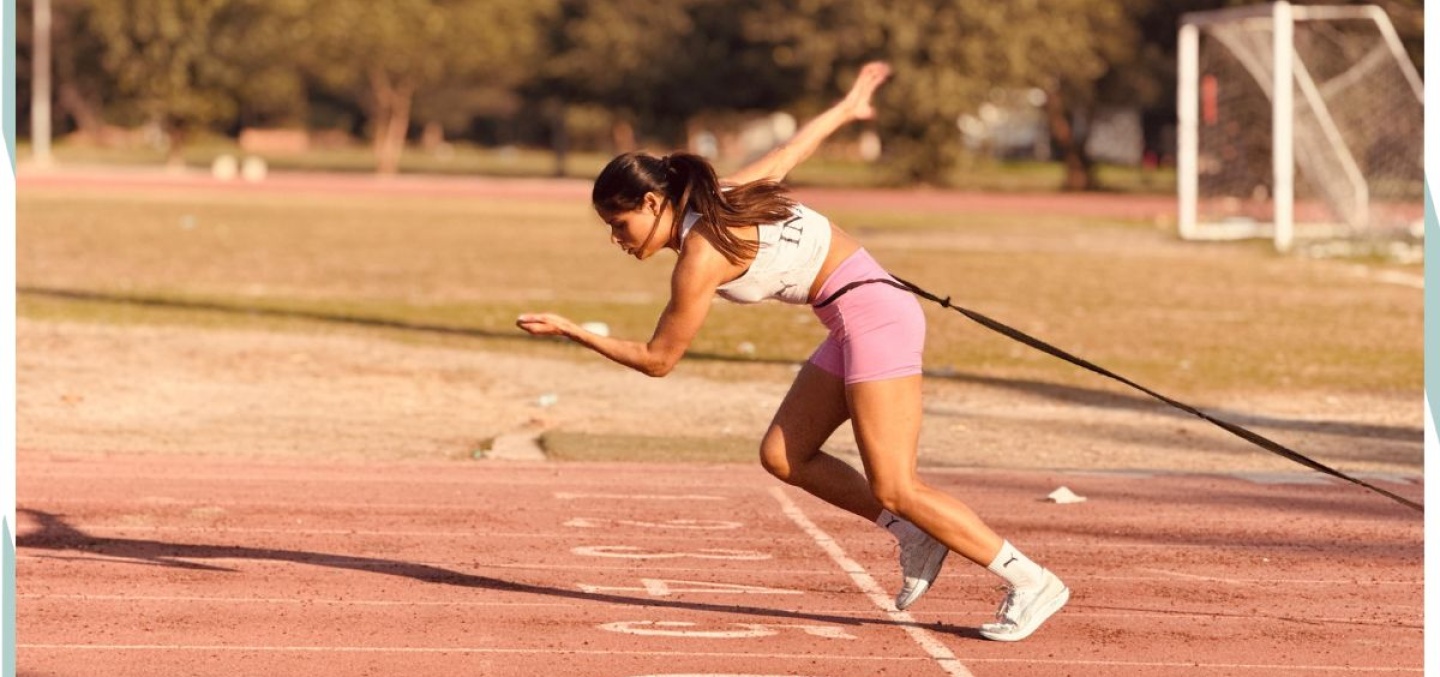
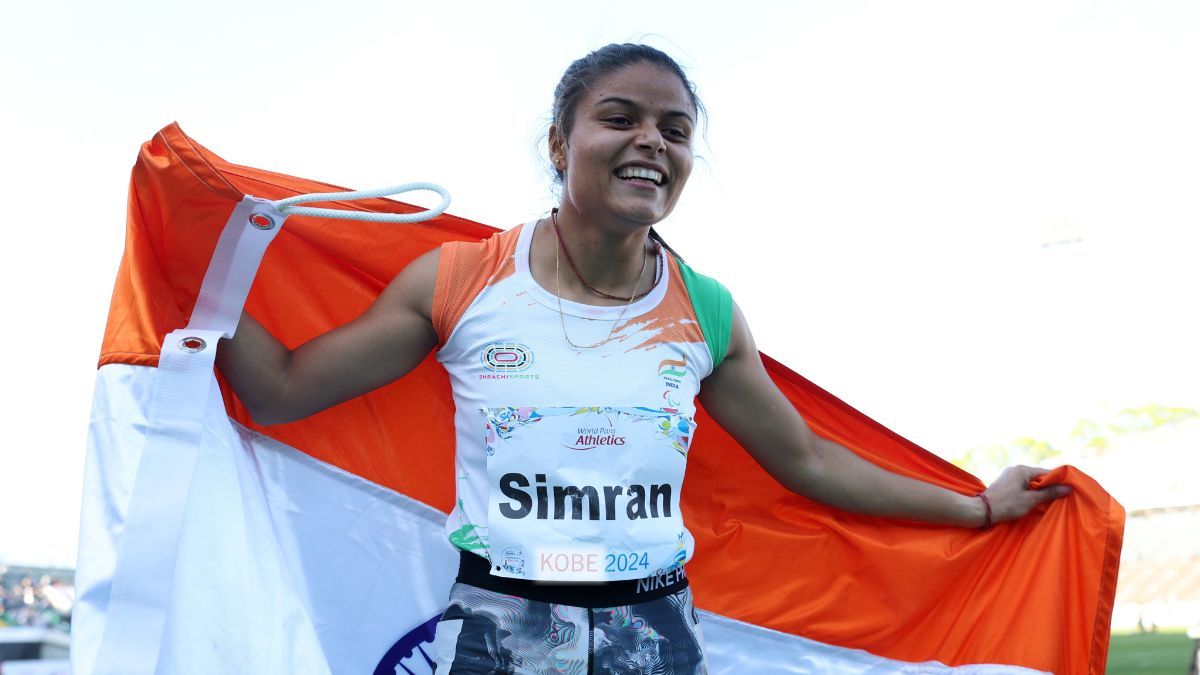
Fear of competition and performing in front of thousands may be nerve-wracking for most, but for para-athlete Simran Sharma, it’s the fuel that drives her. “Jitni badi competition hoti hai, mujhe utna maza aata hai. [The bigger the competition, the more I enjoy it.] Everyone feels nervous, even (Usain) Bolt, but your attitude and expressions reveal how prepared you are. I never let my nervousness show on my face,” says the 25-year-old sprint champion. Sharma won gold in the 200m at the 2024 World Para Championships in Kobe, Japan, becoming the first Indian world champion in a Para sprint event. She also made history by winning a bronze medal in the 200m at the 2024 Paris Paralympics and was conferred with the Arjuna Award in January 2025 for outstanding performance in sports and games.
Sharma, who’s set on winning a gold medal at the Paralympics at LA 2028 says, “I want to run so fast that my feet barely touch the ground, so fast that my legs become a blur.” She is coached by her husband Gajendra Singh and runs with a running guide as per the norm in the T12 category (visual impairment). Despite the odds being stacked against her since the beginning, Sharma has knocked down all hurdles to become an accomplished runner.
In a candid chat, Sharma takes us through the roller coaster life of an athlete—where resisting a plate of momos is as tough as sprinting 200m, daytime naps are non-negotiable, and training is basically a full-time job.
Para-athlete Simran Sharma on how to kill self-doubt
Through your journey, did you experience any setbacks due to stereotypes?
I was born prematurely at 6.5 months with visual impairment, in a small village in Modinagar, UP. I was bullied by relatives and peers, they would mock me, asking, ‘Kitni ungliyan hai bata? Udhar dekh ke kisse baat kar rahi hai, idhar dekh?’ (How many fingers are there, tell me? Who are you talking to while looking over there? Look here and talk). I faced a lot of these taunts. My bones were also weak so my body wasn’t as fit. When I started running, my posture used to bend sideways and I unknowingly entered other runners’ lanes, leading to fights. To fix my posture, I started running with 1-2kg weights on my shoulders and trained my mind to run straight in my line.
I faced more social discrimination after my marriage. My husband and coach, Gajendra Singh, supported my running dreams, which the village community didn’t like. They thought I was a bad influence on the other women of the community who may start taking a stand for themselves too. So my partner and I have faced that a lot, but we kept our minds focused on our goals.
How did you work on improving yourself?
When I didn’t win anything at the 2020 Tokyo Paralympics, I felt defeated. My husband was putting 100% into training me but I wasn’t. I used to think of ways to skip training because my body was exhausted. I used to fall, get dizzy, faint on the track, even throw up. I didn’t feel like doing it anymore.
Then I realised I wasn’t motivated enough because I was seeing it as a job. I needed to enjoy the sport, not just see it as work. I pushed through and, in 2023, jumped from world rank 11 to 1. Everyone is sad in life, but unless we learn to enjoy it, we cannot move forward. Staying happy and calm is key to reaching your goals.

When you’re going through a tough time in your career, how do you fight off self-doubt?
You need a strong support system to help you get through those tough times. At the 2023 World Para Athletics Championships in Paris, I had just started running when my muscle tore, leaving a 5cm gap that needed surgery. The Asian Games were three months away. I felt like all my effort was wasted.
In the 2024 World Para Athletics Championship, I couldn’t run in the 100m due to technical reasons. I thought, ‘Meri kismat hi kharaab hai.’ (My fate is just bad) But then, I won gold in the 200m race so that relaxed me a bit. Moments like these are heartbreaking. Family can’t always understand an athlete’s struggles because my profession is different but my team helped me through it.
You have to allow yourself time to feel emotions. Ek-do din toh doosron ko hi sambhalna padta hai, (For a day or two, others have to console and take care of you). But then you get up and move forward. I think I will work even harder in future.
How do you unwind after a tough day?
Fighting with my husband and gossiping. If there’s no drama, I create some. But he’s a sweetheart—he knows I’m just picking a fight and apologises. I also call my sister to gossip with her, it relaxes me. Or then I watch comedy films. Hera Pheri is my all-time favourite; I’ve lost count of how many times I’ve watched it.

What’s been the most monumental moment in your career?
Winning gold at the 2024 World Para Championship. I know the Paralympics is a bigger event but my dream was to stand on the podium while our national anthem played and that happened at the World Para Championship. Sukoon tha woh mere liye (It gave me peace).
What’s a piece of advice that’s made a big impact in your work?
I remember one day, I was crying in training over personal and financial issues in my family. My strength and conditioning coach let me rest but later told me, “At this moment, you can’t do anything. Crying won’t help. The only way to support your family is by winning this medal, and to win, you need to train with a free mind.”
That advice changed me. I understood that crying wasn’t going to do anything. Working hard and staying focused was the only way to make a real difference.
Who’s your biggest inspiration?
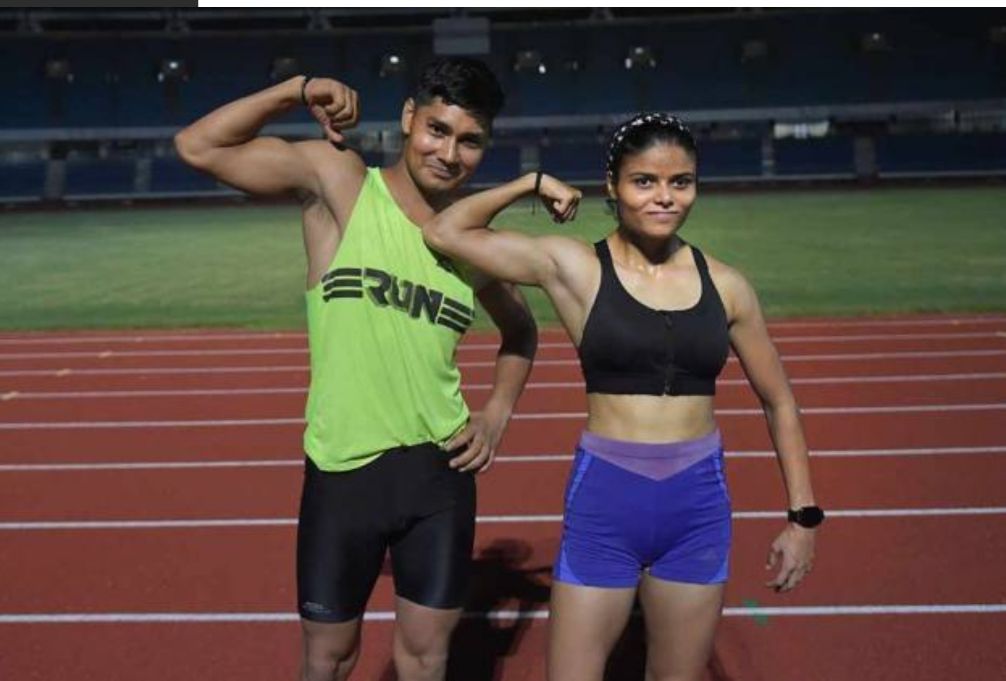
My husband—he works out more than a player. And myself. I’ve seen a lot of lows and difficulties in my career. So whenever I feel like my motivation is dipping, I watch my own videos to see how far I’ve come and how far I have to go.
How do you celebrate your big wins?
Women often downplay their achievements. And like most women, I’ve also never owned my big wins. I’ve always given my husband credit, and he’s always praised my hard work. But yes, women should own their wins. Our dedication and ability to get back up after falling deserve recognition. I’ll remember to take credit for myself now.
What’s your hope for women in the future?
I hope women uplift each other and support each other’s progress. When my husband first started training me, he was solely focused on me. But I urged him to train another athlete, and today, she’s winning medals too. I feel good if my efforts can make someone’s life better—there’s nothing greater than that. After all, what are seniors for? What is the purpose of my eight years of experience? It’s to share with others so they can move forward. If we keep everything to ourselves, what will we ever learn? Nothing at all.
*This interview was conducted in Hindi and has been translated into English for our readers. Some sentences have been paraphrased for clarity and readability.