
The real MVP of every desi household
“It’s going to outlive you.”
“Opening this almirah was like opening a treasure chest. All the household valuables, such as the camera and gold, were stashed in this.”
“I never thought I’d feel nostalgic seeing an almirah. We still have this, but it’s not used much. It was gifted to my parents at their wedding in the 60s! I used to stick those Action Kamen and quantum robot stickers from Cheetos on it.”
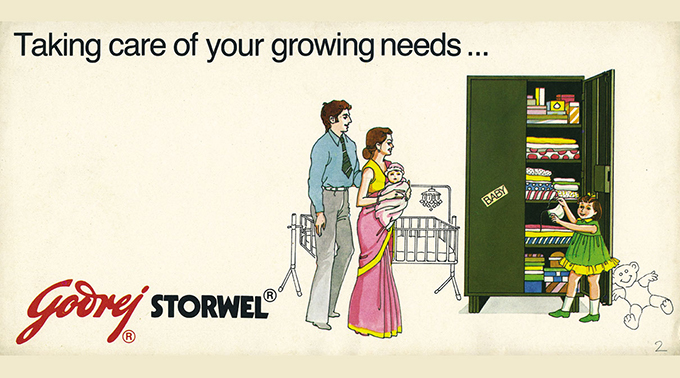
In the heart of almost every Indian home, amidst the scent of simmering curries and family chatter, stood a silent guardian of our most precious treasures: the Godrej cupboard. For decades, this steel sentinel has been more than just a storage solution; a feeling best explained in the comments of this Reddit Nostalgia thread. It’s not just the Redittors though; 94% (818) of 869 Tweak readers shared that they’ve owned at least one Godrej Storwel cupboard in their lifetime.
Ardeshir Godrej, lawyer-turned-serial entrepreneur and founder of Godrej (1897), perhaps didn’t foresee that he was about to create the cultural icon so integral to Indian households, especially since he went through a few failed ventures “before he struck gold with a locks business,” according to the Godrej website.
Imagine the polished steel doors, the sturdy lock closing with a satisfying click, and the unmistakable scent of mothballs and aged newspaper that lined each shelf wafting out as you open it. For many, the Godrej cupboard is a treasure chest of memories. It’s where wedding sarees, gold jewellery, essential documents and even secret love letters were stashed away from prying eyes. Each shelf tells a story, each compartment holds a fragment of the past and each lock protects a piece of a family’s legacy.
Even when covered with chewing gum wrapper stickers, stick-on gemstones, or scuff marks and rust, the Storwel remained the Indian’s greatest ally.
A room of one’s own
Picture a young bride, her eyes shimmering with the dreams of a new life, and tears of fear for what she leaves behind to step into a strange land. A new home that bore no marks of her presence, with its own rules, territories and ways of functioning where she didn’t have a place (yet). This was the age of arranged marriages and a trustee Godrej cupboard was as much a part of the wedding trousseau as the clothes and bangles were, a symbol of new beginnings and a sense of security. That no matter what this next home brings, this Storwel will be your space, for the things you hold dear. The sarees from your grandmother, along with delicate zari work, intricate jewellery, a class 10 mark sheet, and precious mementoes from your childhood act as talismans to time-jump to the past. The cupboard wasn’t only about convenience, it was a necessity. This was the new bride’s domain. And no Hindi serial-style mother-in-law with her bindi the size of a 10-rupee coin could say otherwise (15 mothers-in-law give us an inside perspective on the saas-bahu saga).

When the pitter-patter of kids came into your life, the Godrej cupboard became the silent keeper of life’s milestones. From their first footprint on paper to school ID cards and graduation certificates – it held all their achievements, silently acknowledging the hard-earned success of the mom who did everything she could to get her children through it all, though rarely celebrated for it (we need to talk about the mental health of stay-at-home moms).
But that top shelf. That was the best of all. The one often out of reach for children, holding the secret stash of cash or the treasured chocolates America-return Tony Chacha brought or papa’s favourite boiled sweets. Gathering around in hushed voices with your siblings and cousins to plot who would be the bottom and who, the reacher, when you stacked up on each other, trying to reach new heights of sweet delights.
Times change, designs change, and the good ‘ol Godrej cupboard now comes in many variations. Some are close to the old-school almirah of our childhoods (sometimes hidden inside larger wooden cupboards), and some are sleek and multicoloured to fit modern aesthetics. The look may have changed, but the emotional connection remains unchanged.
A legacy of love
With its enduring presence and unyielding strength, the Godrej cupboard is more than just a piece of furniture. It’s a silent witness to the ebb and flow of life, a keeper of secrets and a symbol of trust. For Indian women, it has been a reliable companion, safeguarding their treasures and memories alike. It is, and always will be, an integral part of the Indian household. With every new generation, the stories and secrets stored within its shelves continue to grow, making it not just a piece of furniture, but a cherished family member.