
My camera roll is full, yet my social feed is empty
Are we quiet-quitting social media?
I remember a time, that now seems a lifetime ago, when I would click a photo and think of captions. That shaky picture of the sunset from that beach trip that materialised after a thousand and one abandoned group chats? Posted two days after returning from the trip, with the simple yet succinct caption, “Take me back to paradise”. An artfully arranged overhead shot of my breakfast, complete with an arrangement of fake flowers, with the caption, “Sundays done right” (I never claimed the captions were good). Not just Instagram, my X (formerly Twitter) feed would usually be the resting place for my thoughts on everything from Baahubali to hair conditioner.
In 2017, I even founded an online parody magazine called Rayon. I used to post three to four times a day, and the thrill I felt as I saw the posts catching the attention of virtual strangers with no responsibility of being nice to me was enough to fuel this practice for a couple more years. Until it wasn’t enough.
An inexplicable sense of fatigue started settling in with the constant (self-imposed) expectation of being ‘on’. The number of posts slowed down from one a week to one a month to, now, one a year.
My social media activity has become relegated to endlessly scrolling through Reels or expelling puffs of air in lieu of laughing out loud at the hot takes Elon Musk’s algorithm spits out on my X feed. That need to constantly document, update, or react has faded.
Like with most phenomena on the planet, I quickly discovered that I’m not the only one. This (involuntary, in my case) abstinence from being active on social media is more common than I thought it was.
A new kind of digital silence
With the amount of content that’s currently on the Internet, it could be hard to believe that people are abandoning sharing on social media. However, the signs are there. A post on Reddit discusses this subtle but certain shift that is happening in how we interact with social media. The question posed by Reddit user Honest-Ease-3481 asks: “Anyone noticing more people abandoning social media?” Over 800 people responded affirmatively to the query, with user Black_roses4u summarising what we’ve all been feeling with their reply on the thread:
“Social media just ain’t the same.”
It truly isn’t.
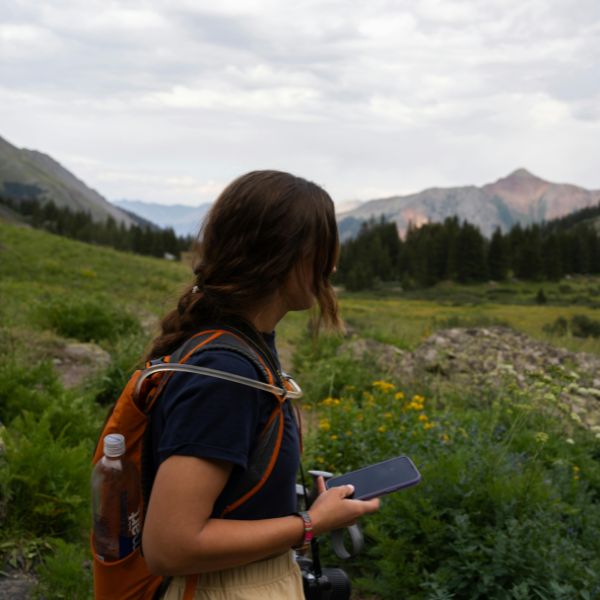
People are on Instagram, they’re sharing memes and Reels with their friends, but they’re not posting anything new on their feeds.
In an appearance on a podcast with British venture capitalist Harry Stebbings, the head of Instagram, Adam Mosseri, said that users are spending more time in DMs. “All the friends sharing is moving in that direction. There are more photos and videos shared in DMs than there are shared in Stories, and there’s way more shared in Stories than there is in Feed.”
28-year-old Hyderabad-based economic consultant Shephali Kushwaha noticed that she had stopped sharing pictures on her Stories and, over time, she lost the impulse or desire to go back to it. “I realised I felt better when I wasn’t constantly thinking of how to ‘share’ my life.” According to Shefali, it started feeling silly to post what she ate or what she was reading on her feed. “People have too much access to everyone and everything these days. If I ate something delicious or saw something cool on a trip, I can just share it on a group chat with my friends. I don’t want people from office or school friends who I don’t talk to anymore to have that kind of information.”
“Social media users (especially young people) are moving away from public broadcasts that ‘live online forever’, leave you open to abuse, and let Mom, Dad, your boss, the neighbour, your teachers and the guy down the street know exactly what you’re up to,” writes professor of social media at Xavier University and founder of social media marketing agency Dooley Media, Matthew Dooley, in his blog titled ‘A New Age in Social Media? Why Millennials Aren’t Sharing Anymore’. The expert theorises that this new trend worldwide has led to an increase in the attraction of smaller, closed networks on Instagram, Snapchat and WhatsApp.
The ‘about last night’ photo dumps on Instagram, containing a non-filtered slurry of photos indicating that a lot of fun was had by your friend group on a random weekend night out, and the incessant documenting of what you ate when you stepped out to that cafe specially marketed as ‘Instagrammable’ are slowly petering out.
A recurring theme across these discussions on various subreddits (members of the r/AskReddit and r/NoStupidQuestions are especially curious): it’s not always about deleting an account or going cold turkey. The shift is often subtler. People stop posting but keep lurking. They take photos but leave them unpublished. They no longer feel the need to update their followers on every meal, outfit, or milestone.
But how did we arrive at this point?

From burnout to boundaries
What’s driving this shift? In part, it’s emotional exhaustion. Social media thrives on immediacy, comparison, and performance, all of which can slowly erode mental well-being. Platforms like Instagram, X, and YouTube continue to grow in user numbers, are more popular than ever in India. A report published earlier this year revealed that social media users in India increased by 29 million users (that’s 6.3%) between the end of 2024 and the beginning of 2025.
Despite this unceasing dependency on social media for staying connected, there’s also a growing awareness of the psychological toll.
For instance, the tumultuous political climate around the world has given way to a kind of dilemma that our ancestors would never have had to face. We’re not insulated from news of death and devastation from countries thousands of kilometres away from us, and it has caused me to often ask myself: Should I even post about this hilarious meme I came across about Carmy from The Bear when I had just scrolled past seven Reels about an ongoing genocide? The constant moral questioning could be a cause of the decline in people actively using social media for its intended purpose.
For people like Hasina Jeelani, the constant negativity and barrage of news (both good and bad) made her reluctant to engage and interact with people and posts on social media. Last year, the 31-year-old Bengaluru-based lifestyle journalist consciously chose to take a step back from being active on social media.
“Going off Instagram started as a one-month experiment in the summer of 2024, and I immediately found myself struck by how relaxed I was. It felt like there were too many tabs open in my brain, and now that everything was closed, I could take a deep breath mentally,” says Hasina, “The cumulative effect over time is that I feel more positive, I am holding on to the good memories that I have of people within my Instagram circle and, most importantly, I do not have negativity being drip-fed to me every morning.”
I feel, for lack of a better word, silly when I go to X to draft a Tweet about my thoughts on how Karim’s malai tikka is my one true love. Will anybody care? It’s not like I’m famous and have legions (or at least thousands) of followers that I have a parasocial relationship with. Don’t get me wrong, I might still share the status of my ongoing ‘25 books in 2025’ channel on Instagram Stories occasionally and retweet (I don’t think Elon Musk has come up with an X equivalent for that) K-pop memes. It’s just not the same.
In an illuminating post on the Wall Street Journal, writer and columnist Christopher Mims asks the question that could have been snatched straight from my mind: Is social media turning into old-fashioned broadcast media?
“A handful of accounts create most of the content that we see. Everyone else? They play the role of the audience, which is there to mostly amplify and applaud. The personal tidbits that people used to share on social media have been relegated to private group chats and their equivalent.”
And that, dear readers, pretty much sums up the average social media experience in 2025.
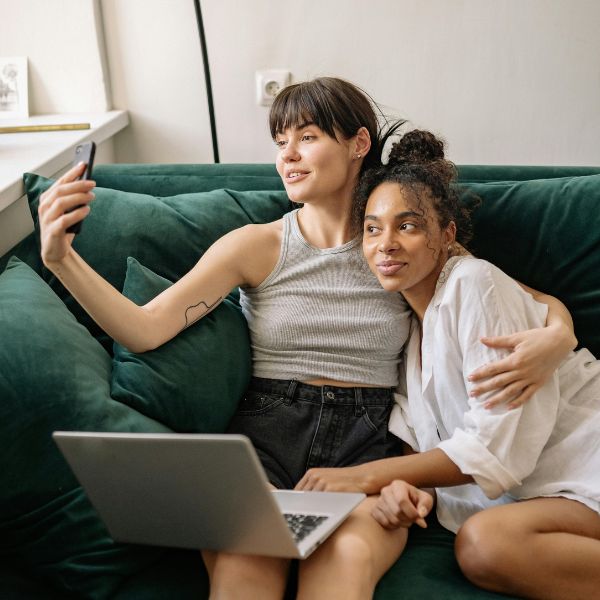
Is this the beginning of the end of social media?
While the Internet seems to love absolute statements, it would be a folly to assume that this slowly-growing trend amongst mostly millennials might end up causing the end of social media. Maybe, it’s the end of social media as we know it and the way we interact with the various platforms.
For me, these social media platforms have become (questionable) news feeds. One scroll down my X feed in the morning tells me all the things I should be excited/mildly outraged about for the day. I might not be posting as many hot takes on X or duckface selfies on Instagram, but my Sundays now comprise trying out the million and one recipes I’ve saved on the latter. My family, at least, is grateful for the pivot, especially since I no longer make them wait two extra minutes before diving into their food because I just had to get a shot of that perfectly arranged platter of kebabs for my feed.
There are also micro accounts propping up, catering to niche interests, like a YouTube account that sporadically posts about making knives from different materials, or this one Instagram account that regularly posts videos of the creator filling out colouring books even as her posts receive 60 likes. There are people out there who are not paying the growingly gentrified algorithm much attention and doing their own thing.
Amongst the people choosing the abstinence route, there’s a lingering sense of hope. Maybe social media doesn’t have to be all or nothing. “I think I’ll go back to posting someday,” says Shephali, “But on my terms. Not to keep up or to impress, just because I want to.”
This sentiment — of reclaiming social media as a tool rather than being ruled by it — feels like the real shift. People aren’t rejecting the platforms entirely. They’re just refusing to let them dictate how they experience and express their lives.