
Beyond momos and thukpa: What to eat in Meghalaya and where to actually find it
Eat like a local. No, really
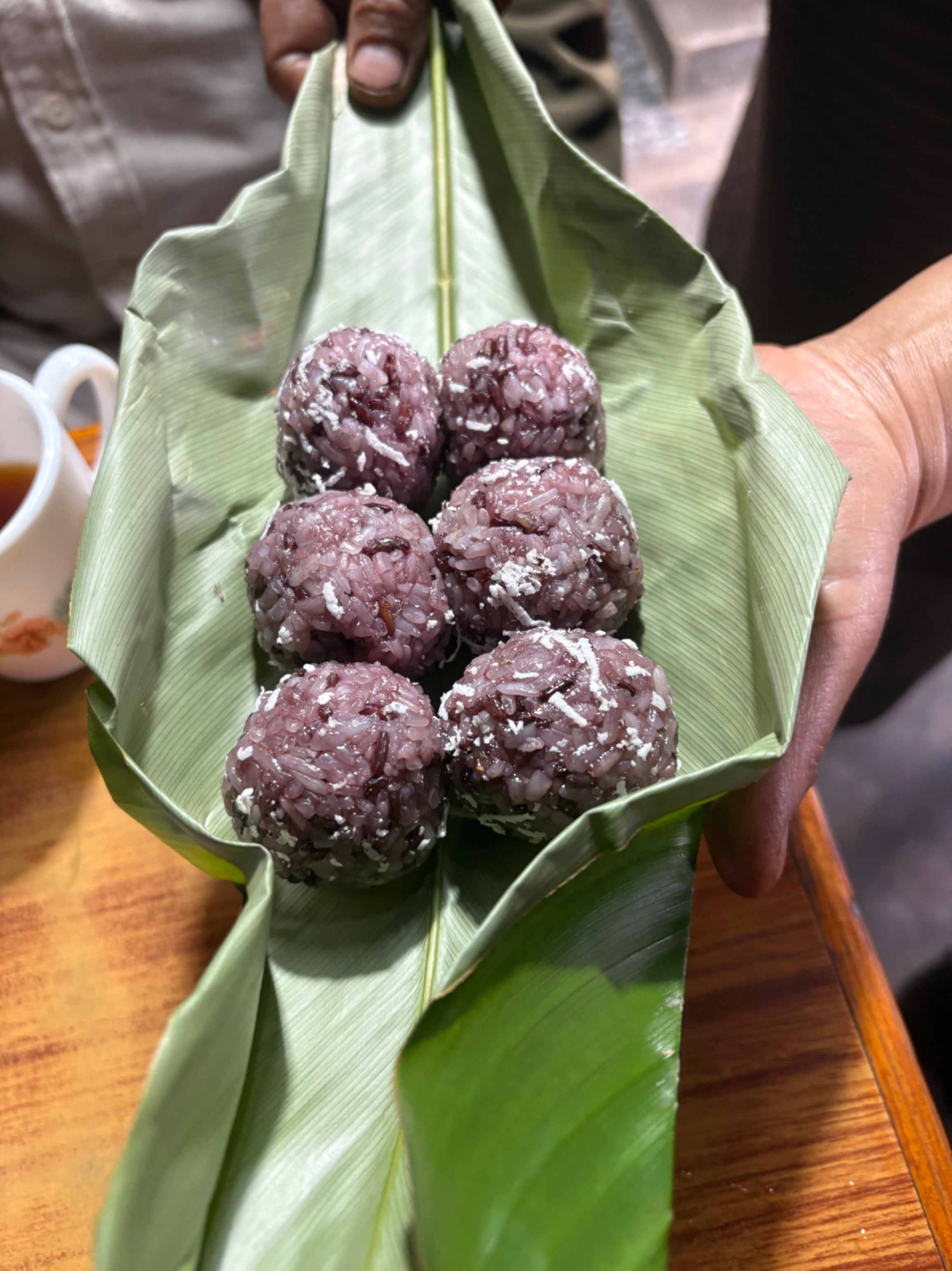
In Mylliem, lunch comes on a steel plate slick with pork fat. There’s no menu, no explanation, just a pile of dark, glistening meat coated in crushed black sesame. Alongside it, rice, a simple aloo bhaji, and greens grown in the owner’s home garden. Two chutneys sit with it, one sharp with chilli, the other deeper, fermented fish. I’m also given six small balls of purple sticky rice, lightly dusted with coconut, on a banana leaf. A cup of black tea, no milk, sugar optional, is set down without comment.
The pork is dohneiiong. The sesame is nutty-bitter, slightly gritty, clinging to the fat. Some pieces fight back, others give in immediately. There’s a faint smokiness that sits in the background. The chutneys change the bite each time, one cuts straight through, the other stays. The tea resets everything before the next mouthful.
Mylliem sits about 20 kilometres from Shillong, on the road to Sohra in the south. For a short stretch, the road is lined with food stalls on both sides. Just smoke, steel plates, and people who already know where they’re stopping.
This is my first local Khasi meal in Meghalaya. I am on my third trip to the state, here for a week this time, returning for its green landscapes, cool climate, unhurried pace, and lately, its food. Most travellers to the state stick to thukpa, momos, and generic Chinese menus, assuming that is the local default. I did too on my first two visits.
It isn’t. Khasi, Garo and Jaintia, the state’s three major indigenous communities and their cuisines, sit just outside that loop.
“Food is the easiest way to understand people, their history, their geography, their culture. But many people don’t even know the distinction between Khasi, Garo and Jaintia cuisines. It’s not ignorance, just lack of exposure,” says Sid Mewara, co-founder of Seeti Movement, a food-focused cultural initiative currently working to build awareness around Northeast cuisines.
This was my way in.
How to eat like a local in Meghalaya
Khasi
They are Meghalaya’s largest ethnic community, rooted in the central hills and known for their origin myths, sacred groves, and cultural traditions shaped by the landscape, language and local craft practices. The landscape has shaped Khasi food too: forests and hill farming have helped create a cuisine that draws on foraged ingredients and local produce, while pigs, easier to rear in steep terrain than larger livestock, made pork central to the table.
Khasi food is the easiest to come across, and pork appears in every form, boiled, smoked, stewed—sometimes across the same meal. The fat behaves differently each time, pooling at the edge or clinging to the meat. You smell it before you see it. Seasoning stays light in most dishes, with ginger, garlic and turmeric, and heat coming more from green chillies than layered masalas.
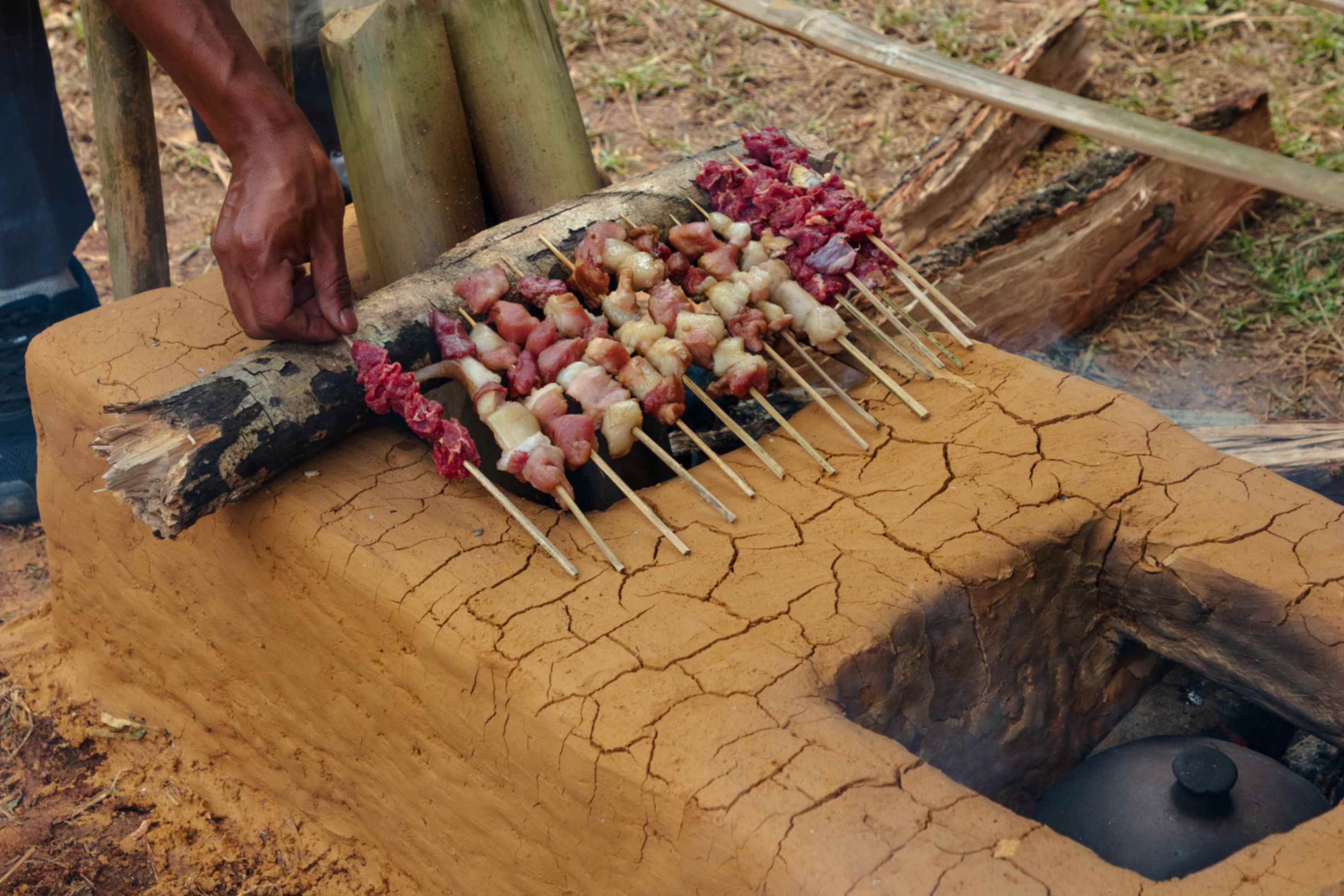
Chef Reuben Sooting, who runs Lady Aiko in Shillong, pushes back on how the cuisine is usually read. “The biggest misconception is that it’s all very spicy or meaty,” he says. That assumption tends to shape what people eat, and what they miss.
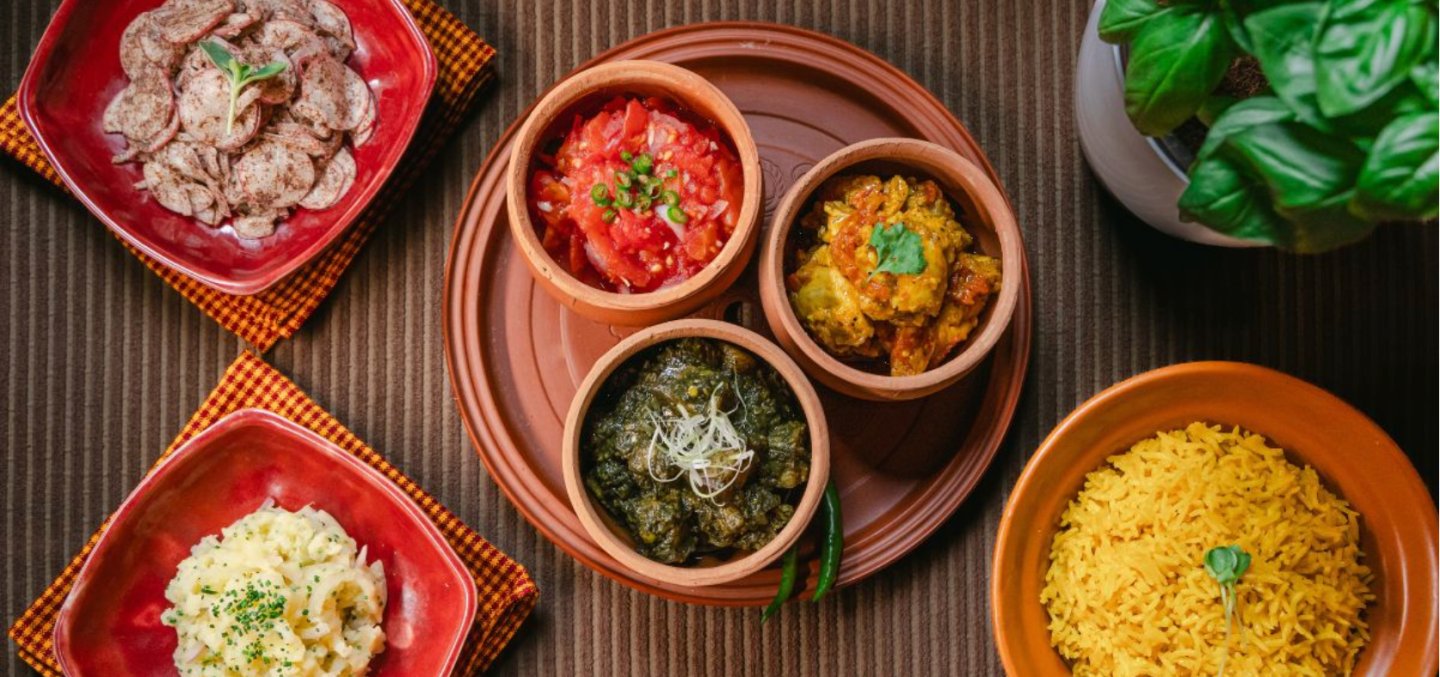
He suggests starting with doh khleh (a meat salad), with tungtap, a fermented fish chutney on the side. Vegetarians can opt for ja stem (turmeric rice) and dai sboh (dal with black sesame), pairing them with sohbaingon dieng (tree tomato pickle) or achaar lungsiej (bambooshoot pickle).
The more adventurous can try tungrymbai, a fermented soybean paste that sits somewhere between a chutney and a side. It smells stronger than it tastes, though the aftertaste lingers. I was also served mulberries with local flattened rice—a raw, more everyday combination.
In Shillong, one of the easiest introductions is through places like Trattoria, the family-run canteen in Police Bazaar known for its homespun meals and steady local crowd. The owners are often happy to guide first-timers through the menu. Beyond that, it’s smaller local joints and roadside stalls, especially in Mylliem and on the way to Sohra, where the food feels closer to everyday cooking.
Dishes like jadoh (rice and pork) and dohneiiong are easy enough to find. What’s harder to come by are the fermented sides, the foraged greens and less common pork cuts, which tend to stay within homes or roadside setups outside the city.
Garo
Indigenous to the Garo Hills in western Meghalaya, the Garo people have long lived in close relationship with the forests and seasonal rhythms around them, shaping a cuisine built on smoked meats, fermented ingredients, bitter herbs and foraged produce. Finding Garo food still requires intent. It is most closely associated with the hills it comes from, a part of the state that lies well beyond the usual Shillong-Sohra circuit and is often skipped by first-time travellers on tighter itineraries.

I did not make it there this time either. Instead, I was introduced to it at a tea estate on the outskirts of Shillong, where it was prepared for guests at lunch. A do’o broth (chicken, slow-cooked) came first. It was light, almost plain, and comforting. A server nudged me to try do’o brenga, chicken cooked inside bamboo over fire. The bamboo left a faint sweetness and a dry, smoky edge that lingered longer than the meat itself.
An oil-free pork dish that dries the mouth before settling, and a light pumpkin and foraged mushroom gravy, with greens alongside, followed. For someone new to the cuisine, nakham bitchi (a broth made with dried fish and chillies) feels like a step up—sharper, slightly bitter, with a depth that doesn’t soften.
In Shillong, Garo food appears in fragments, at roadside stalls in the main market area of Police Bazaar, or on mixed menus. A full meal is harder to come by. For that, you go to the Garo Hills or into someone’s home.
Jaintia
Descended from the old Jaintia kingdom, the Jaintias carry a distinct cultural and historical identity within Meghalaya, but their food which is built around hyperlocal ingredients remains less visible outside the eastern hills. I came across it on the way to the sacred forests in the Jaintia Hills, east of Shillong. There was no server to guide me through the dishes. No drama. No fluff. You just sit and taste.
Bam syien, a simple fish preparation, is one of the few ways in. It’s steamed, often with ginger, clean and restrained, not going much beyond the fish itself. Knia pyrthat, a chopped meat preparation mixed with fresh herbs and a tree tomato chutney, felt closer to a salad. I’m not told what to pair with what, so I hesitate longer than my other meals. Putharo, a soft steamed rice bread, is eaten with dohjem, pork cooked with black sesame.

Nothing was adjusted for outsiders. Tastes weren’t made more palatable. Fermentation came through as it was.
There are very few places in Shillong where you can try this as a full meal. At best, you get parts of it, mainly through cooks hailing from the Jaintia Hills. Or on festival menus and through curated experiences.
Making it accessible
While places like Trattoria keep things straightforward for visitors, restaurants like Lady Aiko, Pa’s Khasi Cuisine and Rynsan are making local flavours easier to understand. Smaller cafés are also beginning to include local elements on otherwise mixed menus.
But this comes with edits. Plates arrive tidier, more composed. Fermented elements are pulled back. Stronger flavours are spaced out. Meals are broken into parts that can be ordered on their own. Chef Sooting acknowledges this. “In restaurants, sometimes the authenticity of preparation or specific local ingredients can be slightly adjusted for broader appeal, but generally, the core flavours remain,” he says.
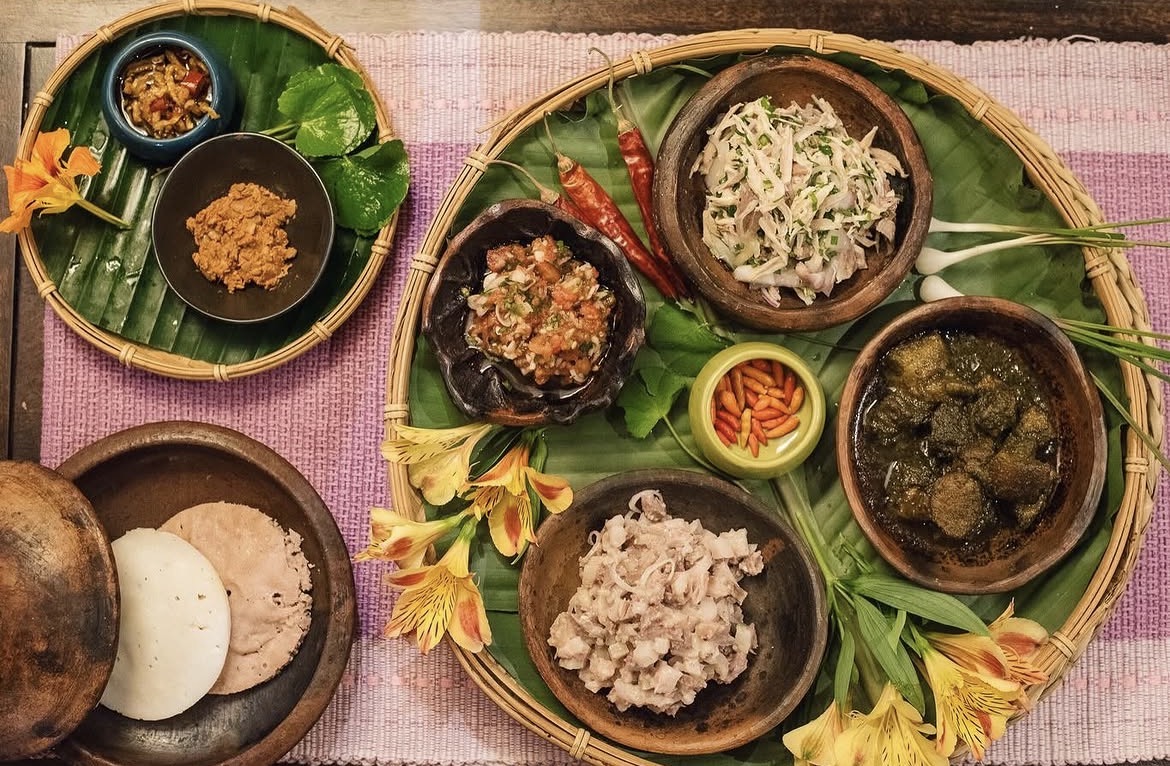
This, of course, changes when the food leaves the state. “If you take a Khasi meal to a city like Bengaluru, say for a pop-up, then you might have to make adjustments. You might tone down something like tungrymbai slightly. People unfamiliar with it need an entry point. You don’t start with the strongest flavours. You build towards it,” says Mewara.
But when had in its original setting, the trade-off doesn’t feel like one. That’s why in the end, that meal in Mylliem stays with me more than the momos and thukpa I ate in Shillong. Not because it was better, but because it was the first time I ate the local food as it was. No cues, no softening. Just what was on the plate.