

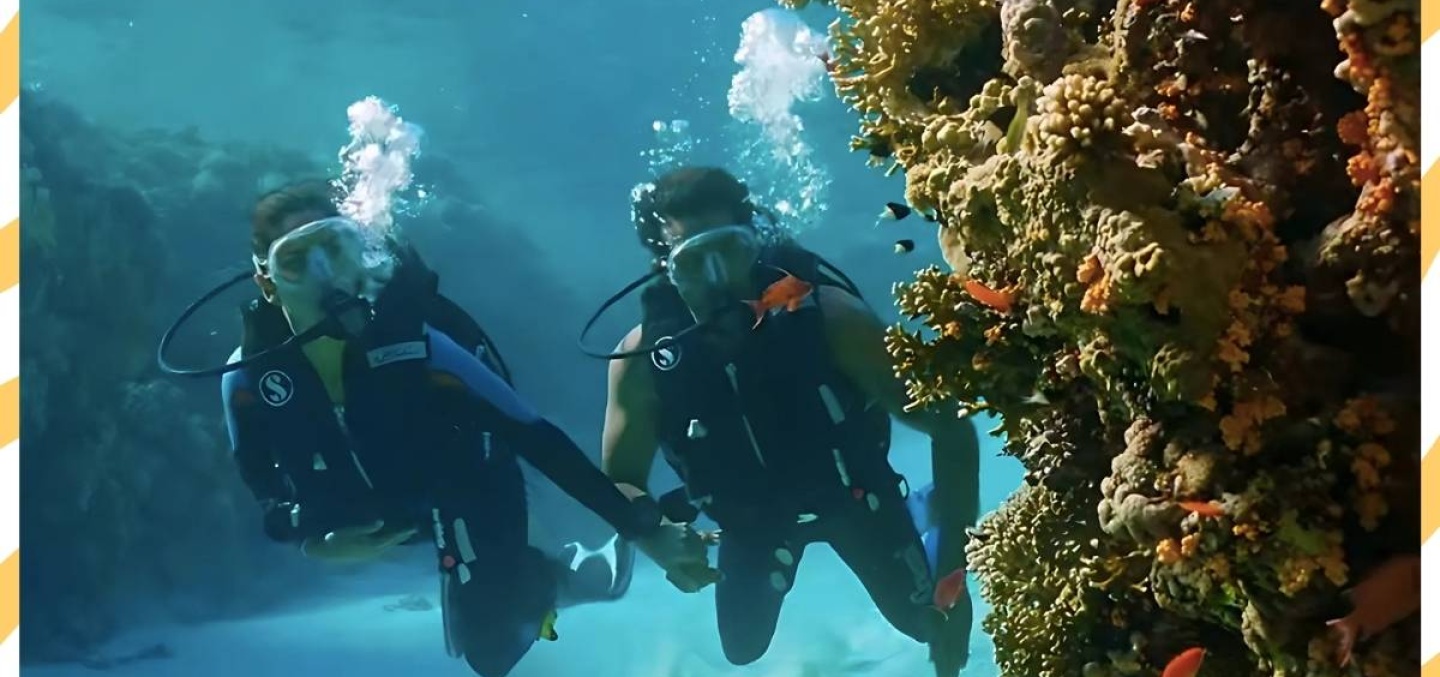
Dive with the sharks and explore historic ship wrecks at these 9 scuba diving sites
Gear up, it’s time to see the sea
Katrina Kaif’s Laila wasn’t lying in Zindagi Na Milegi Dobara when she said, “Diving is like meditation. Insaan ko apni ek ek saans, ek ek pal ka ehsaas hota hai.” It truly is—floating weightlessly, surrounded by a school of shimmering fish while a five-metre manta ray glides past like an underwater spaceship. Coral reefs bursting with vibrant colours as the waves dance over them, while seagrass and mangroves stand out in lush greens against the endless blue. Scuba diving isn’t just an activity; it’s an experience of a lifetime.
That’s exactly what drew Nayantara Jain, a scuba diving instructor, marine biologist, and executive director of a marine conservation NGO ReefWatch, to the depths of the ocean. “It’s a different kind of silence, where you hear your breath more than any external sound. You’re surrounded by marine life, sometimes right in the middle of a school of fish so dense that you can’t even see the other divers beyond them. It’s a feeling like nothing else,” she says.
But Jain didn’t always imagine this would be her life. Her first brush with diving happened at 16, during a family vacation to the Maldives when she got her open water certification. What started as a holiday adventure turned into a lifelong passion. Today, she splits her time between training divers, advocating for ocean conservation, and getting away for dive vacations whenever she can. “It’s like doing vinyasa yoga but underwater. Imagine extreme focus while your brain also turns off, and sometimes, you lock eyes with a fish that you swear recognizes you from yesterday’s dive,” she says.
Scuba diving as an adventure sport has grown in popularity, and Jain believes the rise of adventure travel has a lot to do with it. “More people are now comfortable in the water and learning to swim from an early age—unlike many from our parents’ generation, who never even learned how to swim. Overall, the whole ecosystem is now ripe for more people to take up adventure sports,” she explains. The most important question however is, do you need to know swimming to go diving? Jain says it’s a required skill if you want to get a diving license by doing the open water course or advanced open water course which is valid across the world. If you want to be a one-time diver, swimming isn’t a required skill. “You don’t have to be a fantastic swimmer but you need to show that you can swim 200 metres and that you can tread water for about 10 minutes. You need to have some level of watermanship,” she explains.
If you’re ready to take the plunge, Jain has handpicked nine of the best scuba diving destinations you must visit.
9 best scuba diving destinations to bookmark for your next holiday
India

Havelock Island, Andaman Islands
If you’re just dipping your toes in the world of scuba diving, Havelock Island in the Andamans is a good place to get your open-water diver’s certificate. “Havelock has incredible coral reefs and is perfect for beginners because it has some of the best dive schools in India.” At Havelock, you get to learn how to dive in crystal-clear waters which makes it an incredible experience. Nemo Reef is a marvellous diving spot for your first-ever dive; shallow waters, little to no currents and vibrant coral reefs and marine life to explore at your own pace. You also must put diving at Turtle Bay on your list. As the name suggests, you’ll get to dive in waters abundant with sea-turtles, and watch them in their natural habitat.
Dive level: Beginner, Best time to travel: October to June

Barren Island, Andaman Islands
Volcanoes sound like they belong in fantasy fiction, spewing hot, hot orange lava, somewhere far beyond. But how would you like to dive right next to one? Located northeast of Port Blair, Barren Island in the Andamans is the location for India’s only active volcano. You get to see magnificent volcanic formations both above and below the water which makes it a top-tier experience. If you’re lucky, you might even witness underwater volcanic vents—openings on the ocean floor that emit hot, mineral-rich water from the volcano. The waters around Barren Island are home to whitetip and blacktip reef sharks and octopuses. The best spots to dive there are Purple Haze, Barren Garden and Manta Point.
Dive Level: Advanced, Best time to travel: November to April
Chidiya Tapu, Andaman Islands
Did the story of the Titanic fascinate you too? What mysteries would a sunken ship sitting on the ocean floor hold? At Chidiya Tapu in the Andamans, you could get close to finding out. Explore a mysterious shipwreck site that theories say is either an Indian navy ship or a Japanese warship. For anyone who loves visiting historical spots, this would be a perfect place to go diving at and watch the stingrays, schools of snappers and giant groupers make the wreck their park. For beginners, the island presents spots like the Lighthouse and Fish Point where shallow waters and white sandy ocean floors paint the perfect scene for a mid-afternoon marine excursion.
Dive Level: Advanced or deep sea divers, Best time to travel: October to May

Lakshadweep Islands
Lakshadweep is an excellent choice for beginner divers, especially if you’re getting the chills about entering the deep blue sea and still getting the hang of the ‘okay, not okay’ and ‘air gauge’ signals. With its calm, clear waters and shallow lagoons, it’s the perfect place to ease into diving while witnessing vibrant marine life, lush aquatic flora, and pristine coral gardens. Some of the top diving spots here include Agatti, Bangaram, Kadmat, and Kavaratti. And with its white sandy beaches, swaying coconut trees, and breathtaking azure waters, you might just find yourself asking—Maldives who?
Dive Level: Beginner, Best time to travel: October to May
If at all, you wish to go scuba diving or get your certification on the Indian mainland, Jain recommends exploring diving schools and sites in Goa, Pondicherry, and Netrani islands off the coast of Karnataka. The water may not be as clear, but you’ll be able to see some coral reefs and marine life.
International
Indonesia
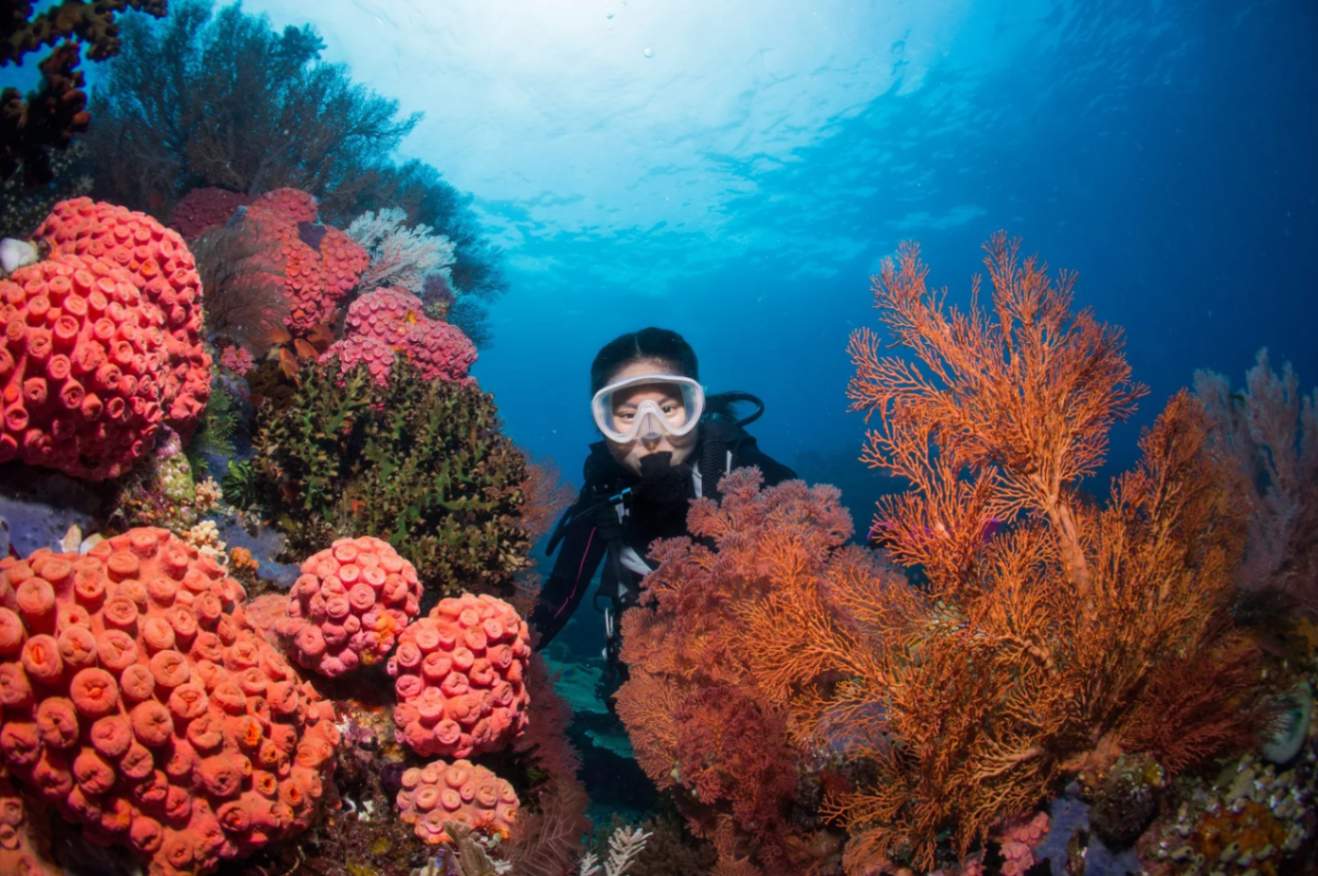
Swap your daily dilemma of hitting the gym vs. walking 10k steps in your society’s garden for something way more exciting—hiking to waterfalls, diving into the cobalt waters and indulging in endless plates of Nasi Goreng in Indonesia. Jain recommends booking your tickets for Komodo and Raja Ampat islands in Indonesia for a magnificent diving experience. It’s home to some of the most breathtaking coral reefs and you get to dive alongside ginormous manta rays, and spot reef sharks, turtles and other marine life. Raja Ampat is also situated within the Coral Triangle, a roughly triangular area in the waters around Indonesia, Malaysia, Papua New Guinea, the Philippines, the Solomon Islands, and Timor-Leste, that contains about 500 species of reef-building corals in each ecoregion.
Dive level: Advanced, Best time to travel: December to April
Egypt
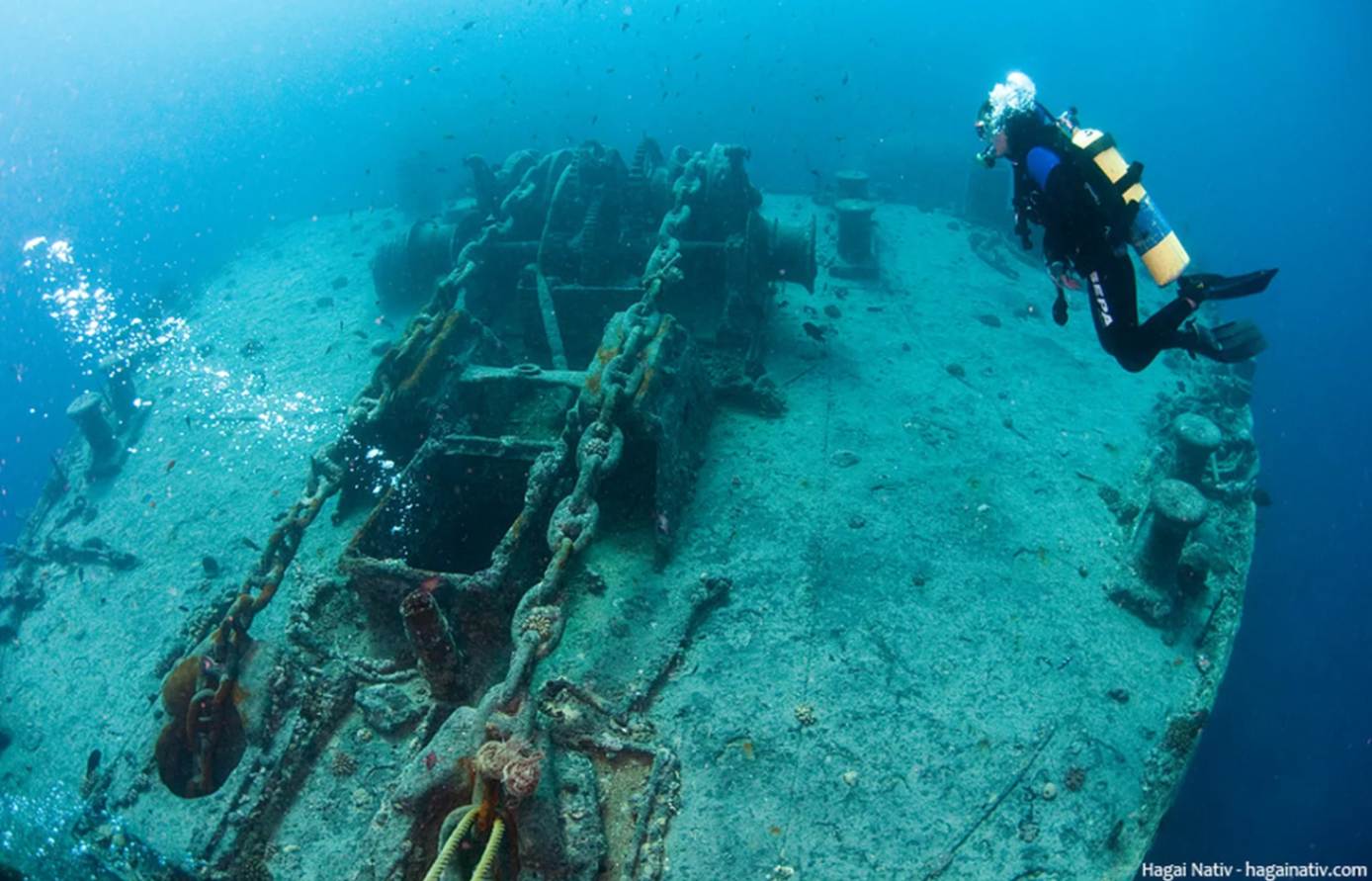
Yes to the pyramids and the mummies of Egypt but let Imhotep rest a bit longer and take your inner Rick and Evelyn to dive into the Red Sea instead. “It has amazingly clear waters and a lot of World War II shipwrecks to explore in there. It’s also home to the well-known SS Thistlegorm, one of the best wreck dives in the world,” says Jain. The SS Thistlegorm was a British merchant navy ship that was sunk in 1941 by German bombers. It rests at a depth of around 30 metres and is a must-visit spot. You can also spot giant moray eels, clownfish (hello, Nemo) and whale sharks on your dive.
Dive level: All levels, Best time to travel: September to November
Philippines
If Jaws didn’t scare you and diving with sharks is on your bucket list of adventures, the Philippines are calling for you. Jain recommends going diving at Malapascua Island where you can have very close encounters with thresher sharks, an endangered species of sharks that are usually harmless to humans. This is among the only places in the world where you can regularly spot the thresher shark. Malapascua also spoils divers with its underwater exploration choices, from coral reefs to shipwrecks and marine life like sea snakes, cuttlefish and mantis shrimp.
Dive level: Beginner but some sites may be off-limits, Best time to travel: December to April
Maldives
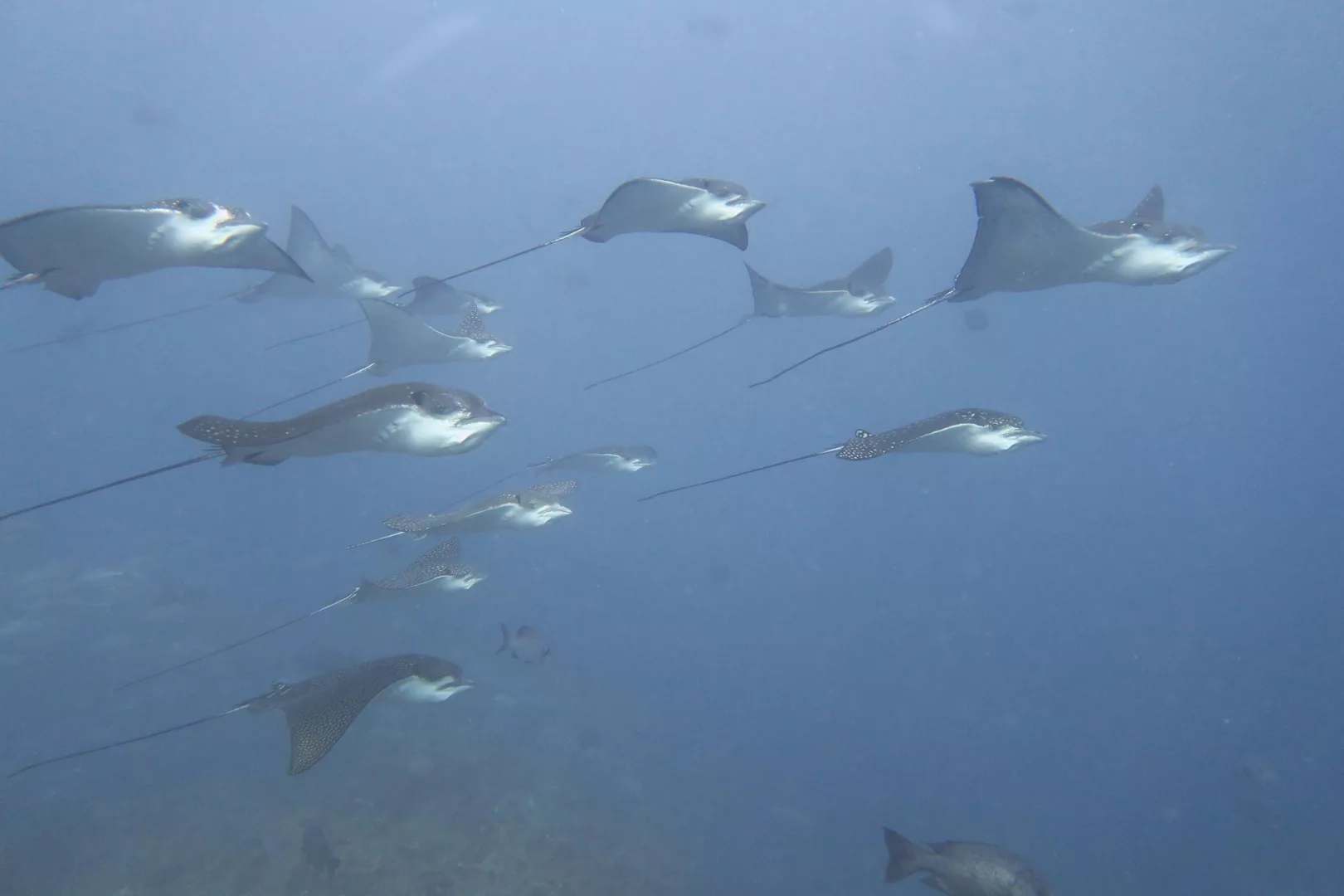
Sipping piña coladas on the wooden sundeck of a water villa while looking at the turquoise waves mingling with the cerulean skies on the horizon in the Maldives, is a bucket list experience for all of us. But there is yet one more dreamy escape to be had when you step out of the resort and dive into the shades of blue instead. “The water in the Maldives has almost swimming pool-like conditions which makes it ideal for new divers,” says Jain. Cocoa Thilla, a popular spot for diving and fishing in the South Malé Atoll is great for spotting sharks and eagle rays, Kandooma Thila, a tear-drop-shaped island is considered one of the best dives in North Male, and if you want to look at unusual species like soldierfish or unicornfish, Vadhoo Caves, another dive site in the South Malé Atoll, should be on your diving spots list.
Dive level: All levels , Best time to travel: November – April
Galápagos Islands
“This particular site is like the Mecca of scuba diving, especially for me. Diving at the Galápagos islands in Ecuador is an experience of a lifetime,” says Jain. Charles Darwin developed his theory of evolution by natural selection after studying the physical differences between related species on different Galápagos Islands. This makes the dive site even more fascinating. You get to see everything from massive pools of hammerhead sharks to marine iguanas. It’s also the only place where you can spot penguins so close to the equator. Diving at the Galápagos is, in one word, magical.
Dive level: Advanced, Best time to travel: June to October
Things to remember before going on a diving vacation
Before you channel your inner mermaid and jump into the deep blue sea, here are some expert-approved tips from Jain that’ll ensure you can enjoy your dive to the fullest without booking a one-way ticket into a whale’s mouth or worse, to flu town.
Plan for the weather – Avoid monsoons; diving is dependent on good sea conditions. Check the best season for your chosen location. If you’re going to get certified, schedule some buffer days in case you experience delays due to poor weather.
Pick a reputable dive centre – Read reviews, ask about instructor-to-student ratios, and ensure safety measures are followed. It’s best to seek out well-established, old dive centres because they’ll have credibility.
Get comfortable in the water – Even if you’re a swimmer, practice beforehand. The more at ease you are, the better your diving skills are. Similarly, if you’re a beginner, it’s good to practise floating for a longer time before going on a diving vacation.
Stay healthy – Avoid catching a cold before you go on a scuba vacation because that would mean no diving. Blocked sinuses prevent equalisation (balancing the pressure in the ears and sinuses with the surrounding water pressure) which can be painful and dangerous.
Get a medical check-up – Some conditions or medications may prevent you from diving. Consult a doctor beforehand and make sure you’re fit to go.
The world of scuba diving is as diverse as it is breathtaking. As Jain puts it, “Diving will blow your mind”—and with these incredible locations, you have the best chance of discovering a whole new passion. Who knows what new world or adventure awaits you out there beneath the cerulean waters?
As told to Shivani Pathak.