

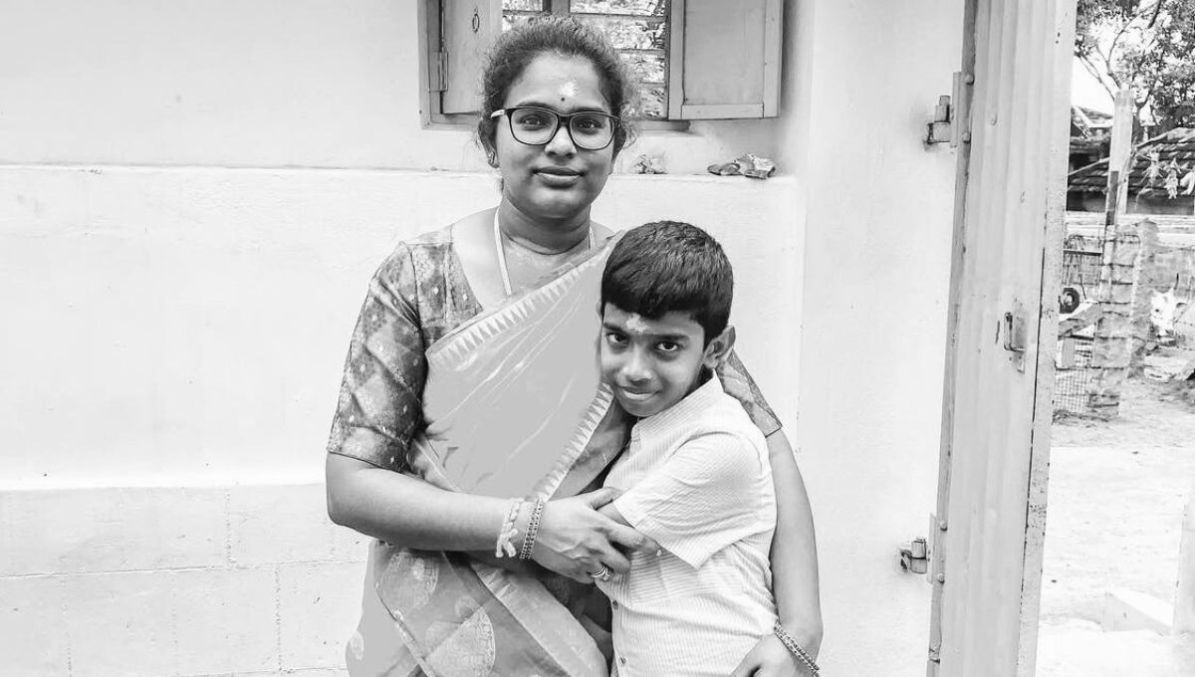
"My son would stare at an empty page for hours hoping to find the words"
His teachers gave up on him but I didn’t
Recently, when we shared an article on Instagram about women who broke barriers to have successful careers in STEM, a Tweak reader commented, sharing her own story of making it. Dr Shanmugapriya, in her comment, described how she pursued her higher education with rare perseverance while also being a mother to a small child when she left India to pursue a PhD. Upon visiting her Instagram page, we discovered she is also confidently raising a dyslexic child and spreading awareness about it. Intrigued by this glimpse of her grit and courage, we connected with her to learn more about her life and journey with her son.
Dr Shanmugapriya comes from a small village near Madurai, settled in Chennai, and is now in Germany, raising her toddler daughter and teenage son, who is dyslexic. The first to graduate in her family—with a Bachelor of Engineering in Information Technology—she married under one condition: she would be free to pursue higher education.
When her son was one year old, she started her Master’s degree in Nanotechnology. After that, she received the coveted Marie Curie Fellowship to pursue a Joint Doctorate between two universities in Belgium and Germany, in Chemistry and Materials Science. While she was out there, breaking barriers, mom guilt (even the most driven women feel it) found its way to her: “My son was four-and-a-half years old when I left India to pursue my joint PhD. It was the first time I was away from him for such a long time and in a different country. I would make sure to connect virtually with him daily. But that first year was difficult, both for my son and me,” Dr Shanmugapriya says.
She says he could barely comprehend why his mother was away. Sometimes she would break down and question everything. “I would wonder if this degree was worth leaving my son for four years, at such a formative age. He had just started school, and he needed me around. But I told myself I was doing this so I could give my family a better life. My father struggled financially while growing up, so he had to start working from the age of 14 years. My parents knew the value of education and did everything to make me well-educated. I wanted to have a satisfying job which drives me purposefully and also uplift my family and the future generations.” Eventually, things settled, and after that first year of adjustment, they were doing much better. Or so it seemed. When she returned to India, her son was diagnosed with dyslexia.
Here, Dr Shanmugapriya recounts her journey with her neurodivergent son and how she continued with her goal of giving her kids the best education possible—now with a slightly adjusted lens:
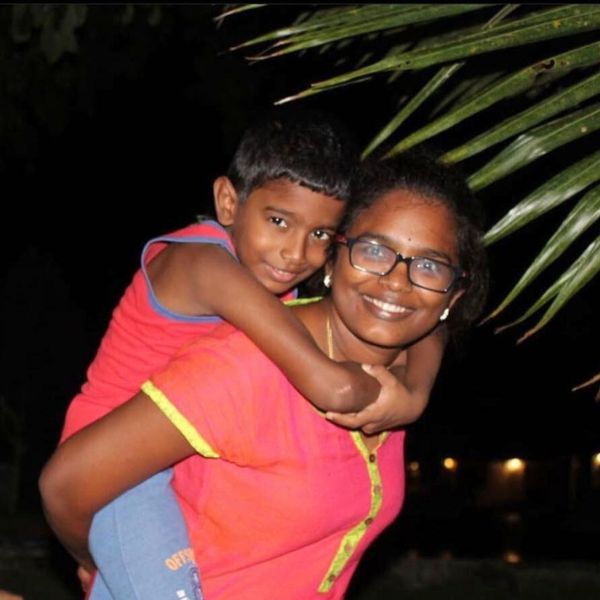
“After my PhD, when I returned to India, my son was eight years old. Right away I started noticing him struggle with reading, writing, and getting a grasp of written concepts.
I didn’t immediately understand what was happening. Like many parents, I assumed it was just a phase—that maybe he needed more practice or better discipline. So I did what I knew best: I sat down with him, tried to guide him through the material, and encouraged him to push through. Yet try as we both did, something wasn’t adding up. I would feel the guilt creeping in. Could I have helped him sooner if I was not away? I would vacillate between guilt, heartbreak and confusion.”
Shame, guilt, and change
“It was deeply taxing to watch my child struggle like that, not because he wasn’t performing well, but because I could tell he didn’t understand why he was struggling. He’d add or miss certain letters in words. My son couldn’t even remember numbers, months, and days in the right order at the age of 9. I began researching, talking to specialists, reading articles, and understanding about learning difficulties. I got him tested and it was confirmed that my son was dyslexic.
There was no doubt about the fact that he was genuinely putting in the effort but it wasn’t reflecting in the output. Imagine the pain of seeing your child sit for hours, earnestly attempting to make sense of letters and words. He’d hold the pencil in his hands, helplessly hoping for something to spark in his brain and give him the words he was looking for. Despite his persistence, the words remained elusive and the spellings inconsistent. I could see the frustration building inside him, but even more heartbreakingly, I saw the confusion.
He had stopped taking part in reading or writing activities in school. Teachers would often make comments like, “Your parents are doing so much for you. Why are you not working harder?” His self-esteem had completely dropped, and he would carry this silent emotional burden and guilt about not being able to work with the written word. Sometimes he’d ask me, if everyone else could do it, why couldn’t he. I could sense the pain in his voice.
However, now we had a name for the invisible barrier that stood between my son and the written word. And more than that, we had a direction.
My son went for special education therapy due to his dyslexia for almost two years. This helped us observe him closely and discover his strengths, one of which turned out to be visual perception. In terms of visualisation, he was two grades ahead of his age. He could remember specific details from years ago—what someone wore, what day something happened, where we were standing when it happened. We also found out that he was good at understanding concepts through analogies. Getting to know his strengths better helped me teach him in a way that suited his needs. It started improving his academic performance.
His teachers at school were informed that he was dyslexic, but they wouldn’t go the extra mile to accommodate his special needs. Instead, they suggested I should quickly change schools. I was angry, but I didn’t let it get to me. Instead, I decided to take the time to find the right space for my child to learn and grow. Until then, I was helping him anyway.”
A fresh start
“Dyslexia, I learned, is not a reflection of how smart a person is. It’s a different way of learning, a different way of being. And the more I understood that, the more my heart opened up with compassion.
When I got offered a job in Germany in 2023, the first thing I did before even accepting, was check out schools for my son. I sent in an application to one that matched his needs, sent them his reports, and they accepted him. I was elated and hopeful this new chapter would be a fresh start for him. I accepted the job and moved to Germany with my 12-year-old son and my one-year-old daughter, who was born the previous year, in 2022.
Here in Germany, they not only focus on academics but also on developing other skills. He has become excellent at drawing and baking, and enjoys doing these activities. His self-esteem has started to heal, as teachers and fellow students appreciate even the smallest efforts and encourage him, instead of pulling him down.
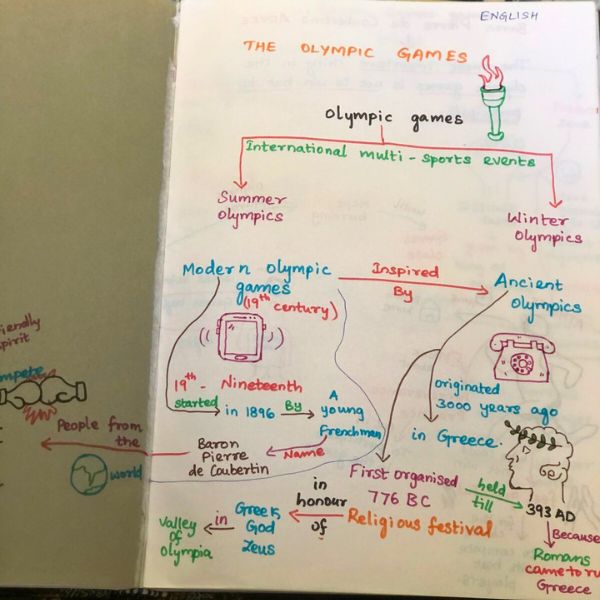
We also adapted how we study together. Since his visual perception is strong, I convert textual material into visuals. I draw diagrams, create mind maps, and tell stories instead of reading textbook passages. If we are studying a science concept, I draw it out and walk him through it. If it is a historical event, we act it out or relate it to a movie scene he remembers. I stopped insisting on traditional rote methods and started tailoring our approach to how he learned best.
And when he feels overwhelmed? I tell him to do something he enjoys to make himself feel better emotionally. And once he is okay, he can return to tackling the tougher tasks again.
He still struggles with socialising (if your child struggles too, here’s how you can help) but he is getting better. He feels good when I tell him that most of my friends are not from my school days, but the later years of my life.”
Being enough
“As my son evolves, I must admit, this journey has changed me too. It has taught me that no child sets out to fail. That behind every struggle is a story, and it is our job as parents, educators, and society, to listen. I used to be a person who would hate repeating myself and here I am now, explaining the same concepts to my dyslexic child over and over again. It can feel mentally draining, but I’ve taught myself to be patient.
I have spent many years of my life in academia to be able to become the torchbearer of change in my family—and I had decided my kids would get the best education possible too, to carry on this change through the coming generations. My goal remains the same, but now I understand that the ‘best’ education isn’t just one kind.
Sometimes, my son asks me, “What do you want me to become when I grow up?” I just tell him he can explore multiple options and see what works best for him. Not feeling confident, he pushes me to tell him what he can be and if he will ever be able to pursue a Master’s like me. I assure him he can choose a profession that works for him, like baking for example, and maybe pursue the highest degree in that, if he wants.
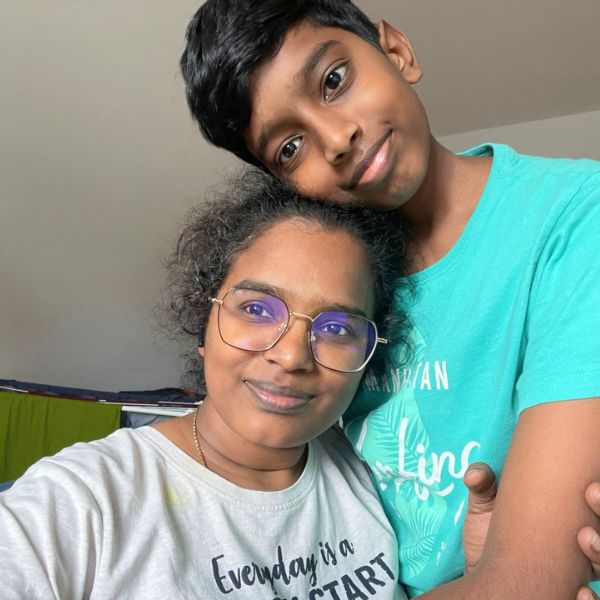
My outlook towards education and what success looks like has changed with him. I am never going to undermine him if he doesn’t get into a STEM course. He is more than his test scores. He is enough.”
If you or someone you know is struggling, please reach out to trained professionals who can guide you on your journey towards dealing with neurodivergence. The Dyslexia Association of India has put together reading materials and offers a list of services such as counselling, assessment, special classes, educational therapy and more. You can find it here.
All images courtesy of Dr Shanmugapriya