

Is my paneer bhurji-like vaginal discharge normal?
The dummies’ guide to cervical mucus and intimate hygiene
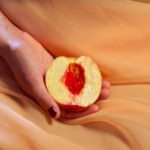
Once you reach a certain stage of womanhood, you need a personal shade card. Not to pick out the colour of your kitchen wall or decide on the living room upholstery, but rather to discern the significance of the colour revealed when you pull down your panties. Is it egg white or milky white? Does it look like cottage cheese or smell like you’re on a fishing boat? Solving the vaginal discharge equation is tougher than finding the value of ‘x’— why am I looking at paneer bhurji in my panties?
We were never told to notice anything except hints of the incoming red massacre every 28-35 days, but the different moods of a vagina can be quite perplexing. It expels different types of discharge that can tell us what our reproductive system is up to — phases of the menstrual cycle, pregnancy and infection, among other things. But how do we know what is what? We spoke to two experts who gave us a dummies’ guide to understand vaginal discharge.
What’s your vaginal discharge trying to tell you?
To understand vaginal discharge, let’s first understand the vagina. It’s the muscular passage that connects the uterus to the outside of your body. What you see on the outside is the vulva, a term used for external genitals.

Vaginal discharge is any kind of secretion that passes through the female genital tract. “It’s a clear whitish mix of fluid and secretions of the cells that line the vagina,” says Ahmedabad-based Dr Karishma Mehta, consultant obstetrician and gynaecologist who shares her expertise on Cystopaedia, her community on coto, a women-only social community app.
The uterus, cervix and internal wall of the vagina create vaginal discharge to lubricate and clean the vagina. Some discharges are indicative of normal bodily functions while others indicate that there’s daal mein kuch kaala.
What’s normal?
Normal discharge is an odourless white or clear fluid that varies from being watery to sticky in its texture and consistency, as per the phase of the period cycle:
Dry or sticky just after periods
Creamier in the phase between the end of your period and ovulation
Wet, clear and stringy before ovulation
Stretchy and slippery during ovulation
Brownish-reddish discharge a few days before or after your period is completely normal. It’s a little blood from your cervix or vagina mixed with the regular white discharge. However, if it continues for a longer period, it could indicate a problem.
What needs your attention?
Through colour, texture and odour, you can determine if the discharge you’re seeing is abnormal and a cause for worry. “In the medical fraternity, discharge is discussed in terms of infective, cancerous, non-cancerous and normal. But for patients, we describe it with colours so that it’s easy to understand and identify,” says Dr Preethika Shetty, consultant obstetrician & gynecologist, Motherhood Hospitals, Pune.
Doctors Mehta and Shetty elaborate on what counts as abnormal discharge and can be cause for consulting a doctor:
Greenish/greyish discharge – Can indicate bacterial vaginosis, a condition caused by excessive growth of vaginal bacteria. It’s sometimes linked to unprotected sexual activity.
Blackish discharge – Sometimes if a fungal infection is accompanied by different types of candida (a type of yeast), it can produce blackish discharge.
Pinkish discharge – If you’re noticing a pinkish discharge without a period due, it could be an indication of cervical polyps or endometrial polyps (a clump of tissue growth protruding from a surface in the body), undiagnosed pregnancy, or a cut that occurred during or post intercourse.
White discharge – If you notice a curdy white discharge that looks like phata hua dahi or cottage cheese crumbs, it’s usually a sign of a yeast or fungal infection.
Brown discharge – An unknown pregnancy in the course of a miscarriage could cause this.
Yellow discharge – Also known as purulent discharge, this happens when there’s an active bacterial infection or cyst, like a Bartholin’s cyst (fluid-filled lump near the vaginal opening). “A Bartholin’s cyst is generally painful so the patient would know before it starts draining. But if they’re on some antibiotic, the initial symptoms may be masked, so they come to us complaining of a lot of discharge, which is when we see it’s a Bartholin’s cyst,” says Dr Shetty.
If the discharge is excessive and seeping through your panties, is foul or fishy smelling, causing itching or burning in your genital region or if you see any redness down there, it’s cause for concern.
Some types of discharge have overlapping meanings, so it’s best to assess other symptoms that you may be experiencing and visit your doctor for the right diagnosis (do not Google it, ladies; we’ve learnt by now that it’s a neverending spiral.)

How can you keep your intimate parts chaka chak?
The vagina is a self-cleaning organ and does not need any external assistance. But there are a few things you can do to help your vagina and intimate parts remain clean and fungus-free. Both Dr Mehta and Dr Shetty are against using intimate washes or vaginal washes for intimate care. They recommend just using regular water to maintain hygiene. A few other ways to maintain vaginal and intimate hygiene are:
- Drink plenty of water.
- Regularly change your menstrual products when on your period. Do not wait for 6-8 hours for a change.
- Change your undergarment twice a day, especially if it’s damp after exercising or using the washroom.
- Dry the undergarments in the sun if possible. Wearing underwear that’s moist or not fully dry can expose your vagina to fungal infections.
- Always use protection during intercourse to avoid STDs (sexually transmitted diseases) and other infections.
A note of caution: This story is for educational purposes with inputs from trained experts. Please consult your healthcare provider to know what suits your needs best.