


“Women are logical and can multitask which helps us accomplish more things”: Computer scientist Sunita Mahajan
In our series Leading Ladies, we profile change-makers whose pursuit of excellence and challenging of conventions has inspired many to speak their minds
At 84, computer scientist Sunita Mahajan spends her time reading spiritual books and doing physiotherapy. Yet, her curiosity for tech remains strong—she eagerly follows developments in AI and deepfakes. “I forget I’m in my 80s; people have to remind me. I still think I’m in my 70s,” she says.
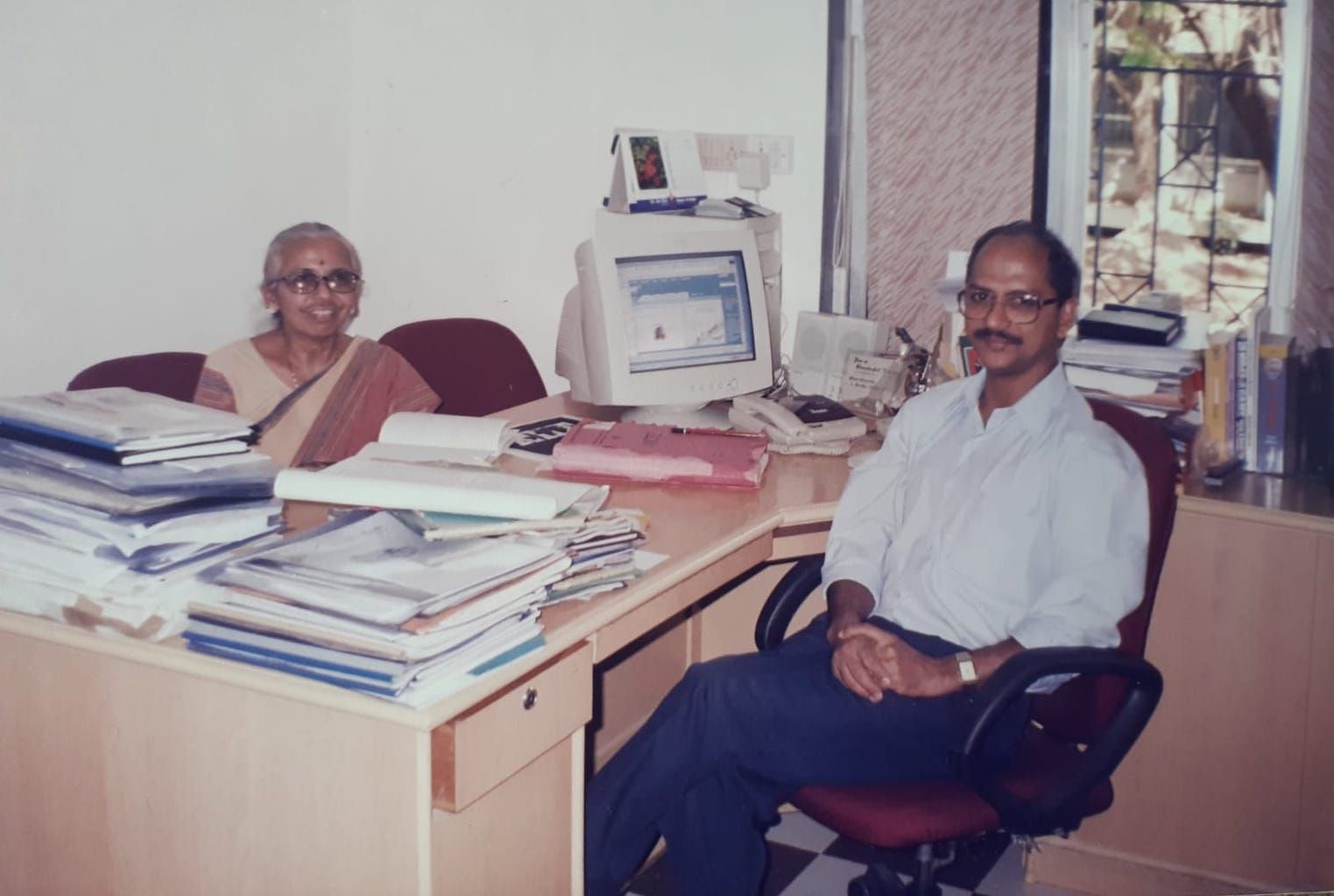
Coding and programming were Mahajan’s life. Her journey in computers began at Bhabha Atomic Research Centre (BARC) when she was 28 years old, where she worked for 31 years. Most people would wrap up their work life at 60, easing into retirement after years of being on the hamster wheel but not Mahajan. With a PhD in computer science, she took up teaching—first at SNDT University in Mumbai for two years, then at Mumbai Educational Trust, where she led the Master of Computer Applications (MCA) course for 15 years. “My son had moved to the US, and there was a void in my personal life. So I thought, this is good. What work is there for me and my husband, just two seniors? I was interested in new techniques, projects, and handling students,” she recalls.
She has also been an integral part of the Indian Women Scientists Association (IWSA) since 1973, an organisation formed by 12 women scientists to support women in STEM and promote science among girls. “In the early days, women’s contributions were often suppressed, especially in fields like nuclear physics. IWSA gave them a platform to showcase their work,” she says. IWSA has grown into a national institution with 12 branches and 2,000 registered participants. “I would sum up my career in three parts—my time at BARC, teaching in colleges, and my work with IWSA. Until two years ago, I was the chairperson of the IWSA trustees. Now, I’m taking things a little easier.” In 2019, Mahajan was even awarded the Woman of the Year prize by the Zonta Club of Bombay III, a local chapter of Zonta International, a global organisation that empowers women across the world through service and advocacy.
In a candid chat, the octogenarian shared stories from her time at BARC, working on the programming of the fighter plane Tejas, and her advice for women in STEM.

Computer scientist Sunita Mahajan’s advice for women in STEM
Can you tell me about your early life, and what led you to computers?
I came from a family of doctors, but physics fascinated me more. My father encouraged me to study engineering, and after schooling in Goa, I moved to Mumbai for my BSc and MSc. In 1967, I applied for BARC’s training program but had to reapply after my son’s birth in 1968. I finally joined in 1969, studying 20 subjects with weekly exams, taught directly by scientists. Initially trained in electronics, I was placed in the computer division, which led me to pivot into computing.
What was it like to learn about computers back then?
We were trained in electronics since computer courses didn’t exist. We studied independently and trained in Russia for three months on FORTRAN (Formula Translation), a computer programming language and assembly language, using a second-generation computer called BESM-6. Seeing instructions executed in real time was fascinating. Back in India, we ran FORTRAN programs on punch cards, as users couldn’t access computers directly. That is how I started my journey in computers, and being a research institute we were given free time to study and increase our knowledge. So simultaneously I started learning about the history of computer science.
How was it being one of the few women in STEM at that point?
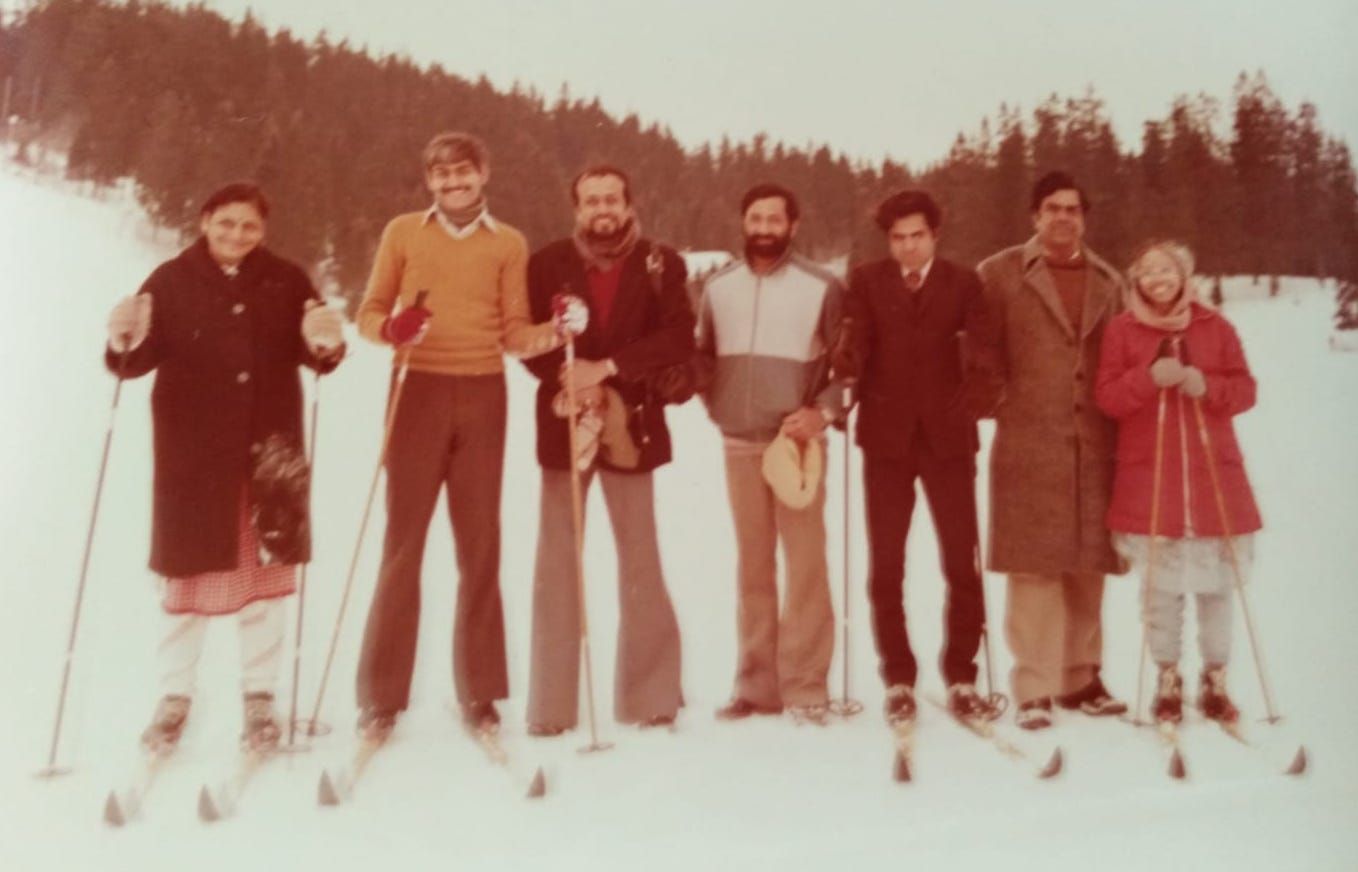
We never felt any different. All other scientists around us, men and women, were supposed to give us equal respect—and if they did not listen to us, we made sure that they listened. I was involved in developing parallel processing, a computing technique where multiple tasks are done at the same time using multiple CPUs, making computing faster and more efficient. I had to really struggle and prove that parallelisation can be done. But we were never treated differently. I’ve listened to many women say that initially they were not listened to. Nobody gave them credit because they were girls. Luckily, we didn’t feel that. We were sent abroad to study, allowed to present papers, and sent to other cities to give lectures in parallel processing, I have gone everywhere. My family—my husband and mother-in-law were always very supportive.
How do you unwind after a tough day?
Earlier, my days ended with conversations with my son—sometimes he’d come to me with a problem, and I’d teach him something new. After that, I’d unwind with a fiction book—though I admit, I had a soft spot for Mills & Boon. Now, in retirement, I’ve rekindled my love for sketching faces and crocheting. I enjoy making small items like beanies and mobile phone pouches, which I happily give away to others.
When you went through a tough time in your career, how did fight self-doubt?
Whenever self-doubt crept in, I made it a point to conquer it. I would talk to my seniors, who always encouraged me. One of the biggest challenges came while writing my PhD thesis in parallel processing—I was in my 50s, my son was married, and I was about to become a grandmother. I wondered, Why finish it now? But a friend’s mother told me, “You have to complete your PhD so you can proudly tell your grandson you’re a doctor.” That motivated me, and I finally earned my PhD at 55.
What’s been the most monumental moment in your career?
The most defining moment of my career was developing the Anupam parallel processor. At the time, India was working on the Tejas light combat aircraft, but a computational fluid dynamics program was causing delays—taking 21 days to run on an IBM computer. With the US banning our access to supercomputers, we had to innovate.
Our team helped parallelise the program while enhancing our processor’s speed, reducing the computation time to just four minutes. This breakthrough enabled the finalisation of Tejas’ design, particularly the bifurcated duct controlling airflow. Though I didn’t write the program myself, I guided the team in parallelisation. I often explained it using a cooking analogy—one person cooking takes time, but ten people working together get it done faster.
This achievement was a seamless collaboration between software and hardware teams, improving both processing speed and chip communication, ultimately creating a more powerful system.
A piece of advice that made a big difference in your work.
When I first joined BARC, I was placed in the electronics group of the computer division, where they worked on transistors and printed circuits. A colleague suggested I move to the software division, and it turned out to be the best decision I ever made. Having spent years in electronics himself, he likely saw my potential and felt I was better suited for software—and he was right.
Who’s your biggest inspiration in the field?
My biggest inspiration in this field was and is Augusta Ada King, Countess of Lovelace. She was the daughter of the poet Lord Byron and a mathematician. She is recognised as the world’s first programmer for her work on Charles Babbage’s proposed mechanical general-purpose computer and recognising its potential to do tasks beyond just calculating.
What’s your hope for women in STEM in the future?
I feel like the women in STEM will take over everything. I’ve met a few young women who are very dedicated to different causes and sincerely working on innovations such as finding out a way to reduce water wastage. You know, women think logically and we can multitask, something men are not good at. That helps us accomplish more things. Dedication, logical thinking and multi-tasking are the skills that will take women in STEM very far in their careers.
One piece of advice you’d like to give young women entering the field.
My advice for women in STEM is to work with full dedication, and don’t be disheartened if you have some failures because in my experience, when one door closes, another one opens. There’s always some way in which you can overcome the hurdle you’re facing.