

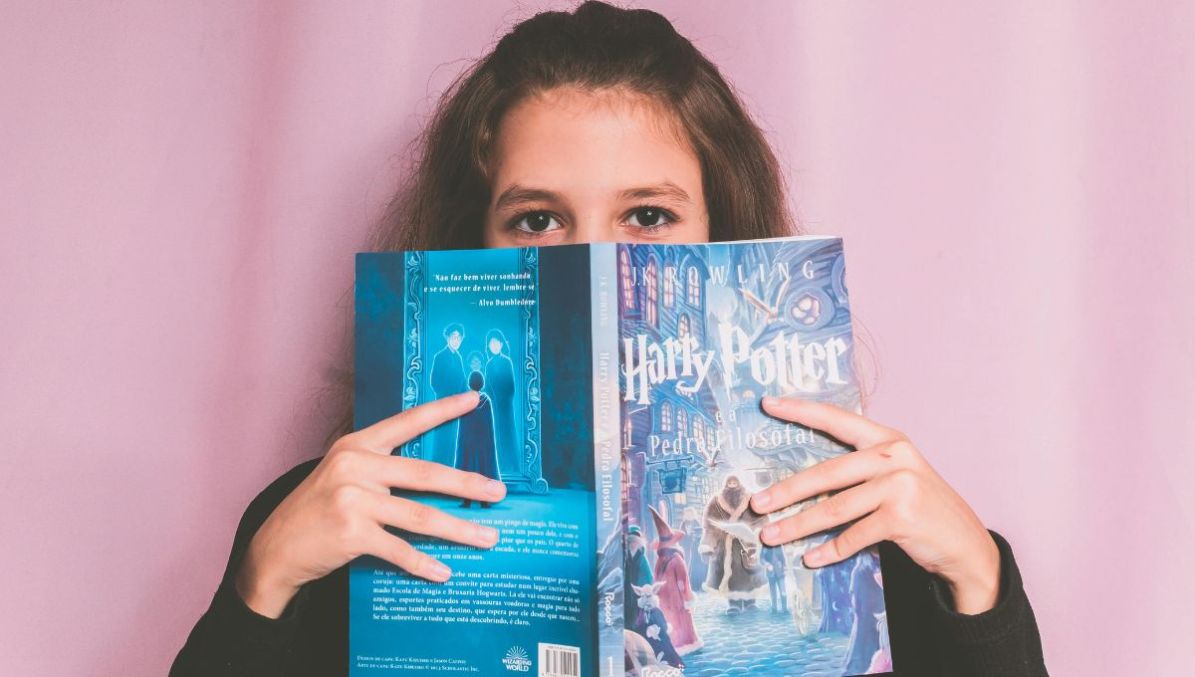
I’m breaking up with J. K. Rowling, but not with Harry Potter
Expelliarmus!
You know that kaleshi aunty who spends her days forwarding problematic messages on the family WhatsApp group? Who’s quick to retaliate and even quicker to play the victim when called out? J. K. Rowling is basically that aunty for the internet. ICYMI, over the last few years, she’s shed her reputation as a beloved author, instead becoming famous for her bigoted views, which she regularly imposes on the internet. From claiming that transgender people are “predators”, to celebrating the UK Supreme Court’s ruling about only biological females being able to identify as women, even urging people to snap non-consensual photographs of trans women who enter women’s toilets, it seems Rowling really has lost the plot.
Her most recent outburst was directed at Emma Watson, who played Hermione Granger in the Harry Potter films, after she confessed that while she cannot reconcile with Rowling’s problematic opinions, she’ll always cherish the bond they previously shared. Gracious and balanced, right? Not according to JK, who, in retaliation, took to X with a 700-word-long essay lambasting Watson for being “ignorant of how ignorant she is”.
As a Potterhead and an ally to the trans community, I’ve been wary of Rowling’s outbursts for a while now, but this one especially struck a nerve because of how inordinately mean it felt. I couldn’t help but feel a knot in my belly when I thought about this author I’d once admired—who’d smuggled whimsy into my childhood—becoming nearly unrecognisable all these years later.
A bitter betrayal
It was 2011, the year my friends at school grew obsessed with Harry Potter almost overnight and seemingly began to speak in tongues. They threw around words like ‘muggle’ and ‘Quidditch’ and ‘dementor’, brandished twigs while pretending they were wands, and fought over who’d get to play Hermione during recess. After several weeks of eyeing their antics with envy, I dusted the cobwebs off my tattered copy of the Philosopher’s Stone, tore through its pages, and almost instantly became a fan.
As a shy, timid child, I was afraid of an endless roster of things—cockroaches, death, teachers, oceans, big groups of edgy-looking teenagers, and the dark. If I ever got picked on in class, I’d wordlessly open and shut my mouth like a goldfish, until my teachers eventually gave up and moved on to the next person. While reading Harry Potter, though, I was suddenly a braver, bolder, more outspoken version of myself. For a few hours, I wasn’t being asked to speak up in Math class, I was fighting a fire-spewing dragon on a whizzing broomstick as my friends cheered me on. I wasn’t feeling my heart pounding in my chest at the prospect of talking to the classmate sitting beside me, I was winning points for Gryffindor by doing something horrifyingly bold and reckless. To 10-year-old me, Harry Potter represented an escape. It was a portal to jump into, where I could shed my inhibitions and don this new, shiny garb of someone brave and cool, much like those edgy teenagers I so dreaded.
Looking back now, though, I see that what really drew me and many others to the series, was the fact that it rooted for the underdogs, the outcasts, and the disadvantaged. Like this article points out: “The Harry Potter books challenge readers to not only delve into a world completely different from their own, but they also glorify those at the bottom of the social pecking order.” And it’s true—timid characters like Neville and Luna weren’t pitied, they were celebrated. A house elf like Dobby wasn’t relegated to a caricature, he was lauded for his loyalty. Ron wasn’t just overlooked as Harry’s sidekick, he was a hero in his own right.
Sure, her multicultural characters had all the depth of a non-stick frying pan (her Chinese character called, for instance, is called “Cho Chang”) and she was given to stereotyping (characters like Lavender and Parvati who had traditionally female interests like gossip, magazines, and divination, were portrayed as vapid or high-strung), but the JK of now? Nobody could have imagined that.
That’s precisely why her villain arc has felt like being stabbed in the back for those of us who started the series with not-yet-formed moral compasses, only to become kinder versions of ourselves by the end of it. Whenever I see a new rant by Rowling on my X feed, I feel my heart sink, wondering: can this really be the same person who wrote about rebelling against prejudice and pure blood supremacy? Who lost billionaire status after donating large amounts of her money to charitable causes? Who remarked that she’d always thought of Dumbledore as gay? Or has an evil, Rowling-shaped AI clone begun to masquerade as her?
To boycott or not to boycott
Now, I find myself riddled with guilt each time I pick up a Harry Potter book. Part of me feels the series has been forever muddied by Rowling’s vitriolic remarks, but there’s the other part of me that still looks back at my years of being a Potterhead with rose-tinted glasses.
My heart feels fuller when I reminiscence about all the silly things I did as a Potter-obsessed preteen—building a makeshift Firebolt with a jhaadu and suspending it from a ceiling fan with a stray piece of rope (much to mother’s chagrin). Painstakingly making a list of every single spell mentioned in the entire Harry Potter series after occupying our family’s computer for a grand total of three hours, zealously retaking the sorting quiz on the official Pottermore website until I eventually manipulated the hat into giving me my dream house, Gryffindor (though I suppose that made me more of a Slytherin?). How can I leave all those warm, fuzzy memories behind? And, more importantly, should I?
After all, Rowling might have turned out to be a lousy person and a bigot, but so did Enid Blyton, Roald Dahl, HP Lovecraft, Wilbur Smith, and countless other much-loved authors. If I chose to burn every book I own that’s been penned by a somewhat controversial author, I’d soon be left with a painfully empty bookshelf. Besides, as Rowling herself pointed out in response to an X post that spoke of burning her books, “I get the same royalties whether you read them or burn them.”
So I’ve decided that since I don’t know any magic spells to un-buy her books, what I can do instead is no longer support the rest of the franchise by spending on any new Harry Potter books, movies, merchandise, video games, and theme parks. That way, I can ensure I’m not deepening her pockets—and therefore empowering her voice—any further, while still going back to the books and DVDs I already own whenever nostalgia slam dunks me out of nowhere.
Because if there’s anything Harry Potter taught me, it’s that two contradictory things can be true at once. Professor Snape was a malicious bully and he gave up his life to protect Harry. Hagrid was a warm-hearted father figure and he threw Harry in harm’s way on countless occasions. Similarly, perhaps, I can acknowledge that Rowling is a venomous bigot (who should learn about diversity from the very basics) while still having a soft corner for the magical world she created that I fell in love with all those years ago.


